Home recovery for rotator cuff repair: A clinically guided roadmap for protection, movement, and rehabilitation
Home recovery for rotator cuff repair centers on protecting the surgical repair while gradually restoring movement, comfort, and function. Early rehabilitation is not a race: the appropriate sling period, exercise range, and activity restrictions depend on factors such as tear size, repair quality, surgical technique, and any additional procedures, so the surgeon’s and physiotherapist’s instructions take priority. 1
Protecting the repair during the first weeks
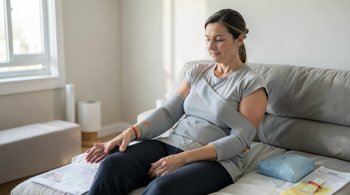
After surgery, the shoulder is commonly supported in a sling for several weeks while the tendon heals. Guidance for large repairs describes a protected first stage, with inpatient therapy staff teaching the patient before discharge. The sling period and permitted movement are individualized, because a large or complex repair may require more protection than a smaller repair. The central early objective is to prevent accidental loading while maintaining safe movement elsewhere in the arm. 1
Early home care generally focuses on keeping the elbow, wrist, and hand moving rather than actively lifting the repaired shoulder. Patients are commonly instructed to avoid lifting, pushing, pulling, weight-bearing through the arm, and sudden shoulder movements until the clinical team permits them. Active shoulder use introduced too early can conflict with the protection phase, particularly when the repair is still biologically vulnerable. 4
Exercises and the safe zone
North Tees and Hartlepool NHS Foundation Trust advises beginning its home exercise program only after the nerve block has fully worn off and feeling has returned to the arm, which usually takes 12 to 48 hours. Its large-repair leaflet describes three daily sessions, with 10 repetitions followed by a one-minute rest and a further 10 repetitions. These figures apply to that specific leaflet and should not replace the individual protocol supplied after surgery. 1
The permitted range is often described as a surgeon-defined “safe zone,” meaning movement selected to limit significant stress on the repair. Exercises may progress from passive movement to active-assisted movement and later to active motion, but timing varies with healing and clinical assessment. Pendulum exercises, when prescribed, are gentle and controlled rather than forceful swings. Any exercise that causes a sharp increase in pain or exceeds the prescribed range should be discussed with the physiotherapist. 4
Pain, swelling, and sleep at home
Pain, swelling, and disrupted sleep are common practical difficulties during early recovery. Prescribed pain relief can reduce discomfort and make the prescribed exercises more manageable. Over-the-counter medicines should be taken only according to the label, with a pharmacist or general practitioner consulted when uncertainty exists. Severe or continuous pain is a reason to contact a clinician rather than simply increasing exercise intensity. 1
Positioning and a gradual activity plan may also help with symptom management. A sling should be worn and positioned according to the surgical team’s instructions, and the repaired arm should not be used to support body weight. Pain trends matter more than a single uncomfortable session: worsening symptoms, persistent severe pain, or a sudden change after an accidental movement warrants medical advice. Rehabilitation aims to restore function without treating pain as a signal to push harder. 2
How rehabilitation usually progresses
Rehabilitation is staged rather than uniform. The early protection phase is followed by prescribed passive or assisted motion, then active movement, and eventually strengthening. Massachusetts General Hospital’s protocol emphasizes avoiding active shoulder motion initially and advancing range of motion and strengthening according to healing and clinician direction. The timetable can be slower when tissue quality, tear size, stiffness, diabetes, smoking, or additional procedures affect the repair or recovery plan. 4
Complete recovery commonly takes several months, while strength, endurance, and function may continue improving for six months or longer. Return to driving, work, sport, and heavier household tasks depends on sling use, pain control, medication effects, arm function, and job demands. A desk-based task and a job involving overhead lifting do not place the same demands on a healing shoulder, so clearance should be individualized rather than based only on a calendar. 2
Home-based therapy and clinical supervision
Evidence comparing rehabilitation settings suggests that structured home exercise can be effective for some patients. A meta-analysis of six studies found no significant differences between supervised physiotherapy and home exercise for postoperative pain, Subjective Shoulder Value, American Shoulder and Elbow Surgeons score, Constant-Murley Score, or external-rotation range of motion. The analysis nevertheless indicates that closer supervision may be appropriate when stiffness risk, monitoring needs, or difficulty following the program is substantial. 5
A retrospective Taiwanese study of 30 patients after double-row rotator cuff and subscapularis repair compared 11 people using home rehabilitation with 19 receiving hospital-based therapy. At three months, both groups improved in active and passive forward flexion, abduction, and internal and external rotation, with no statistically significant range-of-motion differences. Because the study was small, retrospective, and performed in one surgical setting, its findings do not establish that every patient or repair type has the same result. 6
Incision checks, warning signs, and daily planning
Incisions should be monitored for increasing redness, drainage, wound separation, fever, or worsening pain. These changes can indicate a complication requiring medical contact, particularly when symptoms are increasing rather than settling. MedlinePlus identifies wound changes, fever, and increasing pain as reasons to seek postoperative medical advice. The surgical team’s own instructions remain the controlling source for dressing care, bathing, medication, and follow-up timing. 8
A practical home plan reduces avoidable strain: arrange frequently used items within reach, keep walkways clear while the sling limits balance or arm use, and schedule exercises around prescribed pain relief when directed. The arm should not be used for pushing up from a chair or bed unless specifically cleared. Ongoing maintenance is part of recovery because restoring motion does not automatically restore strength, and strengthening must be progressed under clinical guidance to reduce reinjury risk. 3
Sources
- North Tees and Hartlepool NHS Foundation Trust, Large Rotator Cuff Repair, Stage 1 Physiotherapy Advice and Exercise: https://www.nth.nhs.uk/resources/large-rotator-cuff-repair-stage-1-physiotherapy-advice-and-exercise/
- Mayo Clinic, Rotator cuff surgery: https://www.mayoclinic.org/tests-procedures/rotator-cuff-surgery/about/pac-20384743
- Johns Hopkins Medicine, Rotator Cuff Repair: https://www.hopkinsmedicine.org/health/treatment-tests-and-therapies/rotator-cuff-repair
- Massachusetts General Hospital, Rehabilitation Protocol for Rotator Cuff Repair: https://www.massgeneral.org/assets/mgh/pdf/orthopaedics/physical-therapy/rehabilitation-protocol-for-rotator-cuff-repair.pdf
- OrthoArchives, Supervised Physiotherapy vs Home Exercise After Rotator Cuff Repair: https://orthoarchives.com/en/orthoscience/article/W7161706857
- Formosan Journal of Musculoskeletal Disorders, Reclaiming Mobility at Home: https://doi.org/10.4103/fjmd.fjmd-d-25-00108
- American Academy of Orthopaedic Surgeons, Rotator Cuff and Shoulder Conditioning Program: https://orthoinfo.aaos.org/en/recovery/rotator-cuff-and-shoulder-conditioning-program/
- MedlinePlus, After surgery: https://medlineplus.gov/patientinstructions/000279.htm
Authored by MistyMountainView team