Cooking Workshops in the United States: A Guide to Culinary Education and Skill Development
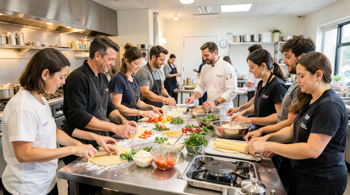
Cooking workshops in the United States have evolved into a robust sector of non-degree culinary education, offering everything from recreational skill-building to intensive technique mastery 1. These programs serve diverse demographics, ranging from children and families to adults seeking professional-grade training in specialized cuisines 6. Participation often involves collaborative, hands-on environments where learners apply theoretical knowledge directly to ingredients, tools, and equipment under the guidance of experienced instructors 2.
Diverse Formats and Pedagogical Approaches
The structure of culinary workshops in the U.S. varies significantly based on the provider and the desired outcome. Many institutions, such as Abigail’s Kitchen in New York, host sessions within active restaurant environments, providing a realistic view of professional kitchen dynamics 1. Other entities, such as the Young Chefs Academy, focus on long-term skill development for younger demographics through multi-day camps that emphasize the science of baking and the art of cooking 6. These structured programs frequently leverage curricula tested by professional chefs to ensure safety, engagement, and consistent educational outcomes 6.
Beyond traditional classrooms, many organizations now offer a blend of in-person and digital learning. For example, national platforms like Cozymeal connect students with local chefs for private or group workshops, often including team-building components in cities across the country 5. Meanwhile, online-first schools like those hosted by America’s Test Kitchen and Milk Street emphasize technique-oriented instruction that can be accessed from any location, catering to home cooks who prioritize convenience and modular learning 10, 11.
Common Curricula and Technical Focus
Most cooking workshops prioritize practical, transferable skills. A common focal point is pasta making, where participants learn to mix, knead, roll, and shape dough from scratch, often pairing their creations with seasonal sauces 8, 9. Another popular area of focus includes international cuisine, such as Japanese ramen workshops, which often teach participants how to build broth foundations, hand-cut noodles, and prepare traditional accompaniments like marinated eggs or miso-glazed eggplant 5, 7.
Workshops also frequently dedicate time to specific culinary components rather than just full-meal preparation. For instance, New York Kitchen hosts specialized workshops ranging from paella creation to bagel making, allowing students to deep-dive into the chemistry and history of individual dishes 4, 9. This granular approach allows students to build a repertoire of specific, replicable recipes, such as perfecting a tagine or mastering raw seafood preparation techniques 1.
Operational and Logistics Considerations
Potential participants should note that workshop operations often involve specific safety and logistical protocols. Most professional-grade kitchens require students to wear closed-toe, non-slip footwear for safety reasons 10. Furthermore, classes often operate on a per-station basis, where stations are designed to accommodate multiple people working together, requiring social coordination among participants 9, 10. Prospective attendees should verify these requirements during the registration process, as they are essential for maintaining a secure learning environment 10.
Registration and cancellation policies are critical components of the workshop experience. Policies are often strict to account for the perishable nature of ingredients and the limited availability of space. At some venues, full refunds are available up to one week prior to the session, while others may shift to a non-refundable, transfer-only policy within a 48-hour window 1. Because many classes sell out, providers often manage waitlists to handle high demand, and potential participants are encouraged to monitor these status updates through official event calendars 1, 4.
Professional vs. Recreational Pathways
The distinction between recreational and professional continuing education is a primary consideration for prospective students. While recreational workshops focus on enjoyment and immediate skill acquisition, institutions like the Culinary Institute of America and the Institute of Culinary Education offer programs designed for those interested in deeper culinary study, including public-facing classes for non-degree seeking individuals 2, 3. These higher-level programs often provide a broader look at industry standards, food safety, and professional kitchen management.
Conversely, community-oriented workshops, such as those held at local community centers, often focus on fundamental life skills. Programs like the Kitchen Confidence Workshop in South Carolina emphasize basic nutrition and age-appropriate skills for families, providing a more accessible entry point for those less concerned with technical perfection and more focused on community participation and basic culinary competence 3. These diverse offerings ensure that regardless of the goal, there is likely an educational format that fits the specific needs of the learner.
The Role of Specialized Skills and Equipment
Advanced cooking workshops often integrate the use of specialized tools, introducing students to equipment they might not have at home. This exposure is a significant benefit of attending in-person workshops rather than learning through self-guided practice. Whether it involves industrial pasta machines, precise temperature-controlled broilers, or specific Japanese kitchen implements, these workshops provide a controlled environment to experiment with high-quality, professional-grade resources 2, 5. Instructors often provide insights on how to replicate these results with consumer-grade equipment once the student returns to their own kitchen.
In addition to physical equipment, the curriculum frequently covers the sourcing of ingredients. For example, certain advanced workshops may include guided market tours, such as trips to local neighborhoods to source authentic Thai ingredients before returning to the kitchen to cook 1. By combining shopping expertise with technical preparation, these workshops offer a comprehensive overview of the culinary lifecycle, from raw procurement to the final plated dish, which remains a cornerstone of the modern U.S. workshop experience.
Sources
- Abigail’s Kitchen NYC: https://www.abigailskitchennyc.com/cooking-classes/
- Institute of Culinary Education: https://www.ice.edu/newyork/cooking-classes
- Culinary Institute of America: https://www.ciachef.edu/continuing-education/
- New York Kitchen: https://nykitchen.com/event/make-your-own-paella-workshop-10-01-26/
- Cozymeal: https://www.cozymeal.com/cooking-classes
- Young Chefs Academy: https://youngchefsacademy.com/locations/sandyspringsga/culinary-camps/
- Whisk Cooks: https://whiskcooks.com/cooking-class/the-japanese-kitchen-sesame-miso-ramen-5/
- Classpop!: https://www.classpop.com/cooking-classes/54061/fall-pasta-from-scratch-with-chef-tissany
- New York Kitchen (Pasta Workshop): https://nykitchen.com/event/homemade-fresh-pasta-workshop-09-10-26/
- New York Kitchen (Pasta Workshop 10/11): https://nykitchen.com/event/homemade-fresh-pasta-workshop-10-11-26/
- America’s Test Kitchen: https://www.americastestkitchen.com/cooking-school
Authored by MistyMountainView team