Alaska coastal cruises through Glacier Bay in summer: Routes, conditions, and expedition choices
What summer Glacier Bay cruises include
Alaska coastal cruises through Glacier Bay in summer generally operate from May through September, with June, July, and August offering the broadest selection of departures. Common itineraries combine Glacier Bay National Park with Juneau, Skagway, Ketchikan, Sitka, Icy Strait, or other Southeast Alaska waters. Cruise access is not automatic: vessels require authorization, and daily entry is managed to protect park resources. 14
Large ships typically provide several hours of scenic cruising inside the park rather than daily shore-based exploration. Glacier viewing may include tidewater glaciers such as Margerie Glacier, while naturalist commentary often focuses on humpback whales, sea otters, harbor seals, bald eagles, and bears. Glacier Bay is therefore both a destination and a regulated wildlife-viewing environment, with the exact experience affected by route, weather, vessel authorization, and the day’s operating conditions. 15
Major route patterns and departure ports
Summer routes commonly begin in Vancouver, Seattle, Juneau, or other Alaska gateways. One-way sailings may connect Vancouver with Whittier or Seward and are sometimes paired with inland travel, while round-trip cruises return to the original port. Vancouver is a significant cruise gateway, and passengers using a Canadian embarkation or disembarkation point must account for both itinerary and border requirements. 412
Inside Passage itineraries often combine glacier scenery with port calls and narrow coastal channels. Published mainstream examples identify Glacier Bay alongside Juneau, Skagway, and Ketchikan, while other Alaska programs include Southeast destinations and glacier-viewing areas. A route labeled “Alaska cruise” does not necessarily enter Glacier Bay, so the park should appear explicitly in the itinerary rather than being inferred from the destination name. 567
Large ships and small expedition vessels
Large cruise ships offer established onboard services and scenic viewing from higher, more spacious decks, but their movement is constrained by access rules and the dimensions of the vessel. Their Glacier Bay visit is usually concentrated into a scheduled scenic-cruising period. This format suits travelers prioritizing a broad coastal itinerary, predictable shipboard routines, and multiple named ports over extended landings in remote coves. 15
Small expedition vessels place greater emphasis on shore landings, kayaking, skiff rides, hiking, and wildlife interpretation. Lindblad describes full-day Glacier Bay exploration, kayaking, Zodiac cruising, and observation of humpback whales and orcas. Other published small-ship itineraries list 60 to 86 guests, while an intimate 22-guest yacht itinerary highlights narrow coves, remote passages, and restricted wilderness areas. These voyages can provide closer access, but activity levels and schedules are more variable. 91314
Wildlife and glacier-viewing expectations
Glacier Bay’s coastal environment supports a wide range of observation opportunities, including humpback whales, harbor seals, sea lions, otters, bald eagles, puffins, mountain goats, and bears. Sightings are never guaranteed because animals move through large, uncontrolled habitats. Small-ship descriptions also identify Frederick Sound and Icy Strait as areas associated with whale searches, while South Marble Island is noted for seabirds such as puffins, oystercatchers, cormorants, and kittiwakes. 813
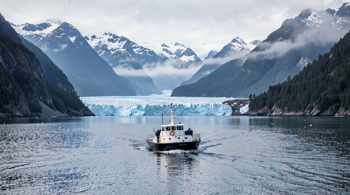
Glacier viewing can include Margerie and Grand Pacific glaciers, depending on the itinerary and operating conditions. Expedition programs may add hikes through old-growth forest, glacial outwash, muskeg, and coastal rainforest, with kayaks or skiffs used to reach quieter inlets. A glacier cruise is not the same as a glacier landing, and a scheduled viewing day can change because of weather, ice, wildlife protection requirements, or navigation decisions. 1314
Weather, clothing, and onboard logistics
Summer conditions remain cool, wet, and changeable even when a departure port feels mild. Layered clothing, waterproof outerwear, gloves, and binoculars are practical preparation for exposed decks and extended viewing periods. Rain, wind, cloud cover, and low temperatures can affect visibility and comfort, particularly near tidewater glaciers. Official park guidance emphasizes variable weather, so packing should reflect conditions rather than calendar expectations. 3
Activity-focused vessels may offer hiking, kayaking, stand-up paddleboarding, or skiff excursions, but participation depends on vessel procedures, sea conditions, physical ability, and daily staff assessments. Some programs describe guided hikes at different levels, while others emphasize daily off-ship activity. Travelers should distinguish between a scenic cruise and an expedition schedule, because the latter may involve wet landings, uneven terrain, early activity periods, and changes to the planned route. 89
Planning constraints and regulatory considerations
Glacier Bay operates under a formal vessel-management system. Cruise ships and other commercial operators must hold the relevant permit or concession authorization, and the number and timing of vessel entries are controlled. This oversight means that capacity, route access, and operating dates are not determined solely by cruise-line marketing. It also explains why two Alaska itineraries of similar length may offer different levels of Glacier Bay access. 1
Peak-season cabins, outside-view accommodations, and popular wildlife excursions can become unavailable well before departure, particularly on small vessels with limited capacity. Travel documents also require attention when a voyage begins or ends in Canada. United States and Canadian entry requirements vary by nationality and travel status, so documentation should be checked against official border guidance. These regulatory and logistical limits are central to evaluating a summer itinerary accurately. 101112
Sources
- National Park Service, Cruise Ships: https://www.nps.gov/glba/planyourvisit/cruise-ships.htm
- National Park Service, Glacier Bay Visitor Information: https://www.nps.gov/glba/planyourvisit/index.htm
- National Park Service, Glacier Bay Weather: https://www.nps.gov/glba/planyourvisit/weather.htm
- Travel Alaska, Cruises: https://www.travelalaska.com/Things-To-Do/Cruises
- Princess Cruises, Glacier Bay: https://www.princess.com/en-us/cruise-destinations/alaska-cruises/glacier-bay
- Holland America Line, Glacier Discovery: https://www.hollandamerica.com/en/us/cruise-destinations/alaska-cruises/glacier-discovery
- Norwegian Cruise Line, Alaska Cruises: https://www.ncl.com/cruise-destinations/alaska-cruises
- UnCruise Adventures, Alaska: https://uncruise.com/destinations/alaska/
- Lindblad Expeditions, Alaska: https://www.expeditions.com/destinations/alaska/
- U.S. Customs and Border Protection, Western Hemisphere Travel Initiative: https://www.cbp.gov/travel/us-citizens/western-hemisphere-travel-initiative
- Canada Border Services Agency, Travel: https://www.cbsa-asfc.gc.ca/travel-voyage/menu-eng.html
- Port of Vancouver, Cruise Operations: https://www.portvancouver.com/marine-operations/cruise
- AdventureSmith Explorations, Glacier Bay Adventure Cruise: https://adventuresmithexplorations.com/cruises/alaska/glacier-bay-national-park-adventure-cruise/
- Sunstone Tours & Cruises, Alaska’s Glacier Wilderness with Glacier Bay: https://smallshipadventurecruises.com/itins/alaskas-glacier-wilderness-with-glacier-bay/
Authored by MistyMountainView team