Best cupping therapy for muscle tightness: An objective analysis of clinical application and outcomes
Understanding the Mechanisms of Cupping Therapy
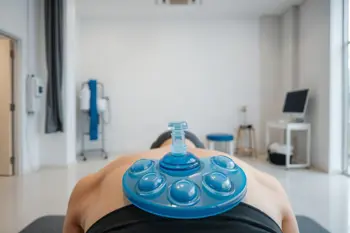
Cupping therapy, a modality with historical roots in ancient Egypt, China, Greece, and the Middle East, is increasingly integrated into modern physical therapy and rehabilitation settings 4, 8. The technique operates on the principle of negative pressure, where cups made of glass, silicone, or plastic are placed on the skin to create suction 2, 9. Unlike traditional massage, which relies on downward pressure to compress tissue, cupping draws the skin and underlying fascia upward 1, 5. This decompression effect is intended to stimulate mechanoreceptors, modulate pain pathways, and encourage localized microcirculation 4, 9. By lifting the soft tissue layers, practitioners aim to provide relief for restricted myofascial layers and support the body's natural response to muscle guarding 1, 6.
In clinical practice, the suction created by the cups is designed to facilitate the flushing of metabolic waste products and promote the influx of oxygenated blood to tight or sore muscle groups 2, 9. This physiological response may assist in reducing chronic tension patterns and improving range of motion 1, 4. While the sensation is often described as a steady pulling or skin tightness, the intensity is typically adjusted to the patient's comfort level 3, 4. Because muscle tightness can stem from various causes-including postural habits, overuse, or joint protection-professional assessment is essential to determine if cupping is a suitable adjunct to a broader recovery plan 1, 4.
Types of Cupping Techniques in Clinical Use
Physical therapy and integrative medicine clinics primarily utilize dry cupping, where suction is applied to intact skin without the use of incisions 4, 11. Another common variation is dynamic or gliding cupping, which involves the application of oil to the skin followed by the movement of the suction cups across a muscle group 10, 17. This method allows the practitioner to actively mobilize fascia and address specific trigger points across larger surface areas such as the back, shoulders, or legs 9, 17. Wet cupping, or hijama, involves superficial skin punctures before suction to draw small amounts of blood, though this approach is significantly less common for standard muscle tension protocols 4, 11.
| Feature | Details |
|---|---|
| Primary Modality | Dry cupping (suction on intact skin) |
| Common Materials | Silicone, plastic, glass |
| Duration | Typically 5-10 minutes per cup |
| Common Targets | Upper traps, low back, calves, hamstrings |
| Physiological Action | Negative pressure-induced tissue decompression |
The choice of equipment often depends on the setting and the clinical intent. Silicone cups are frequently utilized in home-based maintenance due to their flexibility and ease of use, whereas glass or plastic pump-style cups are more commonly standard in clinical environments where precise pressure control is required 11, 17. Regardless of the device, practitioners prioritize safety protocols, including skin cleansing and the use of disposable or sanitized equipment, to mitigate the risk of skin irritation or infection 4, 16.
Addressing Muscle Tightness and Recovery
Muscle tightness is a complex sensation often linked to neurological and mechanical factors, including protective muscle guarding, localized circulation reduction, or nervous system stress 3. When the body remains in a heightened state of alertness, muscle tissue can exhibit persistent guarding even after the primary source of strain has resolved 3. Cupping is frequently integrated into rehabilitation programs as a supportive tool rather than a standalone cure, often paired with manual therapy, therapeutic exercise, and patient education to achieve sustainable outcomes 4, 6.
For athletes and active individuals, cupping may be employed during the recovery phase to manage post-exercise soreness and improve overall movement efficiency 4, 6. However, clinical evidence remains mixed, with many systematic reviews indicating that while cupping can provide short-term pain relief and improved range of motion, further high-quality trials are necessary to confirm its long-term efficacy across diverse populations 11, 13. It is generally recommended that individuals view cupping as a component of an evidence-informed recovery program that emphasizes active movement and strengthening 6.
Safety Considerations and Contraindications
While cupping is considered a low-risk intervention, it is not appropriate for every individual 4. Common, non-harmful side effects include circular skin discoloration (ecchymosis), localized soreness, and minor skin irritation, all of which typically resolve within a few days 4, 11, 15. More serious complications are rare when the procedure is performed by a licensed and trained provider, such as a physical therapist, licensed massage therapist, or acupuncturist 9, 11.
Certain populations must avoid cupping therapy entirely to prevent potential health complications. Individuals with blood-clotting disorders or those who are currently taking anticoagulant medications should consult with a physician before pursuing this treatment, as the suction pressure can cause bruising or bleeding issues 11. Furthermore, cupping should never be performed over areas with broken skin, active infections, or directly over prominent arteries and veins to avoid damaging underlying structures 16. A thorough pre-treatment assessment is the standard of care for identifying these contraindications before any cups are applied 4.
The Role of Professional Assessment
The efficacy of cupping is highly dependent on the precision of the application, which is why professional guidance is strongly recommended over self-application in the absence of clinical training 11. A licensed professional evaluates the underlying cause of the tension, such as weakness in stabilizer muscles, poor postural habits, or repetitive strain patterns 1, 17. By understanding the source of the tightness, the practitioner can determine the optimal placement of the cups and the necessary intensity to achieve the desired therapeutic effect 3, 9.
Patients should seek care from professionals who follow modern clinical guidelines and demonstrate a clear understanding of musculoskeletal anatomy. Clinics that integrate cupping often emphasize that the treatment is intended to facilitate other forms of recovery work. By using cupping to reduce immediate restriction, the therapist can then guide the patient through exercises that build strength and correct the underlying movement dysfunctions that contributed to the initial tightness 4, 17.
Summary of Clinical Expectations
For those considering cupping for muscle tightness, the expectation should be centered on temporary, adjunctive relief rather than permanent correction 1, 6. The literature suggests that while the subjective experience of tension can be significantly altered through this modality, it serves most effectively as part of a multi-faceted rehabilitation strategy 4, 13. Patients are encouraged to maintain realistic expectations regarding the appearance of temporary skin marks and the transient nature of the relief provided by the negative pressure mechanism 4, 9.
Ultimately, the best approach to managing muscle tightness involves a combination of professional assessment, targeted mobility work, and evidence-based interventions like cupping where appropriate. By focusing on why the body is guarding and addressing the root cause, individuals can move toward a more sustainable recovery process that reduces the need for repeated manual interventions 3, 6.
Sources
- Panorama Physiotherapy and Chiropractic Clinic: Cupping Therapy for Muscle Tightness
- Elevate PT Utah: How Does Cupping Therapy Relieve Deep Muscle Tension?
- Dr Huang Clinic: Cupping Therapy for Muscle Tension
- O'Brien Physical Therapy: Cupping Therapy in Physical Therapy
- ACA Acupuncture: Cupping Therapy for Muscle Knots
- Live Fully Now Rehab: Cupping Therapy for Muscle Recovery
- Lets Get Phyzical: Cupping for Muscle Tightness
- St. Vincent's Medical Center: Does Cupping Actually Work?
- Rochester Regional Health: What is Cupping Therapy?
- Pain Free Health Clinic: Dynamic Cupping Therapy
- General Clinical Research Data: Cupping Modalities and Safety
- Cleveland Clinic: Cupping Therapy Overview
- PubMed: Systematic Reviews on Cupping for Pain
- American Physical Therapy Association (APTA): Standards of Practice
- Medical News Today: Understanding Cupping Side Effects
- Mayo Clinic: Cupping Therapy Safety Protocols
- Verywell Health: Cupping for Muscle Pain and Trigger Points
Authored by MistyMountainView team