Best Couples Dance Classes Near Me: A Comprehensive Guide to Selecting Professional Instruction
Finding the right dance environment requires an understanding of the varied instructional models available for partners. Whether the objective is social confidence, specific event preparation, or a regular date night routine, individuals can utilize national studio networks or local independent providers to access professional training 1, 6. Because curricula and environments fluctuate by location, selecting a studio necessitates an evaluation of pedagogical focus, class structure, and the specific dance styles offered 2, 10.
Understanding Instructional Formats for Partners
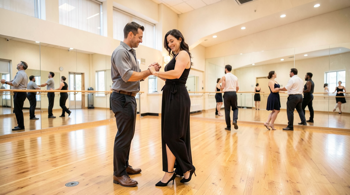
Most professional dance studios provide a hybrid of private and group instruction to accommodate different learning preferences. Private lessons typically offer 30- to 55-minute sessions of one-on-one coaching, allowing instructors to customize the curriculum to the couple's specific skill level and pacing requirements 8, 9. This format is often favored by those preparing for high-profile events, such as weddings, where specific timing and stylistic cohesion are required 1, 9. Conversely, group classes facilitate a social environment where couples learn alongside others, often at a standardized pace suited for beginners looking to master foundational steps 2, 4.
Evaluating Professional Studio Networks
Large, standardized studio networks such as Fred Astaire Dance Studios and Arthur Murray provide consistent pedagogical methods across multiple regions 3, 6, 7. These organizations often specialize in ballroom and Latin disciplines, including waltz, rumba, salsa, and swing 3, 10. Because these studios often require standardized training for their instructors, they offer a predictable entry point for individuals with no prior dance experience 6, 7. When researching these providers, prospective students should look for studio-specific introductory offers that may include a small number of private lessons intended to assess comfort levels before committing to larger packages 3, 10.
| Feature | Private Instruction | Group Instruction |
|---|---|---|
| Customization | High (tailored to pace) | Lower (set curriculum) |
| Social Interaction | Minimal | High |
| Pacing | Individualized | Fixed |
| Primary Goal | Skill mastery/Events | Social practice |
Assessing Experience Levels and Pedagogical Needs
Modern dance instruction is designed to be accessible to total beginners, with many studios specifically emphasizing that rhythm or past experience is not required to enroll 1, 5, 9. Instructors often categorize students into levels: beginner, intermediate, and advanced. Beginner classes focus on fundamental weight shifts, connection, and basic footwork, while intermediate and advanced sessions transition into polishing technical performance and complex social patterns 1, 8. Choosing the correct entry point prevents frustration and ensures that both partners feel supported regardless of their baseline comfort level 5, 9.
Tools for Discovering Local Instruction
For those navigating the search for local options, several digital platforms provide necessary data. Aggregate directories like Yelp and Thumbtack allow for the comparison of business hours, user testimonials, and geographic proximity 2, 3. Additionally, platforms like ClassPass or Eventbrite are useful for identifying scheduled workshops or social dance mixers in specific neighborhoods 1, 5. When performing these searches, verifying the studio's cancellation policy and the specifics of their introductory offers is essential for maintaining a positive experience 10.
Integrating Dance as a Long-term Activity
Beyond technical skill, many practitioners approach dance as a long-term strategy for building communication, coordination, and trust between partners 2, 6, 7. Developing a regular dance habit provides an alternative to traditional, sedentary leisure activities and encourages physical activity 1, 2. Consistency is the primary factor in progress, and studios that prioritize a low-pressure, encouraging environment often retain students more effectively than those focused solely on competition-style training 3, 5.
Regulatory Oversight and Studio Maintenance
It is important for participants to acknowledge that the dance industry is largely decentralized, meaning training standards can vary significantly between independent studios and franchise locations. When assessing a location, prioritize businesses with a clear history of operation and verified testimonials 8. Always inquire about the instructors' qualifications, the studio's teaching philosophy, and whether the facility provides sufficient space for the number of enrolled students. Engaging with a studio's administrative staff before booking a full session ensures that the chosen program aligns with personal expectations and requirements 10.
Sources
- Dance With Me USA, Midtown Manhattan
- Dance Treat Sarasota
- Fred Astaire Dance Studios, The Woodlands
- Fred Astaire Dance Studios, Moon Valley
- Fred Astaire Dance Studios, Solana Beach
- Arthur Murray Dance Studios, Sandy Springs
- Fred Astaire Dance Studios, Marlboro
- Dennis PaSamba Dance Company
- Eric & Bria Bird Dance Lessons
- General Industry Standards for Dance Instruction
Authored by MistyMountainView team