Best elbow brace for tennis elbow: A clinical analysis of support mechanics and utility
Understanding Tennis Elbow and Mechanical Support
Tennis elbow, clinically identified as lateral epicondylitis, is a repetitive strain injury characterized by inflammation and micro-tears in the tendons that attach to the outer part of the elbow 9. While often associated with racket sports, the condition frequently impacts individuals engaged in occupations or activities involving repetitive wrist extension, gripping, and forearm rotation 5, 10. The primary objective of utilizing an elbow brace is to redistribute the physical forces that would otherwise strain these sensitive tendon attachment points 4, 7. By providing targeted compression, these devices aim to dampen vibration and reduce the load on the wrist extensor muscles 4, 8.
It is important to recognize that a brace acts as an adjunct to professional treatment rather than a standalone curative measure 6. Clinical guidelines from institutions like the NHS and the Mayo Clinic emphasize that long-term recovery generally requires activity modification, physical therapy, and resting the affected tissue 2, 3. While braces are effective for managing acute symptoms during activity, their role is to facilitate function while the body undergoes healing processes supported by rest and rehabilitation 10.
Comparative Analysis of Brace Styles
When selecting support, it is critical to distinguish between counterforce straps and compression sleeves, as they function through different mechanical principles 4. A counterforce strap is designed specifically for tennis elbow; it applies concentrated pressure to the muscle bulk of the upper forearm, effectively creating a new attachment point that shifts tension away from the inflamed tendon 1, 4. This style is generally considered the most effective for individuals experiencing sharp pain during gripping or lifting tasks 4.
Conversely, compression sleeves provide a more generalized, circumferential pressure across the entire joint 4. These devices are designed to increase blood flow, provide warmth, and reduce swelling 4, 6. While sleeves offer comfort and secondary support, they often lack the localized counterforce required to significantly unload the extensor tendons compared to a dedicated strap 1. Many patients find utility in rotating between a strap for high-intensity activity and a sleeve for general daily support 5.
Key Features and Sizing Considerations
Product design in the orthopedic space has evolved to incorporate advanced materials and ergonomic adjustments. Many modern braces, such as those produced by brands like Mueller and Bauerfeind, utilize moisture-wicking fabrics and silicone inserts to improve user compliance 3, 11. Features like the Boa Fit System allow for precise tension control, ensuring the device remains effective without restricting natural range of motion or circulation 2. When choosing a device, fit is paramount; a brace that causes numbness, tingling, or skin discoloration is likely fitted too tightly and should be adjusted or removed immediately 1.
| Feature Type | Functional Benefit | Best Use Case |
|---|---|---|
| Counterforce Strap | Targeted tendon unloading | Acute pain during gripping/lifting |
| Compression Sleeve | General circulation/warmth | Chronic swelling/daily support |
| Viscoelastic Pads | Massage effect/secure positioning | Post-traumatic stabilization |
Clinical Guidelines for Proper Application
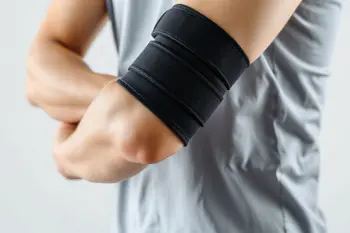
The placement of a tennis elbow brace is as important as the selection of the device itself. A common error is placing the compression pad directly over the bony prominence of the outer elbow, which can increase irritation 1. Instead, the strap should be positioned approximately one to two inches below the elbow joint, directly over the muscle belly of the forearm 4. This placement ensures the pressure is directed against the muscle mass rather than the vulnerable bone and tendon insertion site 4.
Healthcare professionals recommend that patients monitor their symptoms during the first few weeks of brace use. If pain persists, worsens, or is accompanied by unexplained weakness or numbness, a clinical assessment by an orthopedic specialist is warranted to rule out more complex pathologies 1, 2. Relying on a brace to push through pain without addressing the underlying repetitive strain can potentially lead to further tissue damage or chronic tendonopathy 2, 5.
Market Diversity and Selection Trends
The marketplace for elbow supports features a variety of professional-grade options, ranging from simple adjustable bands to sophisticated knit supports with integrated gel inserts 4, 12. Brands like DonJoy, Mueller, and Bauerfeind are frequently cited in orthopedic contexts for their varied product lines that cater to different severity levels 4, 11, 12. While premium models may offer high-performance materials like antimicrobial fabric or infrared-emitting fibers, the fundamental requirement remains a snug, adjustable fit that permits continued activity without causing secondary discomfort 3, 8.
When comparing options, consumers should prioritize clear sizing charts that require measurement of the forearm circumference at the widest point 3. Because human anatomy varies significantly, a one-size-fits-all model may not provide the same structural integrity as a size-specific brace for individuals with larger or smaller forearm diameters 1. Always review the manufacturer's care instructions, as many high-quality supports are machine washable, which is essential for maintaining hygiene during regular use 6.
Regulatory Oversight and Evidence Base
It is important to contextualize the evidentiary support for bracing. The Cochrane review of orthoses indicates that while braces are a staple of conservative management, there is a degree of uncertainty regarding their comparative long-term effectiveness against other interventions 6. Braces should be viewed as part of a comprehensive strategy that includes professional diagnosis, potential anti-inflammatory measures, and structured rehabilitation exercises prescribed by a physical therapist 2, 5. By treating the brace as a support tool rather than a cure, individuals can manage their symptoms more effectively and sustainably over time 1.
Sources
- American Academy of Orthopaedic Surgeons (https://orthoinfo.aaos.org/en/diseases--conditions/tennis-elbow-lateral-epicondylitis/)
- NHS (https://www.nhs.uk/conditions/tennis-elbow/)
- Mayo Clinic (https://www.mayoclinic.org/diseases-conditions/tennis-elbow/diagnosis-treatment/drc-20351993)
- Cleveland Clinic (https://my.clevelandclinic.org/health/diseases/7049-tennis-elbow)
- Johns Hopkins Medicine (https://www.hopkinsmedicine.org/health/conditions-and-diseases/tennis-elbow)
- Cochrane (https://www.cochrane.org/CD003525/MUSKEL_braces-and-orthoses-for-treating-tennis-elbow)
- Hospital for Special Surgery (https://www.hss.edu/conditions_tennis-elbow.asp)
- American Society for Surgery of the Hand (https://www.assh.org/handcare/condition/tennis-elbow)
- Mueller Sports Medicine (https://www.muellersportsmed.com/b2c/products/elbow-supports/adjustable-elbow-support)
- FUTURO (https://www.futuro-usa.com/3M/en_US/p/d/b00042025/)
- Bauerfeind (https://www.bauerfeind.com/b2c/us/medical/epicondylitis-support)
- DonJoy (https://www.donjoystore.com/tennis-elbow-support)
Authored by MistyMountainView team