Warning signs of polycystic ovary syndrome: A clinical guide to symptoms and evaluation
Warning signs of polycystic ovary syndrome, commonly called PCOS, include irregular or absent periods, excess facial or body hair, persistent acne, scalp hair thinning, weight changes, and difficulty becoming pregnant. Symptoms vary considerably, and no single sign confirms the condition. Medical assessment is important because similar changes can arise from other disorders. 1
Menstrual changes and ovulation
Irregular menstrual cycles are among the most recognizable warning signs of PCOS. Periods may occur infrequently, become unpredictable, or stop altogether because disrupted hormonal signals can interfere with ovulation. Some people instead experience heavy bleeding after a prolonged interval between periods. The pattern is clinically relevant when it persists beyond the expected adjustment period following puberty or represents a clear change from a previously regular cycle. 2
Ovulatory dysfunction can also appear through difficulty becoming pregnant. PCOS may prevent the regular release of mature eggs, making conception more difficult even when ovarian cysts are not seen. Fertility concerns alone do not establish PCOS, but they can prompt evaluation of menstrual history, hormone levels, and other possible causes of irregular ovulation. 3
Signs of higher androgen activity
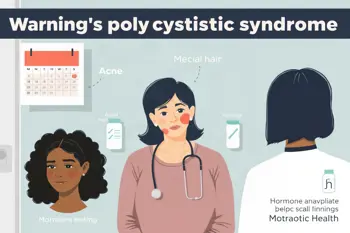
Higher androgen activity may produce increased facial or body hair, particularly in areas such as the chin, upper lip, chest, or abdomen. Clinicians may describe this pattern as hirsutism. Persistent acne, oily skin, and scalp hair thinning or female-pattern hair loss are additional possible signs. These symptoms can develop gradually and may be mild or pronounced, so their timing and progression are important parts of a medical history. 4
Androgen-related symptoms do not occur in every person with PCOS. A new or rapidly worsening change, especially marked hair growth, severe acne, or pronounced scalp hair loss, requires careful assessment because other hormonal conditions can produce similar findings. Blood tests may be used to evaluate androgen levels, while clinicians also consider medications, thyroid disorders, and uncommon causes that can resemble PCOS. 5
Weight and metabolic warning signs
Weight gain or persistent difficulty managing weight may occur alongside PCOS, but body size does not determine whether someone has the condition. Insulin resistance is frequently associated with PCOS and may contribute to higher insulin levels, altered ovulation, and increased androgen production. Some people have metabolic features without obvious reproductive symptoms, while others have PCOS without significant weight change. 6
Darkened, thickened, or velvety skin patches, often noticed in body folds, can be associated with insulin resistance. PCOS is also linked with increased risk of type 2 diabetes, high cholesterol, high blood pressure, fatty liver disease, obesity, and obstructive sleep apnea. These are associated health risks rather than standalone diagnostic signs, and they should be interpreted with reproductive and androgen-related findings. 7
Why ovarian cysts are not required
The name polycystic ovary syndrome can create the impression that visible cysts are necessary for diagnosis. In practice, the ovarian findings often represent multiple partially developed follicles rather than conventional cysts, and a person may have PCOS without this appearance on ultrasound. The condition is assessed through a combination of ovulatory dysfunction, androgen excess, and ovarian morphology, while other explanations are excluded. 2
Clinical criteria commonly require two of three broad findings: hyperandrogenism, ovulatory dysfunction, or polycystic ovarian morphology. An ultrasound finding by itself does not establish PCOS because polycystic-appearing ovaries may occur in people who do not have the syndrome. This distinction helps prevent both under-recognition of hormone and metabolic problems and overdiagnosis based only on an imaging result. 8
How symptoms can vary
PCOS symptoms may begin during the teenage years, soon after puberty, or become more noticeable later. Not everyone experiences the same combination, and symptom intensity can change over time. One person may primarily notice missed periods, while another may present with acne, excess hair, scalp thinning, weight changes, or fertility concerns. This variability is one reason a symptom checklist cannot replace clinical evaluation. 1
Irregular cycles during the early years after the first menstrual period can be part of normal maturation, which makes adolescent assessment particularly careful. Persistent irregularity, androgen-related changes, or metabolic concerns may justify evaluation, but the timing of symptoms and the number of years since menstruation began affect how findings are interpreted. Ultrasound is not automatically appropriate for every adolescent with irregular cycles. 9
When evaluation is appropriate
Medical evaluation is reasonable when periods remain persistently irregular or absent, new excess facial or body hair develops, acne is difficult to control, scalp hair is thinning, or pregnancy does not occur as expected. A clinician may review menstrual patterns, examine the skin and hair, assess weight and blood pressure, and order laboratory tests. Pelvic ultrasound may be considered when it contributes useful information. 10
PCOS has no single definitive symptom or test. Diagnosis generally combines medical history, physical examination, hormone testing, and sometimes imaging while excluding other causes. Conditions affecting the thyroid, adrenal glands, or reproductive hormones can overlap with PCOS symptoms, and rapidly progressive androgen changes may require investigation for less common disorders. Accurate classification matters because treatment and monitoring depend on symptoms, metabolic risks, and fertility goals. 11
Sources
- Penn Medicine, Polyendocrine Metabolic Ovarian Syndrome: Symptoms and Causes
- Merck Manual Professional Edition, Polyendocrine Metabolic Ovarian Syndrome
- MSD Manual Consumer Version, Polyendocrine Metabolic Ovarian Syndrome
- Acibadem Hospitals Group, PCOS Symptoms: Causes and When to Seek Care
- Endocrine Society, PCOS Patient Information
- Cleveland Clinic, Polycystic Ovary Syndrome
- MSD Manual Professional Edition, Metabolic Risks Associated with PCOS
- Pulse Today, Key Questions on Polycystic Ovary Syndrome
- Pulse Today, Adolescent Assessment of PCOS
- Office on Women’s Health, Polycystic Ovary Syndrome
- National Institute of Child Health and Human Development, PCOS Condition Information
Authored by MistyMountainView team