Warning Signs of Uterine Fibroids: A Clinical Guide to Symptoms and Evaluation
Warning signs of uterine fibroids are not identical for everyone. Many fibroids cause no symptoms, while others produce heavy periods, pelvic pressure, abdominal enlargement, urinary changes, bowel problems, pain, anemia, or reproductive complications. 1 The pattern often depends on the growth’s size, number, and location within or around the uterus.
Heavy or prolonged menstrual bleeding
Unusually heavy menstrual bleeding is one of the most recognized warning signs. Bleeding may involve frequent pad or tampon changes, clots, or periods that last seven days or longer. Fibroids that project into the uterine cavity are particularly associated with abnormal bleeding because of their position near the lining. 2 A change from a person’s usual menstrual pattern is clinically relevant even when pelvic pain is absent.
Ongoing blood loss can contribute to anemia, which may appear as fatigue, weakness, dizziness, or reduced exercise tolerance. Yale Medicine identifies anemia from blood loss among the complications associated with symptomatic fibroids. 1 Heavy bleeding can also interfere with work, sleep, travel, and daily activities, making a gynecologic assessment appropriate rather than treating the pattern as ordinary menstrual variation.
Pelvic pressure, pain, and abdominal changes
Pelvic pressure may feel like heaviness, fullness, cramping, or a persistent sensation of something occupying the lower abdomen. Larger fibroids can enlarge or distort the uterus and may cause pelvic or abdominal pain, abdominal distension, or visible swelling. 2 Symptoms can develop gradually, so an increase in waist size or lower-abdominal fullness may be noticed before a diagnosis is made.
Location influences the type of discomfort. A growth on the outer surface of the uterus may press against nearby organs, while one within the muscular wall may contribute to uterine enlargement and pressure. Lower back pain and pain during sex are also reported symptoms. 2 Severe, persistent, or newly changing pain should not be assumed to result from fibroids without evaluation because other pelvic conditions can produce similar complaints.
Bladder and bowel warning signs
Frequent urination, urinary urgency, or difficulty emptying the bladder can occur when an enlarged uterus or fibroid presses on the bladder. Penn Medicine lists frequent urination and difficulty emptying the bladder among symptoms of fibroids. 2 A person may notice repeated nighttime bathroom visits, a reduced sense of bladder emptying, or pressure that becomes more noticeable as the fibroid grows.
Pressure on the rectum or surrounding bowel can contribute to constipation, difficulty passing stool, or a feeling of incomplete bowel emptying. 1 These symptoms are considered bulk symptoms because they result from the physical size or position of the growth. Urinary or bowel changes that persist, worsen, or occur with abdominal swelling warrant discussion with a healthcare professional.
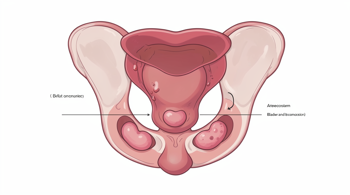
Effects on fertility and pregnancy
Some fibroids are associated with infertility, miscarriage, or other pregnancy complications, although the presence of a fibroid does not automatically mean fertility will be affected. Yale Medicine lists infertility, miscarriages, and pregnancy complications among possible consequences of symptomatic growths. 1 Submucosal fibroids, which grow toward the uterine cavity, may be especially relevant when abnormal bleeding or reproductive difficulties are present.
Fibroid-related reproductive concerns require an individualized assessment of size, number, and location, together with pregnancy plans. The American Academy of Family Physicians states that treatment choices are determined by these characteristics and by preferences concerning uterine and fertility preservation. 7 A fertility evaluation may therefore consider fibroids alongside other possible causes rather than treating them as the sole explanation for difficulty conceiving.
Why symptoms can be missed
Fibroids are common benign tumors made from uterine muscle and connective tissue. Yale Medicine reports that they may affect as many as 75% of women in the United States, while Penn Medicine notes that many women do not know they have them because the growths are too small to cause symptoms. 1 Their high prevalence means that an incidental finding is not necessarily a medical emergency or a reason for treatment.
Symptoms are also easy to attribute to normal periods, digestive problems, stress, or ordinary weight changes. New heavy bleeding, prolonged periods, pelvic pressure, increasing abdominal size, urinary difficulty, constipation, pain during sex, or persistent back pain are patterns worth documenting. 4 A symptom diary can record bleeding duration, clotting, pain location, urinary frequency, and effects on daily activities for discussion during an appointment.
Evaluation and when to seek medical care
Evaluation generally begins with a gynecologic history and physical examination. The American Academy of Family Physicians identifies combined transvaginal and transabdominal ultrasonography as the initial imaging choice for evaluating fibroids; magnetic resonance imaging may further characterize disease and assist treatment planning. 7 Imaging can help determine whether symptoms correspond to the number, size, and position of uterine growths.
Medical assessment is particularly important for very heavy bleeding, symptoms suggesting anemia, severe pelvic pain, progressive abdominal enlargement, difficulty urinating, or reproductive complications. Fibroids are almost always benign, and Penn Medicine estimates that approximately one in 1,000 will turn out to be cancerous. 2 That rarity does not make unexplained bleeding or rapidly changing symptoms appropriate for self-diagnosis. Depending on findings and preferences, management may involve observation, medicines, minimally invasive procedures, or surgery. 7
Sources
- Yale Medicine, “Uterine Fibroids (Uterine Myoma)”
- Penn Medicine, “Uterine Fibroids: Symptoms and Causes”
- NewYork-Presbyterian, “How Can I Tell if I Have Fibroids?”
- American Academy of Family Physicians, “Uterine Fibroids: Rapid Evidence Review”
Authored by MistyMountainView team