Ways to Manage Lice Eggs at Home: Evidence-Based Approaches and Procedural Guidelines
Understanding Lice Infestation and Identification
Head lice infestations remain a common occurrence, particularly among children aged 3 to 11, with millions of cases reported annually across the United States 3. Despite common misconceptions, the presence of lice is not an indicator of poor hygiene or social status; these parasites target the scalp for warmth and access to blood regardless of how frequently an individual bathes 3, 6. Identifying nits, or lice eggs, is the first step toward effective management. Nits are small, oval-shaped structures that appear yellow, tan, or brown before hatching, and they are typically cemented firmly to the hair shaft within 1/4 inch (6 millimeters) of the scalp 1, 5.
Distinguishing between nits and other hair debris like dandruff is essential to avoid unnecessary treatments. Unlike dandruff, which flakes off easily, nits are glued to the hair and require mechanical force to dislodge 2, 5. Practitioners suggest using a magnifying glass under bright light to inspect the hairline, particularly behind the ears and near the nape of the neck, where lice frequently lay their eggs 1, 9. Eggs found further than 1/4 inch from the scalp are often empty casings or dead, as live nits require the warmth of the scalp to survive 1.
Mechanical Removal: The Role of Wet Combing
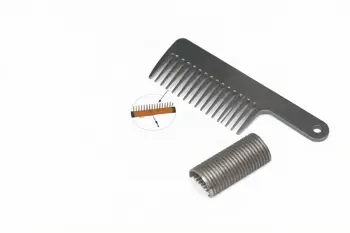
Manual removal is a cornerstone of lice management because many chemical treatments do not fully penetrate the protective shell of the eggs 2, 8. The wet combing method is considered one of the most evidence-based, non-pharmacological approaches to reducing the lice population 4, 9. By applying hair conditioner or a similar lubricant to damp hair, an individual can reduce friction, making it significantly easier for a fine-toothed nit comb to slide through the hair and capture both nymphs and adults 1, 9.
For optimal results, the hair should be combed in small, manageable sections, moving from the scalp toward the ends of the hair strands 1, 9. It is standard protocol to wipe the comb clean on a paper towel or rinse it in hot water after every pass to remove captured debris 9. This process requires patience and should be repeated systematically every two to three days for up to two weeks to ensure that any newly hatched lice are removed before they reach maturity and begin the cycle of laying new eggs 1, 5.
Navigating Over-the-Counter and Clinical Treatments
While many families begin with over-the-counter (OTC) products, it is important to acknowledge that resistance to common ingredients like permethrin and pyrethrin has been documented in many regions 6, 8, 9. If live lice are still observed several days after an initial treatment, it may indicate that the specific product is ineffective against the local population of lice, and a consultation with a healthcare professional regarding stronger, prescription-strength options may be warranted 8.
| Treatment Phase | Action Required |
|---|---|
| Initial Treatment | Apply pediculicide according to label instructions |
| Follow-up Window | Second application 7 to 10 days later to kill newly hatched nymphs |
| Consistency | Manual wet combing every 2-3 days for 14 days |
The timing of the second treatment is critical because most OTC medications do not kill the unhatched eggs 1, 8. A follow-up application 7 to 9 days after the first is intended to eliminate newly hatched nymphs before they can reproduce 8. Care must be taken to follow all label directions precisely, as using multiple products simultaneously or over-applying medication can lead to unnecessary scalp irritation, including burning and itching 1.
Environmental Management and Disinfection
Extensive household deep-cleaning is generally not required, as lice do not survive long away from a human host 2. Public health guidance suggests that lice typically die within 24 to 48 hours when separated from a human scalp 5. Priority should be placed on items that have had direct head contact within the last two days, such as bedding, towels, and clothing 5, 9. These items should be machine-washed and dried using high-heat settings, as the thermal kill threshold for lice and their eggs is approximately 130°F (54°C) 5.
For items that cannot be laundered, such as stuffed animals or specialty headwear, sealing them in an airtight plastic bag for two weeks will effectively kill any lice by preventing access to a blood meal 5. Similarly, brushes, combs, and hair accessories should be disinfected by soaking them in hot water (at least 130°F) for five to ten minutes 5. Vacuuming high-traffic areas like carpets, furniture, and car seats is a practical measure to remove stray hairs that may carry viable nits 5.
Addressing Myths and Common Misconceptions
Much of the stress associated with lice management stems from persistent myths that can lead to ineffective or counterproductive actions. For instance, there is no evidence to support the use of home remedies such as mayonnaise, vinegar, or essential oils; these substances have not been proven to eradicate lice and may cause unwanted scalp reactions or irritation 4, 9. Relying on these methods can delay evidence-based treatment, allowing the infestation to continue and potentially spread to other family members 4.
Another common misconception involves household pets. Human head lice are species-specific and cannot survive on or be transmitted by cats, dogs, or other pets 5, 6. Therefore, treating pets is unnecessary and ineffective. Furthermore, excluding children from school until every single nit is removed is often unnecessary, as many health departments recognize that the presence of non-viable, empty casings does not pose a public health risk once the active infestation has been addressed with proper care 6.
Clinical Oversight and When to Seek Help
While home management is usually successful, certain situations necessitate professional medical oversight. If an infestation persists despite following the recommended treatment schedule, or if the individual displays signs of a scalp infection-such as severe redness, crusting, or discharge-a healthcare provider should be consulted 2, 4. Infants, pregnant individuals, and those with suspected allergies to OTC ingredients also require tailored guidance from medical professionals 2, 7.
Consistent communication with school authorities and medical staff can ensure that treatment efforts are aligned with the severity of the infestation. Maintaining a proactive approach, including regular head checks of all family members during an outbreak, is the most reliable way to monitor for early signs of re-infestation and ensure that the lifecycle of the parasite is completely disrupted 2, 5. Through mechanical removal, evidence-based medication, and diligent environmental management, most infestations can be resolved within a two-week period 8.
Sources
- Mayo Clinic: Head Lice Diagnosis and Treatment
- Acibadem Hospitals Group: Evidence-Based Guide for Patients
- Scripps Health: How to Get Rid of Head Lice Safely
- Acibadem Hospitals Group: Natural Lice Removal Analysis
- Ottawa Press: Lice Eggs Identification and Prevention
- Jase Medical: Clinical Perspectives on Head Lice
- AP News: Lice Infestations in School Children
- ScienceInsights: Home Treatment Efficacy
- WCVB Consumer Reports: Efficacy of Common Treatments
Authored by MistyMountainView team