Early indicators of declining kidney function: Clinical signs, tests, and risk context
Early indicators of declining kidney function can be difficult to recognize because chronic kidney disease often develops silently, with few or no symptoms in its initial stages. The most useful early evidence usually comes from blood and urine testing, particularly estimated glomerular filtration rate, or eGFR, and the urine albumin-to-creatinine ratio, or UACR. 1
Why early decline can be difficult to notice
The kidneys filter waste and excess fluid, help regulate blood pressure, balance minerals, support red blood cell production, and contribute to bone health. Because these functions can remain adequate despite early damage, a person may feel well while kidney abnormalities are already developing. The National Kidney Foundation states that many people with kidney disease have no symptoms, making testing important for people with recognized risk factors. 1
Diabetes, high blood pressure, cardiovascular disease or heart failure, obesity, older age, and a family history of kidney disease are associated with higher risk. The Centers for Disease Control and Prevention identifies diabetes and high blood pressure as major risk factors and emphasizes that early kidney disease frequently has no symptoms. 3 Risk assessment therefore matters even when there are no visible changes in urination, energy, or swelling.
Laboratory indicators of reduced filtration
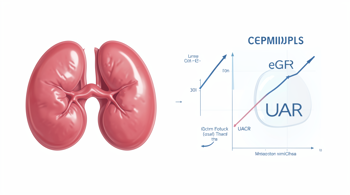
A falling eGFR is a central laboratory indicator of declining filtration, particularly when the change is confirmed through testing over time. eGFR is calculated primarily from a blood creatinine result along with demographic and body-related factors, so a single result should be interpreted in clinical context rather than treated as a complete diagnosis. MedlinePlus identifies creatinine-based blood testing and urine testing as parts of chronic kidney disease evaluation. 4
Serum creatinine may rise as filtration declines, but creatinine alone can be affected by factors including age, sex, and body size. A sustained reduction in eGFR is more informative than an isolated abnormal result. NICE guidance recommends eGFR and albumin-to-creatinine ratio when investigating chronic kidney disease, while KDIGO uses both filtration and albuminuria categories to describe kidney status. 9 10
Urine changes that may precede eGFR decline
Albumin in the urine can identify kidney damage before eGFR falls. The UACR measures albumin relative to creatinine in a urine sample, helping account for urine concentration. The National Kidney Foundation describes a UACR of 30 milligrams per gram or higher as abnormal and recommends evaluation with repeat testing because temporary conditions can affect results. Persistent albuminuria is therefore an important early indicator, even when filtration appears preserved. 1
Visible urine changes can also warrant assessment, although they are not specific to kidney disease. Repeatedly foamy or bubbly urine may reflect protein, and blood in the urine may indicate urinary-tract or kidney conditions. Increased nighttime urination can occur when the kidneys lose some ability to concentrate urine. These observations do not establish declining function on their own, but they can support a clinician’s decision to order blood and urine testing. 5
Physical symptoms and their limitations
Symptoms are more likely to become noticeable as kidney impairment advances, rather than at the earliest stage. Reported symptoms can include persistent tiredness, swelling in the ankles and feet, puffy eyes, poor appetite, dry or itchy skin, muscle cramps, sleep problems, nausea, and changes in urine volume. The National Kidney Foundation lists these among recognized signs, while Mayo Clinic notes that early chronic kidney disease may produce few symptoms. 1 5
These symptoms have many possible explanations outside kidney disease. Fatigue, for example, can have multiple causes, while swelling may relate to heart, liver, medication, or circulation problems. A symptom becomes more concerning when it is persistent, unexplained, or accompanied by abnormal eGFR, albuminuria, blood in the urine, or a relevant risk factor. Symptoms should therefore be treated as reasons for medical assessment, not as a substitute for kidney-function testing. 5
How clinicians confirm chronic decline
Chronic kidney disease is distinguished from a temporary change by evidence that kidney damage or reduced function persists. KDIGO and NICE guidance use a period of at least three months to establish chronicity. Relevant evidence may include repeatedly reduced eGFR, persistent albuminuria, or another marker of kidney damage. This time-based approach helps separate long-term decline from short-lived changes associated with illness, hydration status, or other clinical circumstances. 9 10
A sudden rise in creatinine or rapid fall in eGFR can instead suggest acute kidney injury or accelerated deterioration and requires prompt clinical evaluation. Results may need to be repeated and interpreted alongside medication history, blood pressure, diabetes status, urine findings, and other medical information. The American Academy of Family Physicians describes reduced eGFR and persistent albuminuria as key markers used to identify and stage chronic kidney disease. 8
Testing decisions and practical risk context
For people with diabetes, hypertension, cardiovascular disease, heart failure, or a family history of kidney disease, clinicians commonly consider eGFR and UACR because these tests can detect abnormalities before symptoms develop. The National Kidney Foundation specifically identifies eGFR and UACR as two simple tests for people with important risk factors. 1 Testing frequency and interpretation depend on the person’s medical history and previous results, rather than on symptoms alone.
Routine testing is not identical to universal testing for every asymptomatic adult. The U.S. Preventive Services Task Force has concluded that evidence is insufficient to recommend routine chronic kidney disease screening in asymptomatic adults. 7 That position does not remove the importance of targeted evaluation. It highlights the need to balance individual risk, potential benefits, abnormal findings, follow-up requirements, and the possibility of results that need confirmation.
When a medical review is particularly important
Medical review is appropriate when urine repeatedly appears foamy, blood is visible in the urine, nighttime urination increases without an obvious explanation, swelling develops, or fatigue and itching persist. It is also important when a blood test shows a rising creatinine or declining eGFR. Cleveland Clinic notes that early chronic kidney disease may have no symptoms, while more advanced kidney failure can involve fatigue, nausea, swelling, reduced urination, and cognitive changes. 5
The combination of symptoms, laboratory trends, and risk factors provides more useful evidence than any single sign. Diabetes and high blood pressure are leading causes of chronic kidney disease, and family history may indicate inherited or autoimmune conditions. 3 6 A clinician can determine whether a finding is persistent, whether further testing is needed, and whether the pattern is consistent with chronic disease, acute injury, or another condition.
Sources
- National Kidney Foundation, Signs and Symptoms of Kidney Disease
- National Institute of Diabetes and Digestive and Kidney Diseases, Tests and Diagnosis of Chronic Kidney Disease
- Centers for Disease Control and Prevention, About Chronic Kidney Disease
- MedlinePlus, Chronic Kidney Disease
- Mayo Clinic, Chronic Kidney Disease: Symptoms and Causes
- American Kidney Fund, Chronic Kidney Disease
- U.S. Preventive Services Task Force, Chronic Kidney Disease Screening
- American Academy of Family Physicians, Chronic Kidney Disease Evaluation and Management
- National Institute for Health and Care Excellence, Chronic Kidney Disease: Assessment and Management
- Kidney Disease: Improving Global Outcomes, CKD Evaluation and Management Guideline
Authored by MistyMountainView team