Warning signs of brain tumor: A clinical guide to symptoms and evaluation
Warning signs of brain tumor can include new or worsening headaches, seizures, vision or speech changes, nausea or vomiting, balance problems, weakness or numbness, and changes in memory, thinking, mood, or personality. These symptoms have many possible causes, and headaches in particular are much more likely to result from conditions other than a brain tumor. 1 4
Why symptoms vary between people
A brain tumor is a growth of cells in or near the brain. Tumors may begin in brain tissue or spread there from another part of the body, and they may be benign or malignant. Even a benign tumor can cause serious problems if it grows and compresses nearby structures inside the rigid skull. 1 3
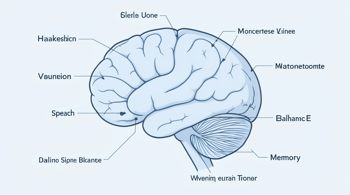
Symptoms depend chiefly on the tumor’s location, size, growth rate, and the pressure it creates. A tumor near regions controlling movement, language, vision, memory, or coordination may affect those functions, while a growth in a less active area may remain unnoticed until it becomes larger. Slow-growing tumors can produce subtle changes over months or years, whereas faster-growing tumors may cause problems sooner. 1 2 7
Headaches, nausea, and pressure-related symptoms
Headaches associated with a brain tumor may become more frequent, progressively more severe, or different from a person’s usual pattern. Medical sources describe headaches that may worsen when lying down, bending over, coughing, or straining, and pain that does not improve as expected with over-the-counter medicine. However, episodic headaches alone are nonspecific and usually have another explanation. 2 6 8
Nausea or vomiting is more concerning when it persists, occurs with headaches, or appears alongside neurological changes. A tumor can occupy space, obstruct the normal circulation of cerebrospinal fluid, or increase pressure inside the skull, producing combinations of headache, nausea, vomiting, drowsiness, confusion, or visual symptoms. These features do not establish a diagnosis, but progressive patterns require clinical assessment. 1 2 3
Neurological changes to monitor
Progressive weakness, numbness, tingling, clumsiness, or loss of coordination can indicate disruption in brain regions responsible for movement and sensation. Symptoms may be more noticeable on one side of the body, affect an arm, leg, or face, or lead to difficulty walking and loss of balance. Speech changes can include slurring, trouble understanding language, or difficulty finding the right words. 2 5 3
Vision-related warning signs include blurred vision, partial loss of vision, or difficulty processing what is seen. Hearing and other sensory changes may also occur depending on the affected structures. A symptom that steadily worsens, repeatedly returns, or appears together with weakness, speech difficulty, or loss of balance is more medically significant than an isolated, short-lived sensation. 3 6 8
Seizures and changes in thinking or behavior
Seizures can take different forms, including uncontrollable movements, unusual sensations, tingling, altered awareness, or loss of consciousness. A first-time seizure in an adult with no established seizure history requires prompt medical evaluation because seizures may result from a tumor, epilepsy, stroke, infection, or other neurological conditions. 2 4 9
Changes in memory, concentration, judgment, mood, or personality may develop when a tumor affects areas involved in cognition and emotion. A person may become unusually withdrawn, anxious, depressed, uninhibited, confused, drowsy, or inefficient at familiar tasks. Family members sometimes notice these changes before the affected person does, particularly when symptoms develop gradually. 2 3 8
When symptoms may signal an emergency
Sudden facial drooping, arm weakness, speech difficulty, severe confusion, sudden vision loss, or abrupt balance problems should be treated as a medical emergency because stroke is a possible cause. Stroke symptoms commonly develop within minutes or hours, while brain-tumor symptoms more often build over days, weeks, or months, although a tumor-related seizure can create sudden, stroke-like effects. 5 6 10
Emergency evaluation is also appropriate for a first seizure, sudden loss of consciousness, rapidly worsening neurological weakness, or severe headache accompanied by vomiting, confusion, or visual changes. The pattern cannot reliably distinguish a tumor from stroke, bleeding, infection, or another serious condition without examination and testing. Delaying assessment because symptoms are assumed to be a tumor, migraine, or stress can therefore be unsafe. 2 4 9
How clinicians investigate possible causes
Symptoms alone cannot confirm or exclude a brain tumor because epilepsy, stroke, Parkinson’s disease, migraine, and other conditions can produce similar findings. A clinician may review the timing and progression of symptoms, perform a neurological examination, and arrange brain imaging. Imaging can detect a mass, but a biopsy is often needed to identify the tumor type with certainty. 4 3
Evaluation considers whether symptoms are stable, recurring, or progressive and whether they correspond to a particular brain function. Treatment decisions, if a tumor is diagnosed, depend on its type, grade, size, location, and growth behavior. Options described in the clinical sources include surgery, radiation therapy, chemotherapy, or combinations of these approaches. Benign does not always mean clinically insignificant because pressure on vital structures can still impair function. 1 3
Sources
- Mayo Clinic, “Brain tumor: Symptoms and causes”
- UT MD Anderson Cancer Center, “8 Top Brain Tumor Symptoms & Signs”
- Merck Manual Consumer Version, “Overview of Brain Tumors”
- Rush, “What Are the Signs of a Brain Tumor?”
- Scripps Health, “Brain Tumor Symptoms and Early Warning Signs”
- University of Utah Health, “The Most Common Symptoms of a Brain Tumor”
- Duke Tisch Brain Tumor Center, “How Long Before Brain Tumor Symptoms Show?”
- Harvard Health, “Brain Tumor Overview”
- National Cancer Institute, “Brain and Spinal Cord Tumors: Symptoms”
- American Stroke Association, “Stroke Symptoms”
Authored by MistyMountainView team