How much does nursing assistant training cost in California: A reported cost analysis
Typical California training cost
Advertised California CNA tuition varies substantially by provider, format, and what the school includes. Examples in the supplied market data range from $1,400 at Annenberg School of Nursing to $1,450 at Radiant Care Nursing and Phlebotomy School, $1,798 for the standard CAL ACE Nursing Academy plan, $1,900 at SisuCare, and $2,900 at LGL College. These figures show why a single statewide price is not reliable. 1 3 8 9 10
A broader estimate places many California CNA programs between approximately $800 and $2,500 before optional living costs, while private accelerated programs may exceed that range. A separate program-cost analysis identifies $1,000 to $3,000 as a common tuition range nationally, with pricing affected by location, delivery format, equipment, registration charges, and institutional structure. 10
| Program example | Published price | Reported inclusions or format |
|---|---|---|
| Annenberg School of Nursing | $1,400 | Books, examination fee, shirt, drug screening, physical examination, and Live Scan |
| Radiant Care | $1,450 | 21-day state-approved program with theory, skills, and clinical training |
| CAL ACE standard plan | $1,798 | Theory, clinical experience, equipment access, guidebook, badge, and selected materials |
| LGL College | $2,900 | BLS card, Live Scan, eBooks, and state test fee |
Public college versus private school pricing
Community colleges can have a very different cost structure from private vocational schools. California Community Colleges list a resident enrollment fee of about $46 per unit, and a CNA course of roughly six to eight units would produce an estimated base tuition of approximately $276 to $368 before supplies and other charges. The final amount depends on the institution, course requirements, student eligibility, and applicable campus fees. 3
Private schools commonly package instruction, lab access, clinical placement, uniforms, testing support, or administrative services into one tuition figure. The published examples illustrate that packaging model. CAL ACE lists an enhanced inclusive plan at $1,948, while LGL lists a $2,900 total that includes several certification-related items. A lower tuition quote may therefore not represent a lower overall expenditure if required items are billed separately. 1 3
Expenses beyond advertised tuition
The total training budget can include expenses that are absent from headline tuition. Common additions identified in the research include textbooks, uniforms, suitable shoes, CPR or BLS certification, physical examinations, tuberculosis screening, immunizations, drug screening, background reviews, fingerprinting, transportation, and clinical supplies. Programs differ in which items they absorb, so written fee schedules are more useful than promotional summaries. 8 9
The California certification examination is a separate cost in many programs, although some schools include it in tuition. LGL states that its published total includes the state test fee, and Annenberg includes the Certified Nurse Exam fee. Other applicants must verify the current written, skills, or combined examination charge with California's designated testing contractor because examination registration is not automatically covered by enrollment. 1 2
- Ask whether books, uniforms, equipment, and identification materials are included.
- Confirm whether Live Scan, medical clearance, screening, and immunizations are separate charges.
- Determine whether the school submits or schedules the state examination.
- Request the balance due, payment deadlines, refund terms, and retake policy in writing.
Training requirements and delivery formats
California-approved nurse assistant education combines classroom instruction with laboratory or supervised clinical practice. The supplied research identifies a minimum of 160 training hours, meaning a fully online pathway cannot replace every required in-person component. CAL ACE describes online theory paired with in-person clinical rotation, while LGL describes an arrangement with six weeks of online theory followed by six weeks of in-person clinical work. 1 6 7
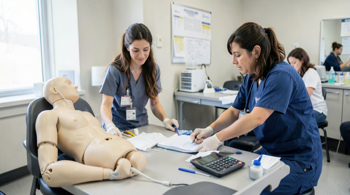
Program length varies considerably. LGL lists 24 class days over 12 weeks for its weekend schedule, Radiant Care reports a 21-day program, and Annenberg describes 24 days of classroom and clinical coursework. These accelerated schedules may reduce time away from employment, but they can require long clinical days and rapid completion of health, documentation, and screening requirements. 1 8 9
Ways students may reduce out-of-pocket cost
Students may find tuition assistance through community-college financial aid, workforce-development agencies, employer sponsorship, healthcare-facility training arrangements, nonprofit programs, or California-approved workforce grants. Some employer pathways link training support to an employment commitment, so the financial terms, required service period, repayment provisions, and job conditions should be reviewed before acceptance. 2 11
Federal Student Aid eligibility rules apply to participating postsecondary institutions and approved programs, but not every private CNA course qualifies for federal assistance. CareerOneStop provides training-search and occupational resources that can help compare public and private routes. The California Department of Public Health maintains a directory of approved nurse assistant training programs organized by county, which is important because approval status affects eligibility for the certification pathway. 5 6 11
Regulatory and financial checks before enrollment
California's Department of Public Health is the relevant state oversight authority for nurse assistant training approval and publishes county-based program information. A prospective student should verify that the specific campus and course are approved, rather than relying only on a school's general statement about accreditation or testing. Approval, clinical access, attendance requirements, and examination eligibility can directly affect whether tuition leads to certification. 6
Cost comparisons also involve practical risks. A course may advertise a single tuition number while excluding examination fees, medical documentation, fingerprinting, equipment, or a second examination attempt. Private career programs can offer structured schedules and bundled services, while community-college routes may have lower base tuition but more separate administrative or supply requirements. The meaningful comparison is the complete cost through examination eligibility, not the initial enrollment figure. 3 4 10
How to compare the total investment
A realistic comparison should place tuition, mandatory fees, travel, unpaid clinical time, examination charges, and possible retesting in one worksheet. The published examples suggest that California applicants may encounter totals from around $1,400 to $2,900 at private providers, while public-college base tuition can be far lower before additional requirements. Nursing assistant work is generally an entry-level healthcare pathway requiring postsecondary nondegree training, so completion speed and certification outcomes should be assessed alongside price. 1 3 9 12
Useful comparison questions include whether clinical hours are guaranteed, whether the school reports examination outcomes, which expenses are bundled, and what happens if a student withdraws or fails a required component. The California Employment Development Department and the U.S. Bureau of Labor Statistics provide occupational information for evaluating the broader employment context, but neither source changes the school-specific obligation to confirm approval, fees, and eligibility directly with the provider or state testing authority. 6 12
Sources
- LGL College, Nurse Assistant Weekend CNA Program
- Prometric, California Nurse Aide Examination
- California Community Colleges Chancellor's Office, Student Fee Summary
- American Red Cross, CNA Training
- CareerOneStop, Find Training
- California Department of Public Health, Certified Nurse Assistant Training Programs
- CAL ACE Nursing Academy, CNA Program
- Radiant Care Nursing and Phlebotomy School, CNA Program
- Annenberg School of Nursing, Nurse Assistant Admissions
- SisuCare Education, CNA Training Costs
- Federal Student Aid, Eligibility
- U.S. Bureau of Labor Statistics, Nursing Assistants and Orderlies
Authored by MistyMountainView team