Natural tips for supporting healthy digestion: An evidence-based guide to daily habits
Natural tips for supporting healthy digestion begin with the everyday habits that influence the gastrointestinal system: eating a varied, fiber-rich diet, reducing stress, exercising regularly, sleeping adequately, and paying attention to persistent symptoms. Cleveland Clinic gastroenterology guidance describes diet and day-to-day routines as important factors in digestive health, which also relates to immune function, mood, energy, weight management, sleep, and concentration.1
Build fiber gradually through whole foods
Fiber supports bowel regularity, but the appropriate amount varies by age and sex. General guidance places adult needs at approximately 21 to 38 grams daily, while another commonly cited range is 22 to 34 grams. Increasing intake gradually is important because a sudden change can contribute to gas or bloating. Adequate fluid intake helps fiber function more effectively and supports softer stools.23
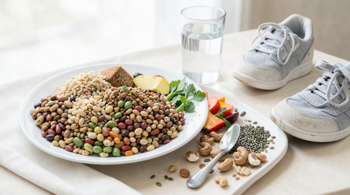
Useful sources include beans, lentils, whole grains, fruits, vegetables, nuts, and seeds. These foods provide different types of fiber and can be incorporated across meals rather than concentrated in one large serving. A gradual approach may be especially relevant for people who currently eat little fiber or who experience digestive discomfort after abrupt dietary changes. Fiber supplements are not automatically necessary when meals can provide varied plant foods.47
Pair fiber with hydration and movement
Fluids and fiber work together in constipation prevention and management. National digestive health guidance identifies fiber-rich foods, sufficient liquids, and regular physical activity as nutrition and lifestyle measures that may help prevent or relieve constipation. Hydration does not replace medical assessment when symptoms are persistent, but it is a basic factor to consider when stools are hard or difficult to pass.2
Physical activity is also associated with bowel regularity and broader digestive support. The relevant guidance does not require a particular exercise program in the supplied evidence, so the practical focus is consistency rather than intensity. Movement can be considered alongside dietary changes, fluid intake, sleep, and stress management. Introducing several major changes at once can make it difficult to identify which habit is affecting symptoms.6
Slow down during meals
Digestion starts in the mouth, making eating pace a relevant part of meal comfort. Nutrition experts cited in the research describe thorough chewing, slower eating, stopping when comfortably satisfied, and avoiding rushed meals as potentially useful behaviors. Chewing also reduces the chance of swallowing excess air, a factor that may matter for people who notice bloating while eating quickly.1
Meal awareness can also help identify personal patterns without requiring broad food restrictions. Recording the meal, portion, timing, and symptoms may reveal whether discomfort follows a consistently repeated trigger. The research cautions against assuming that removing numerous food groups is the first or universal answer. Medically supervised elimination diets may have a role for selected conditions, but prolonged unnecessary restriction can narrow dietary variety and complicate nutrition.4
Consider fermented foods carefully
Fermented foods such as yogurt with live cultures, kefir, sauerkraut, kimchi, and miso may provide beneficial microorganisms. Tolerance differs, however, and fermented foods are not a guaranteed solution for every digestive complaint. Introducing one food at a time makes it easier to observe individual responses, particularly when products contain ingredients, acidity, spice, or fermentable carbohydrates that may themselves affect symptoms.5
Probiotic supplements require more caution than general claims about “good bacteria” suggest. The National Center for Complementary and Integrative Health defines probiotics as live microorganisms and notes that evidence varies according to the specific microorganism and health condition. Benefits therefore cannot be assumed across all products or symptoms. Selection, duration, and suitability are matters to discuss with a qualified healthcare professional, especially when symptoms are unexplained.5
Manage stress, sleep, and food triggers
The digestive system is closely connected with the nervous system, and stress can influence digestive comfort and function. Guidance from digestive health clinicians includes stress management and adequate sleep among habits that support the gut. Practical methods should be selected according to personal circumstances, but the central principle is to avoid treating digestion as an isolated food issue when stress, sleep disruption, and daily routines may also be involved.16
Individual triggers deserve attention, but broad prohibitions are not supported by the supplied evidence. Excessive fatty foods, carbonated drinks, artificial sweeteners, heavily processed snacks, excess alcohol, or other specific foods may worsen symptoms for some people. A symptom record can support a more precise discussion with a clinician or dietitian. Nutrient-dense eating patterns generally emphasize vegetables, fruits, whole grains, legumes, nuts, and seeds rather than rigid universal rules.10
Recognize limits and warning signs
Healthy digestion is not defined by the absence of every occasional symptom. Bloating, constipation, diarrhea, reflux, or abdominal discomfort can have multiple causes, and a self-directed dietary experiment cannot establish a diagnosis. Persistent or disruptive symptoms should be assessed by a healthcare professional rather than managed solely through supplements, restrictive diets, or online advice. This is particularly important when symptoms represent a new or significant change.9
Medical evaluation is especially important for blood in the stool, unexplained weight loss, severe or persistent abdominal pain, ongoing vomiting, or major changes in bowel habits. These signs should not be attributed automatically to ordinary food intolerance or poor gut health. Dietary changes can support general wellness, but they do not substitute for diagnosis and treatment when a concerning symptom is present.9
Sources
- Cleveland Clinic, “4 Things You Can Do To Improve Gut Health,” https://health.clevelandclinic.org/how-to-improve-your-digestive-tract-naturally
- National Institute of Diabetes and Digestive and Kidney Diseases, “Eating, Diet, and Nutrition for Constipation,” https://www.niddk.nih.gov/health-information/digestive-diseases/constipation/eating-diet-nutrition
- Mayo Clinic, “Fiber: How to Increase the Amount in Your Diet,” https://www.mayoclinic.org/healthy-lifestyle/nutrition-and-healthy-eating/in-depth/fiber/art-20043983
- Harvard T.H. Chan School of Public Health, “Fiber,” https://nutritionsource.hsph.harvard.edu/carbohydrates/fiber/
- National Center for Complementary and Integrative Health, “Probiotics: What Do We Know?” https://www.nccih.nih.gov/health/probiotics-what-do-we-know
- Johns Hopkins Medicine, “5 Ways to Improve Your Digestive Health,” https://www.hopkinsmedicine.org/health/wellness-and-prevention/5-ways-to-improve-your-digestive-health
- U.S. Food and Drug Administration, “Fiber,” https://www.fda.gov/food/nutrition-education-resources-materials/fiber
- MedlinePlus, “Constipation: Self-care,” https://medlineplus.gov/ency/patientinstructions/000193.htm
- American Gastroenterological Association, Patient Resources, https://patient.gastro.org/
- U.S. Department of Agriculture, Dietary Guidelines for Americans, https://www.dietaryguidelines.gov/resources/2020-2025-dietary-guidelines-online-materials
Authored by MistyMountainView team