Ways to manage eczema flares at home: A clinical review of practical relief and safety
Eczema flares can bring sudden redness, dryness, cracking, intense itching, and sometimes blistering, bleeding, crusting, or fluid leakage. Common home-management approaches include fragrance-free creams, humidified air, short lukewarm bathing, cool compresses, and careful trigger avoidance. The most useful routine depends on the person’s symptoms, skin sensitivity, and previous treatment plan.
Recognising an eczema flare
An eczema flare is a period when one or more affected areas become substantially more inflamed, itchy, dry, or sore. Atopic dermatitis is the most common eczema type, and moderate-to-severe disease has been associated with an average of nine flares per year, although individual episodes may last days to weeks depending on severity. Typical areas include the hands, feet, chest, neck, knees, and elbows. 1
Symptoms can include red, gray, or brown patches, flaky or cracked skin, severe nighttime itching, small bumps, blisters, bleeding, crusting, and leaking fluid. These signs can overlap with contact dermatitis or infection, so a flare that spreads, persists, or changes noticeably should not automatically be treated as routine eczema. Worsening redness, oozing, or crusting warrants advice from a clinician or pharmacist. 1
Moisturising and repairing the skin barrier
Moisturising is described as the foundation of eczema care because affected skin loses moisture more readily and becomes vulnerable to irritants. Fragrance-free, hypoallergenic products intended for sensitive or eczema-prone skin are generally emphasized. Ointments contain fewer preservatives and provide the strongest moisture seal, while creams are less greasy and may be more practical during the day. Lotions are lighter but often require more frequent application. 2
Apply a liberal layer several times daily, with particular attention after bathing or washing. Applying moisturiser while the skin is still slightly damp helps retain hydration. A simple ingredient list may reduce exposure to potential irritants, but suitability varies between individuals. A product that stings, increases redness, or causes a new rash should be discontinued and discussed with a healthcare professional. 7
Bathing, cleansing, and household irritants
Short, lukewarm baths or showers are generally less drying than long, hot ones. Over-washing, hot water, and moisture-stripping soaps can weaken the skin barrier, even when a cleanser is marketed as gentle. Fragrance-free cleansers, soap substitutes, and bath products designed for sensitive skin can limit unnecessary irritation. Patting the skin dry instead of rubbing it also reduces mechanical trauma before moisturiser is applied. 3
Common irritants include harsh soaps, detergents, washing-up liquid, bubble bath, shampoo residue, and some biological laundry powders. Heat and sweat can aggravate symptoms, as can rough fabrics such as wool. Loose, breathable cotton clothing may create less friction than scratchy or tight materials. Keeping a brief record of products, clothing, weather, sweating, and stress around each flare can help identify personal patterns without assuming that every suspected trigger is relevant. 4
Cooling itch and reducing scratching
A cool, damp compress can soothe itching and burning during an active flare. A clean towel moistened with cool water, wrung out, and placed over the affected skin may reduce the urge to scratch; moisturiser can be applied afterward. Keeping fingernails short and smooth is another practical measure because repeated scratching damages the barrier and can raise the risk of secondary infection. 6
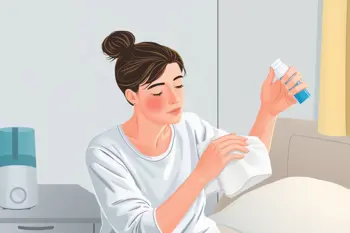
Scratching may occur unconsciously while watching television or sleeping, creating a repeated trauma and inflammation cycle. Protective clothing, covering the hands at night, and replacing scratching with gentle pressure can help reduce damage, although these measures do not treat the underlying inflammation. Nighttime itch may disrupt sleep, and some antihistamines are used to address sleep disturbance, but medication choice and suitability should be checked with a pharmacist or clinician. 3
Wet wraps, oatmeal baths, and humidified air
Wet-wrap therapy is a home technique used to intensely hydrate skin and reduce inflammation. It generally involves applying moisturiser or prescribed topical treatment, followed by a damp layer of clothing or bandaging and a dry layer over it. Because prolonged moisture and occlusion can irritate skin or encourage infection if misused, instructions from a healthcare professional are particularly important for children, extensive flares, or weeping skin. 8
Oatmeal baths are included in eczema flare toolkits as a soothing option, while a humidifier may help in dry indoor environments, especially during winter. Humidifier maintenance matters because a poorly maintained device can introduce unwanted contaminants into the air. Neither approach replaces regular moisturising or prescribed treatment. A stable, comfortable room temperature can also reduce irritation associated with overheating and sweating. 2
Over-the-counter treatment and safety limits
For a mild, localised flare, over-the-counter hydrocortisone may provide short-term relief when used exactly as directed on the label. Research information supplied for this guide identifies short courses, up to seven days, as a typical limit for minor flares. Extra caution is needed on the face, eyelids, skin folds, broken skin, or in young children, where professional guidance is more important. 5
Home care has limits. Medical advice is appropriate when symptoms do not improve, interfere with sleep or daily activities, spread widely, or repeatedly return despite consistent barrier care. Oozing, yellow crusts, increasing warmth, swelling, pain, or rapidly worsening redness may indicate infection rather than an uncomplicated flare. A clinician can assess whether a topical steroid, a non-steroid option such as a calcineurin inhibitor or crisaborole, or another treatment is appropriate. 8
Building a prevention routine
Prevention depends on consistency rather than a single remedy. Regular moisturising, brief lukewarm bathing, gentle cleansing, breathable clothing, and avoidance of known irritants work together to protect the barrier. The routine should be adjusted to climate and lifestyle: ointments may suit very dry skin or nighttime use, while creams may be more manageable during warmer daytime conditions. Personal triggers differ, so broad food or allergen restrictions should not be assumed without qualified advice. 2
Trigger management also includes reducing exposure to environmental allergens when a clear relationship is observed, controlling sweat and overheating, and noting stress or seasonal changes that coincide with flares. Eczema is a long-term inflammatory condition with periods of improvement and worsening, so maintenance remains necessary even when the skin appears calm. Persistent or recurrent disease should be reviewed rather than managed indefinitely with unsupervised over-the-counter medication. 1
Sources
- Cleveland Clinic, “Eczema Flare-Ups: Common Triggers and Relief”
- Eczema Association of Australasia, “Eczema Flare Toolkit”
- Healthline, “Expert tips for managing eczema flare-ups”
- Pharmica, “How to treat eczema flare-ups: A practical guide”
- Doctronic, “How To Manage Eczema Flares At Home”
- Health.com, “12 Ways To Stop Eczema Itch Without Scratching”
- Cleveland Clinic, “How To Choose the Best Eczema Cream”
- Seattle Children’s Hospital and Ubie Doctor’s Note, wet-wrap and atopic dermatitis guidance
Authored by MistyMountainView team