Best Knee Brace for Knee Support: An Evidence-Based Selection Guide
For people looking for the best knee brace for knee support, the central issue is not simply product popularity. Knee braces are designed for different situations, including osteoarthritis, ligament instability, swelling after activity, patellar tracking problems, sports participation, and recovery after surgery. Medical experts and physical therapists generally emphasize matching the brace’s mechanical function to the underlying knee problem. 1
What knee support can and cannot do
A knee brace may improve stability, provide compression, limit painful movement, reduce stress on injured tissues, or increase confidence during activity. The expected benefit depends on whether the device is a soft sleeve, a functional brace, a rehabilitative orthosis, or an osteoarthritis unloader. A sleeve can provide mild support and proprioceptive feedback, but it should not be treated as a substitute for structural stabilization when a ligament is torn or the knee is significantly unstable. 5
Knee pain can result from overuse, swelling, cartilage damage, tendon irritation, osteoarthritis, or ligament injury. That range of causes explains why a brace that feels comfortable during walking may not provide adequate protection during a pivoting sport or post-operative recovery. A medical assessment is particularly important when the knee gives way, because a hinged design may be more appropriate than a compression-only sleeve. 9
Brace categories and their intended roles
Compression sleeves are typically associated with mild support, swelling management, warmth, and sensory feedback. Functional hinged braces are intended to control unwanted movement and support unstable knees after injury. Rehabilitative braces are used under clinical direction to protect healing tissues or restrict motion after surgery. Prophylactic braces are designed around injury prevention, although their suitability depends on the activity and the individual’s risk profile. 9
Patellofemoral supports commonly use a donut-shaped or horseshoe-shaped buttress to influence kneecap tracking. Osteoarthritis unloader braces use a different approach by shifting pressure away from the damaged compartment of the joint. Hinged braces are commonly considered for medial or lateral collateral ligament instability, while a simple sleeve is generally less mechanically capable of controlling a ligament tear. 10
| Support type | Typical purpose | Principal limitation |
|---|---|---|
| Compression sleeve | Mild support, swelling comfort, proprioception | Limited structural stability |
| Hinged functional brace | Ligament instability and controlled movement | Requires accurate fitting and adjustment |
| Patellar brace | Kneecap tracking and front-of-knee symptoms | Not designed for every injury pattern |
| Unloader brace | One-sided osteoarthritis pressure relief | Needs condition-specific alignment |
Examples of designs found in the market
Independent testing reported the Bauerfeind Sports Knee Support NBA as a top overall selection, describing its gel knee pad and side stabilizer. The Bauerfeind Sports Knee Support uses anatomically contoured padding around the kneecap, 3D AIRKNIT material, moisture-wicking construction, integrated adhesive zones, and medical-standard compression. The manufacturer describes these features as supporting circulation, comfort, freedom of movement, and sensorimotor feedback. 1 2
Other documented designs illustrate how varied knee support can be. The Neenca ACE-51 combines a contoured patella gel pad, flexible side stabilizers, breathable knit fabric, and anti-slip silicone strips. The Breg Freestyle Plus OA uses a wrap-around design, breathable cushioning, contoured straps, and a thumbwheel for adjustment intended to unload a selected knee compartment in mild to moderate unicompartmental osteoarthritis. 6 3
When a sleeve is insufficient
A compression sleeve may be reasonable for activity-related swelling, mild soreness, or a desire for light support without substantially restricting movement. It is not equivalent to a brace with hinges or rigid sidebars. The Ossur FormFit Pro Knee Flite, for example, is described as a compression sleeve with dynamic knit construction, airflow in the popliteal area, moisture management, and FoldLock edges intended to reduce slipping. These features address fit and comfort rather than replacing a clinician-directed stabilization plan. 4
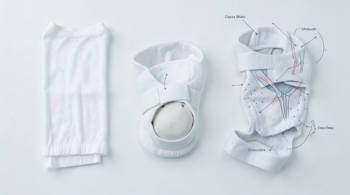
More substantial instability may require a functional or rehabilitative design. The Bauerfeind SofTec Genu is described as using a four-point system, lateral aluminum sidebars, and a hinge system for ACL tears, ligament injuries, and complex instability. Such a brace is more technically demanding than a sleeve and may require selection of the correct side, size, hinge configuration, and motion settings. Clinical guidance remains important because excessive restriction or incorrect alignment can interfere with safe movement. 7
Fit, sizing, and daily wear
Fit is a safety issue as well as a comfort issue. A brace that is too loose can slide or roll and fail to provide consistent support, while one that is too tight may pinch, irritate the skin, or restrict circulation. Sizing methods vary by design. The GenuTrain instructions call for measurements 14 centimeters above and 12 centimeters below the knee, whereas the Ossur sleeve uses thigh and calf measurements six inches above and below the kneecap. 3 4
Measurement instructions should be followed for the exact brace rather than transferred from another model. The GenuTrain range includes 13 sizes, including comfort sizes for a more conical leg shape, and its guidance recommends measuring directly against the skin while standing. Warning signs include numbness, tingling, sharp pain, skin irritation, or restricted circulation. Those symptoms indicate that the brace should be removed or adjusted and that professional advice may be needed. 3 6
Risks, maintenance, and clinical oversight
A brace can mask symptoms without correcting the underlying cause, and relying on the wrong support may delay assessment of an injury. Incorrectly fitted hinges, straps, or unloading mechanisms may create pressure points or alter movement. Professional fitting is especially relevant after surgery, with suspected ligament tears, substantial instability, or osteoarthritis affecting one compartment of the knee. The intended duration of wear also differs between preventive and rehabilitative bracing. 11 14
Maintenance affects hygiene, elasticity, and performance. Several modern supports use breathable, moisture-wicking knit materials, and the Bauerfeind Sports Knee Support is described as washable. Regular inspection can identify stretched fabric, damaged straps, worn anti-slip strips, or changes in padding that affect positioning. A brace should be considered one part of a broader care plan rather than a replacement for diagnosis, rehabilitation, strengthening, or activity modification. 2 15
How to compare knee supports objectively
The most useful comparison begins with the knee problem, not the brand name. A reader can record whether the main issue is swelling, front-of-knee discomfort, one-sided osteoarthritis pain, giving way, a confirmed ligament injury, or post-operative protection. The next questions concern the level of motion control required, whether the brace stays in place during the intended activity, how it breathes behind the knee, and whether the sizing chart uses thigh, calf, or above-and-below-knee measurements. 5
Independent evaluations have considered materials, design, and price, while manufacturer information supplies construction details and sizing requirements. Those sources should be read together because laboratory or editorial descriptions do not establish that a brace will treat a specific diagnosis. A physician or physical therapist can determine whether compression, patellar guidance, hinge protection, or compartment unloading is clinically appropriate, and can identify when pain requires investigation rather than additional external support. 1 12
Sources
- Good Housekeeping, “7 Best Knee Braces of 2025, Reviewed by Medical Experts”
- Bauerfeind USA, “Sports Knee Support”
- Bauerfeind UK, “GenuTrain Knee Support”
- Brace Direct, “Ossur FormFit Pro Knee Flite Compression Sleeve”
- CFA Orthopedics, “How to Choose the Right Knee Brace”
- Neenca, “Professional Knee Brace ACE-51”
- Brace Direct, “Bauerfeind SofTec Genu Knee Brace”
- Breg, “Freestyle Plus OA Knee Brace”
- American Academy of Orthopaedic Surgeons, “Knee Braces: Types and Functions”
- Cleveland Clinic, “Knee Braces”
- Mayo Clinic, “Knee Brace”
- WebMD, “Knee Braces: What to Know”
- Journal of Orthopaedic & Sports Physical Therapy, patellar tracking research
- Verywell Health, “How to Choose a Knee Brace”
- MedlinePlus, knee brace patient guidance
Authored by MistyMountainView team