Painting Classes for All Skill Levels: A Report on Formats, Mediums, and Learner Expectations
Painting classes for all skill levels are designed to accommodate people who are holding a brush for the first time as well as experienced artists refining technique. The documented programs reviewed here include acrylic, oil, abstract, still-life, landscape, and general painting instruction, with formats ranging from single-session workshops to eight-week courses.
How all-level painting classes are structured
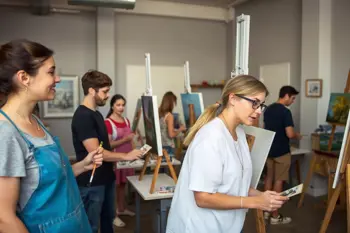
All-level courses generally combine demonstrations, technical instruction, and individualized feedback. Railyard Arts Studio describes a relaxed class in which students choose oil or acrylic, learn palette setup, color mixing, layering, and the use of light and shadow, while receiving instruction tailored to personal experience. Students may work from photographs or real-life objects, and no previous art experience is required. 1
Other programs use a more academic progression. Art Be You presents acrylic instruction for absolute beginners through advanced artists and emphasizes a professional studio setting and a structured “System of Seeing.” Its listed September course consists of four sessions and includes materials, illustrating how the phrase “all levels” can refer to differentiated guidance within one class rather than identical assignments for every participant. 2
Mediums covered in the documented programs
Acrylic appears in beginner and intermediate-focused offerings because classes can address brush selection, paint application, color mixing, composition, and still-life painting in a relatively concentrated format. Downriver Council for the Arts lists a six-week beginning acrylic course covering how an artist sees, tools, materials, color theory, composition, and painting techniques. Wallkill River Center for the Arts similarly begins with brushes, paint mixing, composition, and fundamental acrylic methods for people with little or no painting knowledge. 6 8
Oil painting programs place greater emphasis on observation, layering, values, brushwork, and the handling of a slower-drying medium. George Mason University’s adult introductory oil course combines lectures, demonstrations, art-history research, and one-on-one instruction across eight weeks. Sedona Arts Center documents a three-hour Bob Ross oil-painting session using the wet-on-wet method, with materials included and admission for all experience levels, including participants aged 12 and older when accompanied by an adult. 3 4
Skills and learning outcomes
Color theory and composition are recurring foundations across the research. Kimball Art Center’s Painting Concepts course lists composition, color theory, brushwork, priming, layering, glazing, and varnishing, with the stated aim of helping students develop an individual style and leave with a finished painting. These subjects can serve beginners by establishing vocabulary and process, while giving more experienced painters specific areas for review or experimentation. 5
Documented workshop content also includes expressive and contemporary approaches. The Art Studio NY’s abstract acrylic workshop describes instruction in brushwork, color relationships, values, composition, texture, layering, and palette-knife techniques, along with live demonstrations and personalized guidance. Its oil program references still life, landscapes, floral impressionism, glazing, texture, paint application, and composition. Such range shows that “all skill levels” may cover both technical foundations and personal interpretation. 7
Schedules, ages, and class length
Class duration varies substantially, so schedule suitability is a practical distinction. The documented examples include a three-hour workshop at Sedona Arts Center, four Thursday sessions at Wallkill River Center for the Arts, six weeks at Kimball Art Center and Downriver Council for the Arts, seven weeks at Railyard Arts Studio, four sessions at Art Be You, and eight Saturdays at George Mason University. Meeting times range from weekday afternoons and evenings to Saturday mornings. 1 2 3 4 5 6 8
Age eligibility is not uniform. George Mason University identifies its adult oil course as ages 18 and older, Downriver Council for the Arts lists beginning acrylics for ages 14 and up, and Sedona Arts Center permits participants aged 12 and older with an adult. Online providers expand the range further: Outschool offers live online art classes for children and teenagers organized by age and learner needs. 3 6 4 9
Materials, tuition, and logistical differences
Materials policies require careful comparison because they differ by provider and medium. Railyard Arts Studio states that materials are not included and supplies a recommended materials list. Kimball Art Center lists sketchbooks, canvas paper, oil or acrylic paints, brushes, a palette, odorless mineral spirits, linseed oil, and a glass jar. Downriver’s acrylic course identifies paint, several brush sizes, six canvases, a palette, paper towels, and other tools. 1 5 6
Published tuition also spans different instructional models. The listed examples include $100 for Sedona Arts Center’s three-hour oil workshop, $140 for Wallkill members or $160 for nonmembers at Wallkill River Center for the Arts, $167 per session at Downriver, $245 plus a material list at Kimball, $300 for Art Be You’s four-session acrylic course with materials included, $310 for Railyard’s seven-week class, and $450 for George Mason’s eight-week adult oil course. These figures are course-specific, not a universal market range. 4 8 6 5 2 1 3
Online, social, and formal learning options
In-person classes are not the only format. Painting with a Twist describes instructor-led social painting events intended for people without prior experience, while the Art Students League of New York lists painting classes and workshops across multiple media and formats. Michaels provides arts-and-crafts classes that can include painting projects, and MoMA offers courses and workshops connected to modern and contemporary art practices. 11 12 13 14
Online catalogs provide different forms of flexibility but require more independent organization. Coursera aggregates remote painting courses that can be taken at an individual pace; Skillshare lists on-demand lessons in watercolor, acrylic, oil painting, techniques, and projects; Udemy includes courses across media and learner levels; Creativebug provides on-demand art instruction; and Domestika catalogs structured online painting courses. The main tradeoff is between schedule flexibility and the immediate, physical feedback available in a studio classroom. 15 16 17 18 19
Risks and criteria for evaluating a class
“All skill levels” does not guarantee that every course will match every learner’s goals. A beginner may need direct instruction in brush handling and color mixing, while an advanced student may require critique, independent project development, or specialized medium guidance. Published descriptions should therefore be checked for teaching method, class length, age rules, location, subject choice, materials responsibility, cancellation terms, and whether instruction is group-based or individualized. 1 3 4
Additional friction points include supply costs, solvent handling for oil painting, transportation to a physical studio, fixed meeting times, and the possibility that a listed session may be sold out or already underway. The Art Studio NY pages document sold-out examples, while Railyard and several other providers specify separate registration or materials conditions. A neutral comparison should treat schedules and prices as time-sensitive course details rather than permanent availability claims. 7 10 1
Sources
- Railyard Arts Studio
- Art Be You
- George Mason University Mason Academy
- Sedona Arts Center
- Kimball Art Center
- Downriver Council for the Arts
- The Art Studio NY
- Wallkill River Center for the Arts
- Outschool
- The Art Studio NY oil painting course
- Painting with a Twist
- The Art Students League of New York
- Michaels
- Museum of Modern Art
- Coursera
- Skillshare
- Udemy
- Creativebug
- Domestika
Authored by MistyMountainView team