Glaucoma surgery hospitals: A data-informed overview of where and how glaucoma surgery is delivered
The search intent behind “Glaucoma surgery hospitals” matches the kind of clinical overview reflected in the provided materials. The sources describe glaucoma care pathways that can include medications, laser therapy, and surgical intervention, along with specific procedure options at ophthalmology programs and eye centers. The same materials also emphasize that surgery aims to lower intraocular pressure and help slow or prevent further vision damage rather than restore already lost sight.
Understanding glaucoma surgery hospitals as care systems, not just operating rooms
Public descriptions of glaucoma services repeatedly frame surgical care as a component of a longer treatment plan. Mayo Clinic notes that reduction of intraocular pressure is the only reliable treatment and that specialists may offer medications, laser treatment, or surgical intervention depending on glaucoma type, severity, and patient risk factors. This positions a “glaucoma surgery hospital” as a multidisciplinary program that diagnoses, selects candidates, and monitors progression over time. 1
That system view also appears in international hospital descriptions. Acibadem Hospitals describes glaucoma surgery as a vision-protection decision when eye drops or laser treatment are not enough, and describes techniques such as trabeculectomy, drainage implants, or minimally invasive procedures selected according to glaucoma type and stage. In other words, surgical capability is inseparable from preoperative evaluation, postoperative follow-up, and ongoing intraocular pressure management. 2
What hospitals commonly offer: procedure categories seen in published program descriptions
Named hospital and clinic pages in the provided research emphasize recurring surgical categories. Mayo Clinic lists procedures offered through its Glaucoma Program, including traditional filtering surgery such as trabeculectomy and drainage and implant surgeries such as Ahmed glaucoma valve placement and Baerveldt glaucoma implant surgery. It also describes minimally invasive options and device implantation such as iStent Inject placement and XEN Gel Stent placement. 1
Other entries align with that same spectrum. Almoosa Clinics and Day Surgery Center, for example, presents glaucoma surgical options such as trabeculectomy and drainage-focused implants like Ex-PRESS Mini Shunt, and minimally invasive glaucoma surgery approaches such as iStent inject and PRESERFLO microshunt. While not all entries are peer-reviewed clinical guidelines, the procedure types described across sources illustrate how hospitals cluster surgical offerings around intraocular pressure reduction goals. 9
| Procedure type category | Examples mentioned in provided research | Stated role in care |
|---|---|---|
| Traditional filtration surgery | Trabeculectomy, trabeculotomy | Lower intraocular pressure via drainage pathway creation or enhancement 1 |
| Glaucoma drainage devices / implants | Ahmed glaucoma valve, Baerveldt implant, XEN Gel Stent | Provide an outflow route to reduce intraocular pressure 1 |
| MIGS and micro-invasive options | iStent Inject placement, iStent inject, goniotomy | Often used in mild to moderate open-angle cases and to reduce drop burden 1199 |
| Adjunct and laser-related interventions | Cyclophotocoagulation, laser peripheral iridoplasty/iridotomy, selective laser trabeculoplasty | Part of a broader treatment pathway when medications or surgery alone are insufficient 1 |
Where surgery is delivered: academic centers, specialty hospitals, and internationally organized programs
The provided materials include university-connected and health-system models as well as specialized eye hospitals. Legacy Devers Eye Institute describes itself as an internationally recognized center for research in the prevention and treatment of glaucoma, including the Thelma and Gilbert Schnitzer Comprehensive Glaucoma Center established in 2007 to bring together glaucoma clinical care and research. This kind of model typically supports high-complexity cases and structured follow-up pathways. 3
Individual clinician profiles also reflect how care is organized within hospital ecosystems. UCSF Health describes Dr. Yvonne Ou as specializing in glaucoma therapies including minimally invasive procedures, filtering surgery, and drainage implant surgery, and notes she performs combined cataract and glaucoma surgery. Such role descriptions suggest that hospitals often centralize expertise in subspecialty-trained surgeons who can tailor surgical strategy to coexisting eye conditions. 12
Eligibility and decision points: when hospitals describe surgery becoming necessary
Across the sources, the timing of surgery is tied to insufficient intraocular pressure control with other modalities. Acibadem International frames glaucoma surgery as relevant when eye drops or laser are not enough, and presents the goal as lowering intraocular pressure and reducing ongoing stress on the optic nerve. The page also emphasizes that surgery is not intended to restore permanently lost vision, but to help slow or prevent further damage. 2
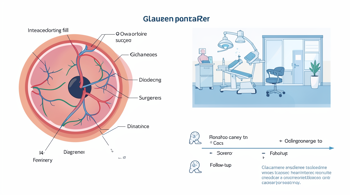
Similarly, glaucoma surgery descriptions in other entries emphasize uncontrolled intraocular pressure and progressive optic nerve damage. Albany Regional Eye Surgery Center states that surgery becomes essential when medications and in-office laser treatments are no longer effective, and identifies uncontrolled intraocular pressure, moderate to advanced glaucoma, inability to tolerate drops, and need for a surgical strategy as reasons for surgical consideration. These decision triggers align with the intraocular pressure reduction framing seen in larger academic program descriptions. 4
What to verify in a glaucoma surgery hospital: surgical capability, governance, and follow-up realities
A neutral assessment of “glaucoma surgery hospitals” should focus on verifiable clinical capability rather than marketing language. Mayo Clinic lists a wide procedural suite through its Glaucoma Program, implying an internal governance structure for diagnosis, procedure selection, and monitoring progression. For patients, that translates into the practical need to confirm that the hospital can match procedure choice to glaucoma type and severity and can provide longitudinal monitoring, not only an index procedure. 1
Equally important are regulatory and safety friction points that can affect outcomes and logistics. The provided research does not supply complication rates, but it does include a PubMed record describing a study where patient information was anonymized after surgery in a retrospective collection design. That detail illustrates how real-world evidence and data collection depend on study design and privacy processes, which can influence how hospitals document outcomes and research participation. 21
- Confirm the range of glaucoma surgeries discussed on the program page (for example trabeculectomy, drainage implants, and MIGS) and whether combined cataract and glaucoma surgery is offered. 112
- Request clarity on which intraocular pressure targets and progression metrics are used for monitoring, since sources repeatedly frame surgery as a method to reduce ongoing optic nerve stress. 21
- Check whether the hospital describes evidence-based treatment principles and research or innovation programs, as shown by Legacy Devers Eye Institute’s integration of clinical care and glaucoma research. 3
Risks, limitations, and ongoing maintenance: balancing expectations with irreversible disease biology
Risk communication is consistent across the provided materials: glaucoma treatment aims to prevent or slow additional vision loss, not reverse prior optic nerve injury. Ayushman Hospital and Health Services explicitly states that glaucoma surgery typically does not aim to improve vision, but rather to preserve vision related to optic nerve damage, and that surgery increases fluid drainage or lowers fluid production to reduce intraocular pressure. This framing matters for patient expectation-setting and for assessing whether a hospital’s clinical narrative aligns with realistic surgical goals. 10
Because glaucoma can progress silently, ongoing maintenance realities can differ from what patients expect from a one-time procedure. Westlake Eye Specialists describes an interventional approach that introduces minimally invasive glaucoma surgery earlier in the treatment process to reduce missed doses and improve sustained pressure control, indicating that postoperative and long-term management still remains necessary. The key limitation is that surgical lowering of intraocular pressure does not eliminate the need for follow-up monitoring for long-term disease stability. 8
Practical comparison across examples: what the sources suggest about surgical “profiles”
Some institutions publish broad procedure sets, which can be useful for understanding a hospital’s “profile” as a comprehensive program. Mayo Clinic’s Glaucoma Program lists multiple implant options, MIGS options, and laser procedures, including Ahmed glaucoma valve placement, Baerveldt glaucoma implant surgery, iStent Inject placement, XEN Gel Stent placement, and trabeculectomy. This breadth suggests a capability to handle diverse anatomic scenarios and disease severities under one program umbrella. 1
Other entries describe the adoption of advanced imaging or specific minimally invasive workflows as part of their surgical environment. The Newkerala report states that Army Hospital in Delhi performed India’s first 3D Flex Aqueous Angiography with iStent using a Spectralis system and a 3D operating microscope, describing real-time visualization of aqueous outflow pathways for precision. While such reporting is not a controlled clinical study, it illustrates that some hospitals emphasize technological visualization integrated with surgical planning. 22
Sources
- https://www.mayoclinic.org/departments-centers/glaucoma/overview/ovc-20524181
- https://acibademinternational.com/treatments/glaucoma-surgery/
- https://www.legacyhealth.org/services-and-resources/services/adult/eye-care/services-and-treatments/glaucoma
- https://albanyregionaleye.com/glaucoma-surgery/
- https://www.floridaeyespecialists.com/glaucoma-center/
- https://iclinix.in/glaucoma/
- https://westlakeeyes.com/interventional-glaucoma-austin/
- https://sanjivanieyehospital.com/glaucoma-surgery/
- https://almoosaclinics.com/glaucoma-surgery-in-dubai/
- https://www.ayushmanhhs.in/critical-glaucoma-surgery-at-dwarka-delhi/
- https://iclinix.in/glaucoma/
- https://www.ucsfhealth.org/providers/yvonne-ou
- https://healthcare.utah.edu/find-a-doctor/roya-garakani
- https://pubmed.ncbi.nlm.nih.gov/41886082/
- https://www.newkerala.com/news/o/army-hospital-delhi-performs-first-ever-high-tech-glaucoma-surgery-547
- https://lasik-plano.com/goniotomy/
Authored by MistyMountainView team