Natural remedies for managing dry eye syndrome: Evidence, limits, and practical care
Natural remedies for managing dry eye syndrome generally mean habits that support the eyes’ own tear film, rather than a homemade lubricant placed directly on the eye. Available clinical guidance indicates that warm compresses, eyelid care, frequent blinking, humidified air, and reduced exposure to smoke or wind may improve comfort, while preservative-free artificial tears remain the standard nonprescription option when actual lubrication is needed. 1
What dry eye syndrome involves
Dry eye syndrome develops when the eyes do not produce enough tears or when tears evaporate too quickly. The tear film contains an oily outer layer, a watery middle layer, and a mucin layer that helps spread moisture across the eye surface. Problems with any layer can cause burning, grittiness, redness, blurred vision, light sensitivity, or paradoxically excessive tearing. Aging, screen use, wind, smoke, certain medications, diabetes, and rheumatoid arthritis are among the reported contributors. 3
Meibomian gland dysfunction is particularly relevant to evaporative dry eye because these eyelid glands produce oils that slow tear evaporation. Blocked or unhealthy glands can make the tear film unstable, so natural care often targets the eyelids rather than attempting to replace tears with household oils or herbal preparations. Persistent symptoms may also reflect eyelid inflammation, medication effects, autoimmune disease, or another condition requiring examination. 6
Warm compresses and eyelid hygiene
A warm compress placed over closed eyelids may soften thickened oils and support the function of the meibomian glands. Gentle eyelid massage and careful lid cleaning can be used afterward as part of a consistent routine, particularly when gland blockage or eyelid debris contributes to symptoms. These measures are supportive rather than curative, and excessive pressure, very hot water, or abrasive cleaning can irritate the delicate eyelid skin and ocular surface. 10
- Apply warmth only at a comfortable temperature over closed eyes.
- Use gentle pressure rather than forceful rubbing.
- Keep eyelid care consistent, since gland-related dryness is often ongoing.
- Stop if pain, marked redness, swelling, or worsening vision develops.
Blinking and screen-related habits
Prolonged computer or phone use can reduce blinking, limiting the distribution of tears over the eye surface. Regular blink breaks may therefore reduce symptoms during visually demanding tasks. A practical approach is to pause periodically, look away from the screen, and complete several deliberate, comfortable blinks. Screen habits address tear distribution and evaporation, but they do not establish the underlying cause of chronic dry eye. 11
Contact lenses may intensify dryness for some people, especially when wear is prolonged. Reducing wearing time or temporarily using glasses can be part of symptom management when lenses worsen discomfort. Blurred vision, recurrent irritation, or symptoms that interfere with reading, driving, or work should not be attributed solely to screen fatigue without an eye-care assessment. 20
Humidity and environmental control
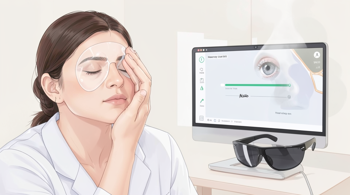
Dry, moving air can increase tear evaporation. A humidifier may add moisture to indoor air, while avoiding direct airflow from fans, air-conditioning vents, or vehicle vents can reduce exposure at the eye surface. Smoke, dust, wind, and campfire exposure are also recognized irritants. Wrap-around sunglasses outdoors may provide a physical barrier against wind and dust, although they do not treat reduced tear production or eyelid-gland disease. 12
- Limit exposure to cigarette smoke and smoky indoor environments.
- Protect the eyes during windy or dusty outdoor conditions.
- Position fans and air vents away from the face.
- Keep indoor humidity comfortable without treating humidification as a substitute for diagnosis.
Hydration, diet, and supplements
Maintaining ordinary hydration supports general health, but extra water alone has not been established as a reliable treatment for dry-eye disease. Dietary omega-3 fatty acids have attracted attention because of their possible relationship to inflammation and tear-film quality, yet clinical findings are mixed. A large randomized trial found that high-dose omega-3 supplementation was no better than placebo for moderate-to-severe dry eye after one year. 18
A newer systematic review assessed 27 randomized controlled trials and reported that omega-3 effects varied by formulation and dry-eye cause. Benefits appeared in some video-display, contact-lens, rosacea-associated, and Sjögren’s syndrome groups, while no significant benefit was found in some meibomian-gland dysfunction, unspecified, or LASIK-related groups. Supplement decisions should account for medical history, medication interactions, and the uncertainty of evidence rather than treating omega-3 as universally effective. 7
What to avoid and when to seek care
There is no proven homemade “natural lubricant” that safely replaces the tear film. Cooking oils, unapproved herbal products, and other household substances should not be placed directly into the eyes because sterility, concentration, preservatives, and contamination are uncontrolled. When frequent lubrication is needed, preservative-free artificial tears are commonly used because preserved formulations may irritate some users. These drops are not natural remedies, but they are an established supportive option. 1
Medical evaluation is appropriate when symptoms persist, recur frequently, or affect daily activities, because dry eye can accompany medication use, eyelid disease, diabetes, autoimmune disorders, and other conditions. Sudden vision changes, significant eye pain, pronounced redness, strong light sensitivity, or discharge require prompt assessment rather than home treatment alone. A clinician may evaluate tear quantity, tear stability, the cornea, and eyelid glands before recommending targeted treatment. 21
How natural care fits into management
Natural-supportive care is best understood as a maintenance strategy, not a guaranteed cure. Warm compresses and lid hygiene address the oil layer, blinking helps distribute tears, environmental control reduces evaporation, and screen or contact-lens adjustments reduce avoidable strain. Results can vary because dry eye has different causes, including insufficient tear production, rapid evaporation, inflammation, and systemic disease. A consistent routine may help mild symptoms, but ongoing disease often requires a personalized clinical plan. 5
- Use eyelid warmth and gentle hygiene when gland dysfunction is suspected.
- Take regular visual breaks and blink deliberately during screen use.
- Reduce smoke, wind, dust, and direct air exposure.
- Consider humidified air and ordinary hydration as supportive measures.
- Do not place nonsterile substances in the eyes.
- Seek professional care for persistent, severe, or changing symptoms.
Sources
- WebEyeClinic, “What Is the Best Natural Lubricant for Dry Eyes?”
- Pacific Eye Institute, “How to Heal Dry Eyes Naturally”
- New England Journal of Medicine, DREAM omega-3 clinical trial
- BMC Ophthalmology, “The effects of different forms of omega-3 polyunsaturated fatty acids on dry eye disease”
- American Academy of Ophthalmology, dry-eye treatment guidance
- Review of pharmacological, natural, and emerging therapies for meibomian gland dysfunction
- National Eye Institute, dry-eye guidance
Authored by MistyMountainView team