Warning signs of blepharitis infection: Clinical symptoms, risks, and when to seek care
Understanding blepharitis and infection
Warning signs of blepharitis infection often begin at the eyelid margins, where the eyelashes grow. Blepharitis is primarily inflammation, not always an active infection, and may result from bacterial overgrowth, clogged oil glands, skin disease, allergic reactions, or Demodex mites. Bacteria that normally live on the eyelids can become overpopulated and contribute to inflammation. The condition commonly affects both eyes and is often chronic or recurring rather than a short-lived infection. 1 2
Typical symptoms are usually more noticeable in the morning. Swelling, itching, irritation, redness, greasy eyelid edges, flaky skin, crusted eyelashes, and eyelids stuck together after sleep are characteristic findings. Some people describe dried tears, foamy tears, or a sensation resembling sand in the eyes. These features can occur in inflammatory blepharitis as well as cases in which bacteria contribute to the condition, so symptoms alone cannot establish the cause. 1 3
Common warning signs at the eyelid margin
Redness and swelling along the eyelid edge are among the most recognizable signs. The skin may appear irritated or change color, while the lashes may be coated with scales or debris. Burning, itching, stinging, and soreness can develop together. Penn Medicine describes dandruff-like material at the base of the eyelashes, while the MSD Manual notes that inflammation may include thick scales, crusts, shallow ulcers, or marked redness and swelling. 2 3
Crusting that repeatedly returns, particularly when it causes the lids to stick together, deserves attention because it can reflect accumulated oil, skin debris, and bacteria. A greasy appearance does not by itself prove infection, and neither does mild redness. However, persistent crusts, increasing tenderness, or visible discharge are reasons to have the eyelid examined, especially when routine bathing and eyelid washing do not improve symptoms. 1 5
Eye symptoms that may accompany blepharitis
Blepharitis can affect the eye surface as well as the eyelids. Reported symptoms include watery eyes, dry eyes, foamy tears, gritty or foreign-body sensations, burning, stinging, frequent blinking, and sensitivity to light. Vision may become intermittently blurred when the tear film is disrupted, and this blurring commonly improves with blinking. These symptoms may be uncomfortable without causing permanent eyesight damage in typical cases. 1 3
Fluctuating vision should not automatically be attributed to blepharitis. Persistent reduced vision, substantial eye pain, pronounced light sensitivity, or symptoms that are worsening rather than fluctuating can indicate another eye problem. Conjunctivitis, a stye, eyelid cellulitis, and other disorders may resemble blepharitis, which is why an eye-care professional may need to inspect the eyelids and the eye surface rather than rely on a symptom description alone. 5 6
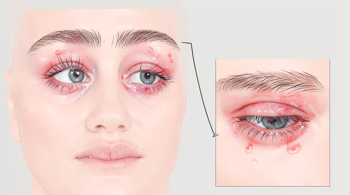
Signs that suggest a more active eyelid infection
Yellowish discharge, a rapidly worsening localized swelling, or a painful tender lump may suggest a bacterial process or an associated stye rather than uncomplicated chronic irritation. Blepharitis caused by bacterial infection can involve the eyelids or the ducts of deeper glands opening at the lid edges. Viral causes, including herpes simplex, are also described, although the appearance and treatment differ from ordinary bacterial overgrowth. 2
Redness that spreads beyond the eyelid, increasing warmth, severe tenderness, or swelling that progresses quickly is more concerning than stable morning irritation. Fever or feeling systemically unwell raises concern for infection extending beyond the eyelid. These findings warrant prompt medical evaluation because cellulitis and other infections may require prescription treatment and cannot be reliably managed through eyelid hygiene alone. 6
Emergency symptoms involving the eye or orbit
Some symptoms require emergency assessment rather than routine monitoring. Severe eye pain, pain when moving the eye, reduced or double vision, a bulging eye, or rapidly increasing swelling can indicate involvement of tissues around or behind the eye. Marked light sensitivity is also a warning sign when it is severe or accompanied by vision changes. Such features are not typical minor blepharitis symptoms and can signal a potentially serious eye or orbital condition. 6
Emergency concern is also higher when eyelid inflammation occurs with fever, redness spreading into the cheek, or a substantial decline in vision. A person should avoid assuming that crusting alone explains these symptoms. The distinction between surface eyelid inflammation and deeper infection depends on examination, and clinical assessment may include magnified inspection, evaluation of the eye, or testing of eyelid oil or crust for bacteria in selected cases. 5 6
Evaluation, contributing conditions, and care limits
Diagnosis is generally based on the appearance of the eyelids and the reported symptoms. A clinician may use a magnifying instrument, examine the lash line and eye surface, or collect a sample of oil or crust when bacterial testing is appropriate. Persistent symptoms in only one eye, particularly when accompanied by lash loss or scarring, may require additional investigation for conditions other than ordinary blepharitis. 5
Recurrence may be associated with seborrheic dermatitis, dandruff, rosacea, eczema, meibomian gland dysfunction, allergies, or Demodex mites. Common supportive measures include warm compresses and gentle daily cleaning of the eyelid edges, while prescription antibiotics, anti-inflammatory medicines, antiviral treatment, or other therapy may be considered according to the cause. Self-care should not delay assessment of severe pain, spreading redness, fever, discharge, or vision changes. 2 3 4 5
Sources
- Mayo Clinic, Blepharitis: Symptoms and causes
- MSD Manual Consumer Version, Blepharitis
- Penn Medicine, Blepharitis
- Cleveland Clinic, Demodex Blepharitis
- Mayo Clinic, Blepharitis: Diagnosis and treatment
- Healthdirect, Blepharitis
Authored by MistyMountainView team