Train tours across Japan: A comprehensive analysis of regional rail travel and luxury expeditions
Japan is widely recognized for having one of the world's most sophisticated railway networks, blending extreme high-speed efficiency with specialized scenic and luxury rail experiences. For travelers looking to traverse the country, options range from standardized high-speed Shinkansen routes to fully escorted multi-day tours that incorporate local cultural immersions, such as tea ceremonies and regional culinary tastings 1. Understanding the distinction between these travel styles is essential for planning an effective journey across islands as diverse as Hokkaido, Honshu, and Kyushu 1.
The Landscape of Guided Rail Tours
Guided rail tours in Japan often act as comprehensive travel packages that combine transportation, lodging, and curated excursions. These tours frequently span 11 to 22 days, allowing for a deep dive into the country's historical and cultural sites, including visits to World Heritage locations like the Peace Memorial in Hiroshima and the ancient temples of Kyoto 1, 3. Logistics, such as the handling of large luggage via coach transport and the provision of local guides, are standard features of these organized adventures, ensuring that travelers can navigate between urban hubs and remote mountain villages with ease 5, 6.
Cost structures for these tours vary significantly based on duration, inclusion of luxury upgrades, and the level of personalization. While some rail adventures focus on a specific thematic interest, such as art history or the search for cherry blossoms, others are designed as grand loops covering major islands 5, 7. Prospective travelers should note that demand for these curated experiences is high, often requiring booking several months in advance to secure space on specific departures 8.
High-End Luxury Sleeper Trains
Beyond standard travel, Japan operates a tier of ultra-luxury sleeper trains that function more like rolling five-star hotels than traditional public transport. The most notable among these are the Seven Stars in Kyushu, the Train Suite Shiki-shima, and the Twilight Express Mizukaze 7. These services offer immersive, multi-day itineraries that include fine dining prepared by celebrated regional chefs, live entertainment in lounge cars, and exclusive off-train excursions to onsen towns and craft workshops 7. Availability for these trains is extremely limited, often managed through application and ballot systems due to their prestige 7.
For those seeking the romance of rail without the multi-year waitlists of the "big three," there are premium scenic and dining trains that serve as an attainable tier of luxury. These include routes like the Royal Express and the Hanayome Noren, which focus on course dining and high-quality aesthetic design 7. It is important for travelers to recognize that while these trains offer an elevated experience, they require meticulous planning regarding onward connections, especially when journeys terminate at stations away from major international transit hubs 9.
Regional Rail and Scenic Excursions
Japan’s regional rail network provides access to areas often skipped by standard tourist itineraries. Small, specialized lines like the Sagano Scenic Railway in Kyoto or the Oigawa heritage steam railway offer travelers a slower pace, specifically highlighting natural features such as cherry blossom corridors and autumn foliage 5, 10. These journeys allow for a deeper connection with rural Japan, providing access to traditional post towns and mountain highlands where the influence of historical eras like the Edo period remains visible 7.
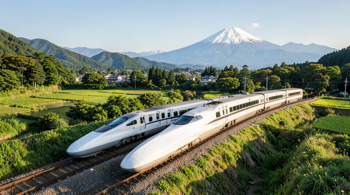
These excursions are often integrated into self-guided or expert-led rail packages to bridge the gap between large cities. For instance, traveling by rail into the Kiso Valley or Nagano allows for visits to well-preserved samurai districts or snow monkey parks, experiences that are otherwise logistically challenging to coordinate independently 2, 4. Utilizing local rail networks in this manner enables travelers to balance the high energy of Tokyo or Osaka with the quietude of Japan's interior landscapes 4.
Essential Tools for Independent Rail Travel
For travelers who prefer independent exploration, the Japan Rail (JR) Pass remains a foundational tool. This pass provides unlimited travel on most JR lines, including the high-speed Shinkansen, for fixed durations of 7, 14, or 21 days 10. While highly convenient for cross-country movement, independent travelers must be aware of the operational logistics, such as the use of IC cards for local transport, booking seat reservations for high-speed trains, and navigating the nuances of station navigation in complex urban environments 2.
Remaining scheduled overnight sleepers, such as the Sunrise Seto and Sunrise Izumo, continue to provide a functional and nostalgic way to travel between Tokyo and the regions of Shikoku and Shimane 10. These services are distinct from the luxury cruise trains mentioned previously; they are practical transportation options that offer limited berth space. Booking these requires significant foresight, as they are the last regularly scheduled sleeper trains in the country and are frequently fully booked by both tourists and local commuters 10.
Regulatory Oversight and Travel Realities
Rail travel in Japan is subject to strict operational standards, with public transport and luxury excursions governed by precise schedules and safety protocols. Prospective passengers should be aware that "no surcharge" guarantees, which some tour operators provide to insulate travelers from fluctuating fuel prices or exchange rates, are specific to those individual companies and not a systemic feature of the Japanese rail network 3. Furthermore, mobility ratings are provided for many tours to help travelers assess if a specific itinerary is suitable for their physical requirements 1.
Market friction often arises from the high demand for rail experiences. Travelers are encouraged to utilize specialized travel agencies that manage the intricacies of ballot applications, luggage forwarding services, and hotel coordination, particularly for luxury rail bookings 7. Understanding that these services are premium products with limited inventory is essential for setting realistic expectations before beginning the research or booking phase 7.
Summary of Travel Options
| Service Category | Typical Duration | Booking Requirement | Primary Focus |
|---|---|---|---|
| Guided Rail Tour | 11–22 Days | Moderate (Months) | Cultural immersion, logistics |
| Luxury Sleeper Train | 2–4 Days | Strict (Ballot/Lottery) | Exclusivity, high-end dining |
| Regional Scenic Rail | Varies | Low (On-demand) | Natural landscapes, photography |
| JR Pass Independent | 7–21 Days | Low (Pre-purchase) | Flexible cross-country transit |
Sources
- Great Rail Journeys: Grand Tour of Japan Itinerary
- Rough Guides: Rail Tour in Japan Through Tokyo, Kyoto, and Hiroshima
- Titan Travel: Grand Tour of Japan Details
- Flat Beds Tour + Cruise: Japan Rail Journey Overview
- Travelrite: Railways, Cherry Blossoms and Temples of Japan
- Samurai Tours: Best of Japan in 22 Days
- Explera DMC: Japan Luxury Train Journeys Analysis
- CNN Travel: Luxury Train Travel Guidelines for Japan
- Uncompromised Travel: Twilight Express Mizukaze Routes
- Japan National Tourism Organization: Scenic Railway Journeys
Authored by MistyMountainView team