Medical alert systems price comparison: A 2026 cost analysis
A monthly budget of $25 to $35 generally corresponds to a monitored, no-contract medical alert system, while automatic fall detection commonly adds about $10 per month. The main pricing complications are equipment charges, activation fees, plan differences, and one widely reported three-year contract. Prices in the underlying comparisons were checked during 2026, and some figures remain estimates because providers do not publish every rate consistently. 1
What the monthly price usually includes
Published comparisons place many monitored systems between roughly $25 and $32 per month before optional services. The cited monthly figures include Lively Mobile2 at $24.99, MobileHelp at $25.95, Bay Alarm Medical at $27.95, Medical Guardian at approximately $27.95, ADT Medical Alert at $31.99, and Life Alert at an estimated $49.95. The difference between the lowest and highest figures in that group is substantial, although plan type, equipment, and contract terms are not identical. 1
Other 2026 comparisons show why advertised starting prices cannot be treated as a universal market rate. One guide lists Medical Guardian from $29.95 per month, Bay Alarm Medical and MobileHelp from $19.95, and LifeFone from $24.95, while another describes Bay Alarm home service from $27.95 and MobileHelp home cellular service from $25.95. These figures indicate that the same company may publish different prices for different devices, channels, or plan configurations. 47
Side-by-side monthly monitoring figures
The following figures represent reported starting or standard monthly prices from the supplied 2026 research. They are useful for comparing the recurring monitoring component, but they do not establish the final first-year cost because equipment and activation charges may be separate. ADT, GetSafe, Aloe Care, and Philips Lifeline also use plan structures in which equipment or automatic fall detection can change the total. 10
| Provider or system | Reported monthly price | Important qualification |
|---|---|---|
| Lively Mobile2 | $24.99 | Fall detection reported separately |
| MobileHelp | $25.95 | Classic home figure |
| Bay Alarm Medical | $27.95 | Home plan figure in one comparison |
| Medical Guardian | Approximately $27.95 to $29.95 | Rate varies by cited plan and source |
| ADT Medical Alert | $31.99 to approximately $39.99 | Plan and equipment details vary |
| Life Alert | Approximately $49.95 | Estimated figure and reported contract concern |
Fall detection and first-year cost
Automatic fall detection is generally an add-on rather than a standard feature in the compared plans. Reported monthly additions are $9.99 for Lively Mobile2, $11 for MobileHelp, $10 for Medical Guardian, $10 for Bay Alarm Medical, and $11 for ADT. Based on monthly fees multiplied by 12, the cited first-year totals with fall detection range from $419.76 for Lively to $515.88 for ADT, before one-time equipment costs. 1
| System | Fall-detection addition | Reported monthly total | Illustrative first-year total |
|---|---|---|---|
| Lively Mobile2 | $9.99 | $34.98 | $419.76 |
| MobileHelp | $11.00 | $36.95 | $443.40 |
| Medical Guardian | $10.00 | Approximately $37.95 | Approximately $455.40 |
| Bay Alarm Medical | $10.00 | $37.95 | $455.40 |
| ADT | $11.00 | $42.99 | $515.88 |
Equipment, activation, and contract costs
Recurring fees do not describe the entire bill. The supplied research reports an equipment charge of approximately $149.95 for a Medical Guardian device and approximately $199.95 for its watch, while Bay Alarm Medical is described as leasing in-home equipment in one comparison. Lively Mobile2 has a reported one-time device cost of about $79.99, and GetSafe separates a monthly monitoring charge from one-time equipment. These charges can materially alter first-year comparisons. 17
Contract length is another financial risk. The comparisons identify Life Alert as requiring a three-year contract, whereas Bay Alarm Medical, Medical Guardian, Lively, MobileHelp, and the other major alternatives are described as month-to-month or without long-term contracts. Cancellation terms, refund periods, activation charges, replacement-device policies, and shipping costs should therefore be treated as separate questions rather than assumed to be included in the monthly number. 610
In-home, mobile, and family-call systems
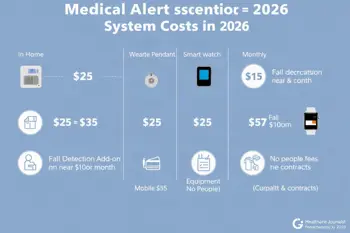
Device category affects both price and capability. Basic in-home systems typically use a base station and wearable help button, while mobile systems use cellular connectivity and may add GPS for protection away from home. The supplied comparisons describe Medical Guardian, Bay Alarm Medical, Lively Mobile2, and several other providers as offering mobile or GPS options. LogicMark is materially different: the cited figure is a $299 one-time purchase with no monitoring center, because it calls family members and 911 instead. 13
| Use case | Typical cost pattern in the research | Key distinction |
|---|---|---|
| In-home monitoring | Approximately $24.95 to $31.99 monthly | Usually centered on a base station and button |
| Mobile GPS monitoring | Approximately $34.95 to $44.95 monthly | Designed for use away from home |
| Smartwatch-style service | Approximately $29.95 monthly or more | May combine communication, GPS, and alerts |
| Family-call device | $299 once for the cited LogicMark example | No professional monitoring center |
Reliability, limitations, and maintenance
Automatic fall detection should not be treated as a complete substitute for pressing the help button. One 2026 comparison states that fall detection may miss up to 50% of actual falls depending on the provider, and the cost comparison reports that two of seven systems offered no automatic fall detection at any price. Users and caregivers must also consider whether the device is worn consistently, whether it can be heard or reached, and whether the system functions throughout the intended coverage area. 51
Operational checks are part of ownership. Testing guidance in the supplied research recommends pressing the help button to confirm that the base unit works, while independent testing described by another source examined response times, battery drain, and fall-detection behavior. Monitoring quality also varies by provider, although one comparison specifically identifies a 24/7 U.S.-based, UL-listed monitoring center for Medical Guardian. Coverage, charging, device replacement, and response procedures should be documented before a system is evaluated on price alone. 349
How to interpret a price comparison
A defensible comparison separates recurring monitoring from equipment, activation, fall detection, and contract exposure. It also identifies whether the system works only at home or includes mobile GPS, whether professional monitoring is present, and whether the quoted number is a starting rate, an estimate, or a price checked on a particular date. ConsumerAffairs ranks Bay Alarm Medical as its overall pick using reliability, pricing, equipment range, and customer feedback, illustrating that price is only one evaluation variable. 2
Record the base monthly monitoring charge and the exact device associated with it.
Add 12 months of any fall-detection fee to estimate the recurring first-year total.
Ask separately about equipment, activation, shipping, replacement, and cancellation charges.
Distinguish professional 24/7 monitoring from devices that call relatives or 911.
Confirm mobile coverage, GPS availability, testing procedures, and contract duration in writing.
Sources
- Medical Alert Review, “Medical Alert System Cost & Fall-Detection Comparison (2026 Data)”
- ConsumerAffairs, “The Best Medical Alert Systems (2026 Guide)”
- PCMag, “The Best Medical Alert Systems for 2026”
- MedAlertGuide, “Best Medical Alert Systems 2026”
- Medical Daily, “The 8 Best Medical Alert Systems for 2026”
- Medical Alert Review, “Best Medical Alert Systems 2026: Top 5 Compared”
- ElderHearth, “Best Medical Alert Systems of 2026”
- AARP, “5 Best Medical Alert Systems of 2026”
- ThirstyBear, “8 Best Medical Alert Systems (August 2026) Tested and Reviewed”
- Seniorsafetyreviews.com, “Best Affordable Medical Alert Systems for Seniors (2026)”
Authored by MistyMountainView team