Warning signs of chronic obstructive pulmonary disease: An evidence-based overview
The warning signs of chronic obstructive pulmonary disease can begin with a persistent cough, mucus, or shortness of breath during ordinary activity. Early symptoms often develop slowly and may be mistaken for a lingering cold, aging, being out of shape, or weather-related changes, even as a person begins avoiding stairs, walking more slowly, or reducing daily activities. 1
How COPD symptoms commonly begin
COPD is a long-term condition involving persistent airflow limitation. It includes chronic bronchitis, which features airway inflammation and excess mucus, and emphysema, which involves damage to the lung air sacs. The condition generally develops over many years, so the first noticeable change may be reduced tolerance for exercise rather than severe breathing difficulty. 2
New or changing shortness of breath with exertion is particularly important when a person has a relevant exposure history. Harvard pulmonary specialist Jessica McCannon notes that people frequently explain breathlessness as normal aging, deconditioning, repeated illness, or weather sensitivity. A progressive change in breathing or activity level warrants clinical assessment rather than assumption. 1
Persistent cough and mucus production
A cough that continues for weeks or repeatedly returns can be an early warning sign, especially when it produces phlegm. Chronic bronchitis is clinically defined as a mucus-producing cough lasting at least three months in each of two consecutive years. Not every chronic cough indicates COPD, but persistence, recurrence, and associated breathlessness make the symptom more significant. 3
Mucus may accompany airway inflammation and narrowing, and changes in the amount or character of sputum can occur during respiratory flare-ups. Recurrent chest infections or bronchitis can also draw attention to an underlying lung problem. Because cough and phlegm are often normalized by smokers and former smokers, the duration and effect on activity should be recorded for discussion with a clinician. 5
Breathlessness, wheezing, and chest sensations
Shortness of breath during stairs, walking uphill, carrying shopping, or other routine exertion is a central COPD symptom. People may notice that familiar activities require pauses or longer recovery periods. As airflow becomes more restricted, breathlessness can extend from exercise to ordinary tasks, although symptoms vary among individuals and may overlap with asthma, heart disease, infection, or other conditions. 4
Wheezing is a whistling sound caused by narrowed airways, while chest tightness or pressure may accompany obstructed breathing. Clinical descriptions of COPD also include a prolonged exhalation and reduced breath sounds, findings that require professional examination rather than self-diagnosis. Sudden or severe chest pain, rapidly worsening breathing, or symptoms unlike a person’s usual pattern require urgent medical evaluation because they may signal another serious problem. 6
Declining stamina and repeated infections
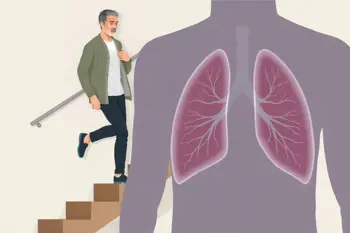
A gradual reduction in stamina may be more revealing than a single episode of breathlessness. Someone might stop exercising, avoid hills, take more breaks, or quietly limit household and social activities. Harvard’s reported case involved a former smoker who attributed a chronic cough to a lingering cold and became winded climbing stairs before recognizing the broader pattern. 1
Frequent colds, bronchitis, or other respiratory infections are another pattern associated with COPD. Repeated exacerbations can intensify cough, mucus, wheezing, and breathlessness beyond a person’s usual baseline. However, infection frequency alone does not establish COPD, and a clinician must consider exposure history, prior lung disease, medication use, and objective lung-function results. 6
Risk factors, including non-smoking exposures
Cigarette smoking is the most important and most common cause of COPD, but smoking history is not required. Long-term exposure to secondhand smoke, workplace dust or fumes, air pollution, and toxins from biomass fuels such as wood and grasses can contribute to lung damage. Occupational exposure is especially relevant when breathing symptoms developed after years in dusty or chemically contaminated environments. 3
Genetic causes are less common but can matter, including alpha-1 antitrypsin deficiency. Research summaries also indicate that approximately one in four people with COPD have never smoked, while about 16 million Americans have received a COPD diagnosis and millions more may remain undiagnosed. These figures support evaluating symptoms according to exposure and clinical history rather than using smoking status as the sole screening consideration. 4
Signs that may indicate more advanced disease
More advanced COPD may involve unintentional weight loss, fatigue, and increasing difficulty completing daily tasks. Breathing requires more energy when airflow is severely limited, and reduced activity can compound weakness and loss of conditioning. Weight loss is more closely associated with later-stage disease than with the earliest warning signs, so it should be reported alongside changes in appetite, exercise capacity, and respiratory symptoms. 6
Swelling of the ankles, feet, or legs can occur when advanced lung disease places strain on the heart and contributes to fluid retention. Bluish lips or fingernails may indicate inadequate oxygen levels. Severe breathlessness, blue discoloration, confusion, or a failure of usual medicines to relieve a known flare-up are emergency warning signs and require urgent medical care rather than routine symptom monitoring. 5
How COPD is confirmed
Symptoms and risk factors can raise suspicion, but they cannot confirm COPD because cough and breathlessness have many possible causes. Diagnosis typically combines medical history, physical examination, chest imaging when appropriate, and pulmonary function testing. The key breathing test is spirometry, in which a person exhales through a tube connected to a computer to measure airflow and assess the severity of obstruction. 2
Clinical assessment should include whether symptoms are new, progressive, activity-related, or associated with mucus and exacerbations. Treatment can help control symptoms and slow progression, but established lung damage is generally irreversible. Smoking cessation, prescribed medicines, pulmonary rehabilitation, oxygen for selected patients, and avoidance of harmful exposures are management considerations determined with healthcare professionals. 3
Why early recognition matters
COPD is progressive and often underdiagnosed because its symptoms creep in over time rather than appearing as a single dramatic event. The Conversation reports that the underlying damage may begin decades before symptoms become obvious, with cigarette smoke driving inflammation, airway narrowing, mucus production, and destruction of alveoli. Recognizing a pattern early can help distinguish a chronic respiratory problem from an isolated cold or temporary loss of fitness. 7
The most useful observations are changes from a person’s previous baseline: a cough that persists, increasing phlegm, breathlessness during familiar activities, wheezing, slower recovery, repeated infections, or avoidance of exertion. Such observations do not prove COPD, but they provide clinically relevant information for deciding whether spirometry and further evaluation are appropriate. Emergency symptoms, particularly blue lips, confusion, or rapidly worsening breathing, should be treated separately from routine evaluation. 5
Sources
- Harvard Health, COPD symptoms: How to spot them early
- FamilyDoctor.org, COPD
- Merck Manual Consumer Version, Chronic Obstructive Pulmonary Disease
- Franciscan Health, COPD Causes & Symptoms
- Acibadem Hospitals Group, COPD Symptoms: Possible Causes and When to Seek Care
- HealthCentral, How to Recognize the Early Warning Signs of COPD
- The Conversation, Chronic obstructive pulmonary disease develops over decades
Authored by MistyMountainView team