Top antifungal treatments for toenail fungus: Evidence, options, and clinical considerations
Top antifungal treatments for toenail fungus vary according to infection severity, nail thickness, the area affected, and whether testing confirms a fungal cause. Onychomycosis is common, but several nonfungal nail conditions can look similar, so treatment decisions are more reliable after clinical assessment and, when necessary, nail clippings, scrapings, fungal culture, or other mycological testing. 1
1. Oral terbinafine
Oral terbinafine, commonly known by the brand name Lamisil, is generally regarded as the leading systemic option for confirmed dermatophyte toenail infection. A commonly described regimen is 250 milligrams daily for 12 weeks. Research summarized in the supplied clinical data reports mycological cure rates of approximately 70% to 80% and complete cure rates of about 35% to 50%, although outcomes vary with disease extent, adherence, and nail growth. 6
The principal advantage of terbinafine is that it reaches the nail through the bloodstream, addressing fungus in areas topical products may not penetrate adequately. Its use requires medical evaluation because oral antifungals can affect the liver and may interact with other medicines. Baseline liver-function testing and a follow-up check during treatment are described as advisable in the supplied clinical review. Anyone with relevant liver disease or complex medication use requires individualized assessment. 6
2. Itraconazole and other systemic therapy
Itraconazole is an alternative oral antifungal for onychomycosis, particularly when terbinafine is unsuitable or when the suspected organism may respond differently. The supplied research identifies itraconazole as an alternative systemic treatment, while also emphasizing that organism identification matters because dermatophytes cause most cases and yeasts or nond ermatophyte molds account for others. Systemic treatment should therefore follow professional diagnosis rather than appearance alone. 1
Oral therapy is not automatically appropriate for every patient. The decision must balance the likelihood of fungal infection against drug interactions, medical history, liver-related risks, and the extent of nail involvement. Because nail improvement depends on the gradual growth of a healthy nail, visible recovery can continue for months after the medication course ends. Recurrence is also common without attention to foot hygiene and concurrent athlete’s foot. 3
3. Prescription topical solutions
Prescription topical treatments are used most often for limited disease, cases without matrix involvement, or patients for whom oral therapy is unsuitable. Efinaconazole 10% solution, tavaborole 5% solution, and ciclopirox 8% lacquer are the principal topical medicines identified in the supplied research. These treatments are applied directly to the affected nail, but they typically require prolonged, consistent use and may be less effective when the nail is extensively thickened or detached. 6
Tavaborole, marketed in the United States as Kerydin, is a prescription solution approved for fungal or yeast infections of the toenails. It works by killing the organism or preventing its growth and is available as a topical solution. Ciclopirox is applied as a lacquer and requires periodic removal with alcohol before continued applications. Treatment schedules and suitability should be confirmed from the prescribing information and a clinician. 5
4. Over-the-counter products and nail care
Over-the-counter creams and liquids containing clotrimazole, tolnaftate, or undecylenic acid are more useful for athlete’s foot and fungal skin around the nail than for established infection deep within the nail plate. The hard keratin structure can limit penetration, which helps explain why nonprescription products often have lower cure rates in longstanding onychomycosis. Treating coexisting athlete’s foot remains relevant because infected skin can contribute to reinfection of the nails. 7
Urea products can soften and thin thick or brittle nails, but urea does not kill fungus on its own. Nail trimming, filing, or professional debridement may reduce pressure and help topical medicines contact more of the affected surface. These measures are supportive rather than substitutes for a confirmed treatment plan. Thickened or painful nails may also reflect conditions other than fungus, including nail dystrophy or psoriasis, which reinforces the value of diagnosis. 4
5. Laser and combination approaches
Laser and light-based therapies are nonpharmacological options used in some clinical settings, but the supplied research characterizes their long-term effectiveness as mixed. They should not be presented as equivalent to established systemic or topical antifungal regimens without considering the quality and duration of available evidence. Insurance coverage may also be limited, creating an additional practical consideration for patients evaluating these procedures. 2
Combination treatment, such as an oral medicine paired with a topical agent, has been reported in the supplied research as potentially producing better results than monotherapy in some circumstances. However, combination therapy also increases the complexity of adherence and monitoring. It should be selected according to the infection pattern, confirmed organism, drug safety profile, and clinician judgment rather than used automatically for every discolored nail. 8
6. Diagnosis, expectations, and recurrence prevention
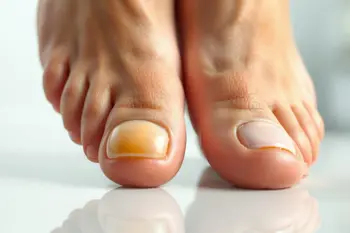
Approximately 10% of the general population is affected by onychomycosis, with higher prevalence among older adults and people with diabetes, poor circulation, weakened immunity, athlete’s foot, or nail dystrophies. Typical signs include yellow or white discoloration, thickening, crumbling, subungual debris, deformity, and separation from the nail bed. These findings are not specific enough to confirm fungus because other nail disorders can produce similar changes. 3
Toenail fungus commonly returns, with the supplied clinical review estimating recurrence at 20% to 50% over three years. Preventive care includes managing athlete’s foot, maintaining footwear hygiene, keeping feet dry, and considering maintenance topical therapy for people at higher risk. Medical evaluation is especially important when pain, spreading inflammation, diabetes, poor circulation, immune suppression, or difficulty walking is present. 6
Sources
- National Center for Biotechnology Information, “Onychomycosis,” StatPearls
- Cleveland Clinic, “Toenail/Nail Fungus Causes & Treatment”
- MSD Manual Consumer Version, “Onychomycosis”
- University of Utah Health, “Nail Fungus Treatments: What Works and What Does Not”
- Mayo Clinic, “Tavaborole topical application route”
- Gomdori Medical, “Onychomycosis: Pattern Recognition, Mycology Confirmation, and Evidence-Based Antifungal Therapy”
- Drugs.com, “What is the best over-the-counter nail fungus treatment?”
- National Library of Medicine, review of combination therapy for onychomycosis
Authored by MistyMountainView team