Natural Methods to Lower Uric Acid Through Lifestyle: Evidence, Limits, and Practical Habits
Natural methods to lower uric acid through lifestyle often focus on balanced nutrition, regular exercise, adequate hydration, and consistent daily choices rather than drastic diets or deprivation. These habits may reduce gout triggers and support uric-acid control, but their effects are usually modest and may not replace prescribed treatment for recurrent gout or complications.
How lifestyle changes affect uric acid
Uric acid comes from purine breakdown, with purines supplied by some foods and also produced naturally during normal cell turnover. Research summarized in the supplied evidence indicates that dietary changes affect only part of the total uric-acid burden, which helps explain why strict food avoidance may not normalize levels for everyone. A purine-restricted diet is estimated to lower serum uric acid by about 0.5 to 1.5 mg/dL at most. 1
The clinical target for many people with gout is a serum uric acid level below 6 mg/dL, while people with tophi may require a lower target. Lifestyle measures are most useful for mild elevation, reducing triggers, improving metabolic health, and supporting medication when medication is indicated. Recurrent attacks, kidney stones, tophi, or chronic kidney disease require professional assessment rather than reliance on home measures alone. 2
Hydration and kidney excretion
Drinking adequate water supports the kidneys in removing uric acid and may reduce dehydration-related flare risk. Practical guidance from the supplied research commonly emphasizes consistent fluid intake throughout the day and urine that is pale yellow, rather than consuming a large volume at once. One evidence summary estimates that increased hydration may produce a relatively small reduction of approximately 0.3 to 0.8 mg/dL while offering particular value for preventing dehydration-driven attacks. 3
Fluid needs are not identical for every person. People with kidney, heart, or liver disease should ask a clinician how much fluid is appropriate, because unrestricted intake may be unsuitable in some conditions. The National Kidney Foundation also emphasizes individualized guidance for people concerned about kidney stones or impaired kidney function. Hydration should therefore be steady and medically appropriate, not an attempt to rapidly flush uric acid from the body. 4
Dietary pattern and food substitutions
A lower-purine eating pattern reduces emphasis on organ meats such as liver and kidneys, red meat, and certain seafood including sardines, anchovies, mussels, and other high-purine choices. It does not require eliminating all protein. Vegetables, whole grains, eggs, tofu, legumes, nuts, and low-fat dairy are identified in the supplied research as practical alternatives, with plant proteins generally preferable to repeated portions of high-purine animal foods.
Low-fat dairy is associated with lower gout risk and may promote uric-acid excretion through milk proteins such as casein and lactalbumin. The DASH dietary pattern, centered on fruits, vegetables, whole grains, legumes, nuts, and low-fat dairy, has also been associated with lower serum uric acid, particularly among people beginning with higher levels. These findings support an overall dietary pattern rather than dependence on one supposedly curative food. 5
Alcohol, fructose, and sugary drinks
Limiting beer, liquor, and binge drinking is one of the clearest lifestyle priorities because alcohol can reduce uric-acid excretion and increase the likelihood of gout attacks. Beer may also contribute purines, but the broader concern is alcohol-related interference with urate handling and the dehydration or dietary disruption that can accompany heavy intake. NHS guidance similarly advises avoiding binge drinking and reducing drinks that can raise uric acid.
Sugar-sweetened beverages and products containing high-fructose corn syrup deserve separate attention because fructose can increase uric-acid production through a pathway distinct from dietary purines. A large prospective study in men associated higher consumption of sugar-sweetened soft drinks and fructose with increased gout risk. Replacing soda and frequent fruit juice with water and unsweetened beverages is therefore more evidence-aligned than relying on concentrated juice remedies. 6
Weight management and physical activity
Gradual weight loss can lower uric-acid burden and reduce gout risk when overweight or obesity is present. The evidence summary estimates that losing 5% to 10% of body weight may lower uric acid by approximately 0.5 to 2.0 mg/dL over the longer term. The relevant approach is steady change through sustainable eating and activity habits, not rapid restriction intended to produce a short-term laboratory result.
Crash diets, fasting, and abrupt calorie deprivation may temporarily increase uric acid, making them unsuitable strategies for dependable control. Regular moderate physical activity supports healthy weight and metabolic health, although exercise alone should not be expected to replace urate-lowering treatment when clinical indications exist. A sustainable routine can include consistent activity matched to fitness, joint symptoms, and medical conditions rather than intense exertion during an acute flare.
Supplements, monitoring, and treatment limits
Vitamin C is sometimes presented as a natural uric-acid treatment, but the supplied American College of Rheumatology guidance advises against routine vitamin C supplementation specifically for gout. A cited estimate suggests that 500 mg daily may lower uric acid by about 0.3 mg/dL, a small effect that does not justify self-prescribing supplements without medical advice. Cherries and cherry juice also should not be treated as substitutes for proven dietary and clinical management.
Lifestyle changes may improve exposure to triggers, but serum testing is needed to determine whether uric acid has reached an appropriate target. Medication can lower uric acid by roughly 3 to 6 mg/dL and is recommended as primary treatment for recurrent gout in the cited ACR guidance, with lifestyle changes as complementary support. Prescribed urate-lowering medicine should not be stopped without medical supervision, particularly when attacks, tophi, kidney stones, or chronic kidney disease are present. 7
A realistic daily framework
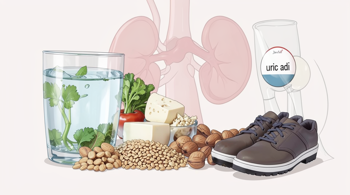
A practical routine combines several modest actions rather than relying on a single food or drink. Meals can emphasize vegetables, whole grains, low-fat dairy, eggs, tofu, legumes, and nuts while reducing organ meats, repeated red-meat portions, high-purine seafood, sugary drinks, and high-fructose processed foods. Water intake should be distributed across the day, alcohol should be limited, and weight change should be gradual if weight reduction is appropriate.
- Choose water or unsweetened drinks instead of soda and frequent fruit juice.
- Limit beer, liquor, and binge drinking.
- Replace organ meats and frequent red meat with lower-risk protein choices.
- Use a DASH-style pattern rich in vegetables, whole grains, legumes, nuts, and low-fat dairy.
- Maintain consistent moderate activity and avoid crash diets or fasting.
- Review uric-acid results and medical risk factors with a clinician.
These measures can reduce preventable triggers and support kidney and metabolic health, but they cannot overcome every genetic, renal, or disease-related factor. The National Institute of Diabetes and Digestive and Kidney Diseases, Mayo Clinic, NHS, MedlinePlus, and the Arthritis Foundation all place lifestyle within a broader management plan that may include prescribed medicine when dietary measures are insufficient. 8 9 10
Sources
- GoutPath.com, “How to Lower Uric Acid Naturally: Evidence-Based Strategies That Work,” https://goutpath.com/guides/lower-uric-acid-naturally
- GoutSnap, “How to Lower Uric Acid Levels Naturally: 12-Week Protocol,” https://goutsnap.com/guides/lower-uric-acid-naturally/
- National Institute of Diabetes and Digestive and Kidney Diseases, “Gout,” https://www.niddk.nih.gov/health-information/kidney-disease/gout/all-content
- National Kidney Foundation, “Kidney Stones,” https://www.kidney.org/kidney-topics/kidney-stones
- New England Journal of Medicine and Arthritis & Rheumatology research summarized in the supplied research data
- BMJ, prospective study of soft drinks, fructose, and gout risk, https://www.bmj.com/content/336/7639/309
- American College of Rheumatology 2020 Guideline for the Management of Gout, https://pmc.ncbi.nlm.nih.gov/articles/PMC10563586/
- Mayo Clinic, “Gout Diet,” https://www.mayoclinic.org/diseases-conditions/gout/in-depth/gout-diet/art-20048524
- NHS, “Gout,” https://www.nhs.uk/conditions/gout/
- MedlinePlus and Arthritis Foundation guidance on gout self-management
Authored by MistyMountainView team