Leading hospitals for Pain management treatment: An evidence-based overview
Leading hospitals for Pain management treatment span academic medical centers, public hospitals, and specialized pain clinics. The available information shows meaningful differences in clinical focus, referral pathways, treatment intensity, specialist expertise, and access conditions, so the term “leading” is best understood as a comparison of documented capabilities rather than a universal ranking.
How the programs differ in clinical scope
Pain programs commonly address both acute and persistent pain, but their documented areas of emphasis vary. Penn Medicine describes care for chronic and acute pain, while Grady Health focuses on chronic pain that interferes with work, sleep, movement, and daily activities. Montefiore Einstein describes a broader multidisciplinary service for persistent facial, spinal, neuropathic, and cancer-related pain that has not responded to traditional therapies. 1 2 3
- Commonly documented conditions include spinal, joint, nerve, headache, musculoskeletal, cancer-related, and postoperative pain. 1 4
- Some programs specifically address complex pain after conventional treatments have failed. 3 5
- Clinical scope should be matched to the underlying diagnosis and the complexity of the pain condition.
Multidisciplinary care and treatment planning
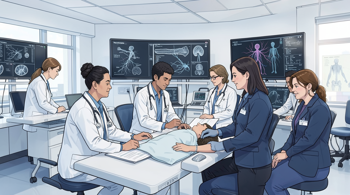
Several programs describe pain management as coordinated care rather than a single procedure. Montefiore Einstein brings together neurosurgery, neurology, interventional pain management, and rehabilitation medicine. Valle del Lili identifies a multidisciplinary team supporting patients with chronic and severe pain, including physical, emotional, and social effects. Grady reports personalized treatment plans developed after assessing the likely source of pain. 3 4 2
- Multidisciplinary models may combine diagnostic assessment, medication management, procedures, rehabilitation, and specialist coordination. 3 4
- Some centers describe alternatives to opioid treatment when clinically appropriate. 3 2
- The stated objective is generally improved function and quality of life, not simply suppression of a symptom.
Procedures and advanced interventions
The research identifies a wide procedural range. Penn Medicine lists cryoanalgesia, epidural steroid injections, facet injections, occipital nerve blocks, intra-articular injections, electromyography, nerve-conduction testing, and radiofrequency treatment. Johns Hopkins describes image-guided procedures, minimally invasive spine procedures, spinal cord stimulation, dorsal root ganglion stimulation, peripheral nerve stimulation, and intrathecal drug delivery for complex cases. 1 8
- Injection-based treatments may be used for spinal, joint, headache, or nerve-related pain. 1
- Neuromodulation uses implanted or delivered electrical or medication-based therapies in selected cases. 8
- Advanced intervention does not mean appropriate intervention; the documented programs generally describe progression from less invasive approaches to more advanced care. 3
Specialist expertise and academic resources
Hospital-level expertise is also reflected in physician training, research, and clinical leadership. Johns Hopkins identifies Paul Christo as chief of its Division of Pain Medicine and reports his work with chronic, neuropathic, cancer, craniofacial, pelvic, and musculoskeletal pain. Cleveland Clinic identifies Nagy Mekhail as a professor with interests in interventional spine pain, cancer pain, and neuropathic pain. UPMC lists Cheryl Bernstein as board-certified in pain medicine and neurology, with expertise including fibromyalgia, headache, postherpetic neuralgia, and cancer pain. 5 6 7
- Academic affiliations can support teaching, clinical research, and specialist referral networks. 5 6
- Subspecialty experience matters when pain involves neurological injury, cancer, persistent postoperative symptoms, or complex regional conditions. 5 8
- Physician ratings shown in provider profiles are individual measures and do not establish a hospital-wide clinical ranking. 5 6 7
Eligibility, referrals, and practical access issues
Access requirements differ across institutions and individual clinicians. Penn Medicine states that pain medicine does not diagnose disorders and that patients need an existing diagnosis and referral. Grady explains that a provider may submit a referral request, while people without a referral may be directed through a primary care center. The supplied profiles also show differences in accepting new patients, age groups, language services, online booking, and accepted insurance plans. 1 2 5 7 9
- Referral rules should be verified before an appointment is arranged because they may depend on diagnosis and department policy. 1 2
- Provider profiles may identify new-patient status, age ranges, languages, office contacts, and insurance information. 5 7 9
- UCSF’s profile documents telehealth visits for established patients, illustrating that virtual access may be limited by patient status or service type. 10
Risks, maintenance realities, and comparison limits
Pain treatment involves clinical tradeoffs that cannot be resolved by hospital reputation alone. Procedures, implanted neuromodulation systems, medication plans, and rehabilitation strategies require diagnosis-specific selection and continuing medical oversight. The supplied material emphasizes individualized plans, coordination among specialties, and progression toward advanced intervention only when appropriate. It also shows that programs differ in referral rules, insurance participation, age eligibility, and location, creating practical friction even when specialist expertise is available. 2 3 8 9
- Important comparison questions include the condition treated, diagnostic requirements, procedural experience, follow-up structure, and rehabilitation support.
- Implanted or procedural therapies should be evaluated alongside their continuing monitoring and specialist-care requirements. 8
- Published provider ratings, institutional descriptions, and service pages are useful reference points but are not equivalent to independent outcome audits. 5 6 7
Sources
- Penn Medicine, Pain Medicine: https://www.pennmedicine.org/specialties/pain-medicine
- Grady Health, Pain Management and Chronic Pain Treatment: https://www.gradyhealth.org/services/pain-management-chronic-pain-treatment/
- Montefiore Einstein Advanced Care, Chronic Pain: https://montefioreeinsteinadvancedcare.org/services/comprehensive-brain-health-center/chronic-pain
- Fundación Valle del Lili, Specialized Management of Chronic and Severe Pain: https://valledellili.org/en/specialized-management-of-chronic-and-severe-pain/
- Johns Hopkins Medicine, Paul Christo, MD, MBA: https://profiles.hopkinsmedicine.org/provider/paul-christo/2704529
- Cleveland Clinic, Nagy Mekhail, MD, PhD: https://providers.clevelandclinic.org/provider/nagy-mekhail/4272031
- UPMC, Cheryl D. Bernstein, MD: https://providers.upmc.com/provider/cheryl-d-bernstein/1325813
- Johns Hopkins Medicine, Eellan Sivanesan, MD: https://profiles.hopkinsmedicine.org/provider/eellan-sivanesan/2708295
- ColumbiaDoctors, Patricia Y. Wang, MD: https://doctors.columbia.edu/us/ny/new-york/patricia-y-wang-md-504-west-35th-street
- UCSF Health, Prasad Shirvalkar, MD, PhD: https://www.ucsfhealth.org/providers/prasad-shirvalkar
Authored by MistyMountainView team