Orthopedic surgeon consultation costs across US regional markets: An Analysis of Pricing Drivers and Financial Variables
Understanding the Variance in Orthopedic Consultation Pricing
Orthopedic surgeon consultation costs are rarely uniform across the United States, as pricing is heavily influenced by regional market conditions, facility ownership structures, and the specific nature of the medical services provided 5. Patients navigating musculoskeletal care often encounter a complex billing landscape where identical clinical procedures may carry significantly different price tags depending on the zip code and the administrative setting of the practice 2. Research indicates that consultations are typically billed as evaluation-and-management services, with costs fluctuating based on the complexity of the diagnosis and the time required for medical decision-making 10. Understanding these underlying financial dynamics is essential for patients aiming to manage their out-of-pocket exposure effectively 1.
Regional Market Impacts on Specialist Fees
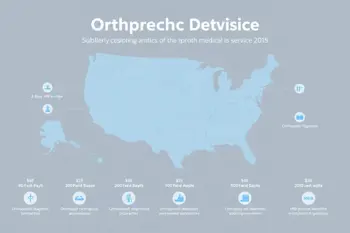
Geographic location remains one of the most prominent drivers of healthcare expenditure disparity in the United States 6. In major metropolitan areas, such as Los Angeles, initial consultations can range from $150 to $450 depending on the neighborhood prestige and local overhead costs 2. Similarly, data from Texas reveals that while local costs may sit below national averages, initial consultations generally range between $100 and $300 3. This regional variation is further complicated by Medicare’s Geographic Practice Cost Indices, which adjust physician payments based on the cost of operating a practice in specific localities, leading to distinct allowed amounts across different markets 10.
The Role of Facility Ownership in Billing
Beyond geographical location, the distinction between independent ambulatory surgery centers and hospital-owned facilities represents a primary factor in overall cost determination 2. Hospital-owned outpatient departments often charge facility fees that can exceed those of independent centers by thousands of dollars for the same clinical procedure 2. National analyses demonstrate that private ownership and the specific nature of the healthcare institution often carry more weight in determining the final cost than external quality ratings or academic affiliations 8. Patients are encouraged to inquire specifically about the facility type and the associated facility fee before proceeding with any examination or intervention 2.
| Service Category | Typical Price Range |
|---|---|
| Initial Consultation | $100 - $300 |
| X-Ray (per scan) | $50 - $250 |
| MRI (per scan) | $500 - $3,000 |
| Physical Therapy (per session) | $75 - $250 |
| Follow-Up Session | $75 - $200 |
Impact of Insurance and Negotiated Rates
Insurance coverage design plays a definitive role in shaping the actual amount a patient pays for orthopedic care 1. For patients covered by Medicare, costs are generally limited to the Part B deductible and a 20% coinsurance payment after the Medicare-approved amount is reached 10. Conversely, commercial insurance rates are often significantly higher than Medicare benchmarks, reflecting the negotiating power of different payers and providers within a specific market 6. Because the allowed amount, which is the maximum an insurer will pay for a service, varies wildly between plans, patients must consider their specific network status and benefit design when evaluating the financial feasibility of treatment 10.
Emerging Costs for Orthobiologic Treatments
Nonsurgical interventions, such as platelet-rich plasma (PRP) and stem cell injections, have introduced new variables to orthopedic financial planning, as these procedures are frequently excluded from standard insurance coverage 7. A nationwide survey of sports medicine practices indicated that PRP injections carry a mean cost of $707, while stem cell injections average $2,728, with individual costs ranging widely based on geographic area and the size of the practice 7. Because these treatments are often out-of-pocket expenses, the decision to proceed requires a clear understanding of the local market price and the provider’s methodology for administration 7.
Policy Factors and Transparency Initiatives
Despite federal mandates requiring hospitals to publish price data, significant variation in the cost of common orthopedic procedures persists across the country 8. Research suggests that transparency laws have yet to narrow the gap in pricing, with costs remaining high in regions like the Northwest and West 6. Furthermore, studies on procedures like total knee arthroplasty show that out-of-pocket costs have been rising steadily over the last decade, with mean burdens exceeding $2,400 in certain time frames 9. Consequently, patients are advised to obtain a Good Faith Estimate and use independent benchmarking tools to compare quoted prices against local market norms before committing to elective care 4.
Sources
- Value Match Consulting Inc, Cost Of Orthopedic Specialist Visit By State
- America Top 10, Orthopedic Surgeons in Los Angeles: What You'll Actually Pay
- Direct Orthopedic Care, How Much Does Orthopedic Care Cost Without Insurance?
- CareCostIndex, Healthcare Procedure Costs by State
- Randall Travel Award, Orthopedic Fees: Ultimate Cost Guide & Savings Tips
- Merative Blog, MarketScan commercial data shows wide variations in elective surgery prices
- Jeffrey Peng MD, How Much Do PRP and Stem Cell Injections Cost?
- OrthoArchives, A Nationwide Study on Price Transparency and Variables Affecting the Cost of Common Hand Procedures
- OrthoArchives, Total Knee Arthroplasty Out-of-Pocket Costs on the Rise
- Centers for Medicare & Medicaid Services, Physician Fee Schedule
Authored by MistyMountainView team