Home recovery for neck surgery: A clinical roadmap for healing at home
Home recovery for neck surgery begins when hospital or outpatient discharge instructions take over from operating-room care. The first days generally emphasize rest, medication adherence, short walks, incision protection, and assistance with routine tasks, while the exact plan depends on the procedure, number of spinal levels, overall health, and the surgeon’s instructions. 1
What recovery may involve
Cervical procedures include anterior cervical discectomy and fusion, posterior operations, laminectomy, and cervical disc replacement. ACDF removes a damaged disc or bone spurs, decompresses nerves or the spinal cord, and places a graft intended to unite adjoining vertebrae. Disc replacement does not require bone fusion, so restrictions may be governed more by soft-tissue healing, although individual protocols still vary. 1 8
Recovery is gradual rather than uniform. Some patients begin light activities within eight to twelve weeks, while complete healing may take three to six months. Fusion procedures can require a longer period of protection because bone maturation continues after symptoms begin to improve. A laminectomy may involve one to three days of hospital monitoring, whereas some cervical procedures are performed with same-day or overnight discharge. 5 6
Preparing the home environment
Home preparation reduces the need for bending, twisting, high reaching, and obstacle navigation during the early recovery period. Frequently used items should be placed between waist and shoulder height, pathways should be cleared, and essential supplies should be accessible without repeated trips. A recliner or firm bed with supportive pillows may make position changes easier during the first 24 hours. 3 4
Assistance is particularly important after anesthesia or when prescription pain medicine causes drowsiness. A responsible adult may need to help with meals, bathing, medication organization, transportation, and observation during the initial period. Low beds, slippery bathroom surfaces, loose rugs, and objects on the floor can create avoidable fall hazards when neck movement and balance are temporarily limited. 3 2
The first 48 hours at home
The immediate objective is protection and controlled movement, not a rapid return to normal activity. Medical teams commonly encourage standing and short walks on the day of surgery or within the first day, with assistance as needed, to support circulation and reduce clot-related risk. Position changes should be slow, and activity should stop if symptoms substantially worsen. 2 9
Pain, incision soreness, neck stiffness, and a heavy sensation across the neck or shoulders may occur early. Prescribed medicines should be taken only according to the discharge schedule, with attention to dosage limits and sedation. Ice may be recommended for swelling, but its use, duration, and placement should follow the surgical team’s directions. Driving is generally inappropriate while taking sedating medication or when neck movement is restricted. 2 6
Incision, collar, and sleep care
The incision should be observed for changes and kept clean and dry according to the discharge instructions. Submerging the wound in a bath, pool, or hot tub is generally avoided until the surgeon confirms that healing is adequate. A cervical collar may be prescribed for several weeks, particularly when stabilization is needed during fusion or graft integration. Collar fit and wearing duration are procedure-specific, so adjustments should not be improvised. 3 7 11
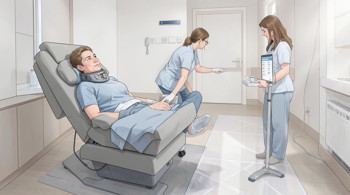
Sleep positioning can reduce strain during the early phase. Back sleeping with a thin or otherwise surgeon-approved supportive pillow is commonly recommended, while stomach sleeping is generally discouraged. Mild swallowing difficulty or temporary hoarseness can occur after an anterior approach because tissues at the front of the neck are affected. Persistent, worsening, or severe swallowing and breathing problems require clinical assessment rather than home observation alone. 7 15 16
Restrictions and rehabilitation
Heavy lifting, repetitive bending, twisting, sudden neck movements, and strenuous exercise are commonly restricted for approximately six to twelve weeks, but limits differ between non-fusion procedures, fusions, and disc replacements. Guidance may include a five-to-ten-pound lifting limit during the first weeks. Work resumption depends on job demands and often falls within a four-to-twelve-week range, although office work and physically demanding work may follow different schedules. 10 8 18
Physical therapy is often introduced after the incision and initial surgical tissues have sufficiently healed, commonly around six weeks, but the timing must be individualized. Therapy may address posture, controlled range of motion, upper-body function, and progressive strengthening. Follow-up appointments and imaging are used to evaluate neurological recovery, implant position, and, after fusion, progression of bone healing. Nicotine avoidance is emphasized because nicotine can delay fusion and healing. 13 9 12 17
Risks, warning signs, and long-term expectations
Expected soreness should gradually improve, but worsening symptoms can signal a complication. Immediate medical contact is warranted for sudden or increasing arm weakness, new numbness, escalating pain, significant fever, wound drainage, marked swelling, breathing difficulty, or severe swallowing problems. New neurological changes are especially important because cervical nerves and the spinal cord influence arm sensation, movement, grip, coordination, and, at some levels, breathing muscles. 1 6
Clinical oversight remains necessary after discharge. Follow-up timing, collar clearance, lifting progression, driving approval, return-to-work decisions, and therapy advancement should come from the treating team rather than a general timeline. Fusion patients may require restrictions for several months while bone consolidates, and long-term maintenance can include posture awareness, prescribed exercises, nicotine avoidance, and monitoring for persistent or recurrent symptoms. Individual eligibility for outpatient recovery depends on the operation, medical stability, neurological status, home support, and surgeon assessment. 4 5 7
Sources
- Neurosurgeons of New Jersey, “Neck Surgery: Comprehensive Guide to Recovery”
- NeuroSpine Plus, “What to Expect After Cervical Spine Surgery”
- G. Katsevman, MD, “Preparing Your Home for Spine Surgery Recovery”
- Kelly Bridges Neurosurgery, “Post-Operative Discharge Instructions”
- Liv Hospital, “How to Recover from Neck Surgery in 12 Weeks”
- Southern California Brain & Spine, “Recovery from Cervical Laminectomy: Timeline and Tips”
- Liv Hospital, “How to Prepare for and Recover from Cervical Neck Fusion Surgery”
- Sardar Spine, “Cervical Disc Replacement Recovery: Timeline, Restrictions & What to Expect”
- Mayo Clinic, “Cervical Spine Surgery”
- Johns Hopkins Medicine, “Cervical Spine Surgery”
- Cleveland Clinic, “Cervical Spine Surgery”
- Spine-health, “Cervical Spine Surgery Recovery”
- Cedars-Sinai Spine Center, “Cervical Surgery”
- Hospital for Special Surgery, “Cervical Spine Surgery”
- UCLA Health, “Cervical Spine Surgery”
- Mount Sinai, “Cervical Spine Surgery”
- Penn Medicine, “Cervical Spine Surgery”
- OrthoInfo, American Academy of Orthopaedic Surgeons, “Cervical Spine Surgery”
Authored by MistyMountainView team