Identifying potential warning signs of kidney disease: A clinical guide to symptoms and testing
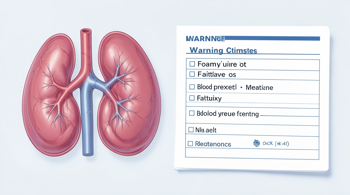
Identifying potential warning signs of kidney disease requires attention to subtle changes, including persistent fatigue, swelling, altered urination, foamy urine, itching, nausea, and appetite loss. These signs can have many causes, and early chronic kidney disease often produces no symptoms, so clinical testing remains essential for determining whether kidney damage is present. 1
Why kidney disease can remain unnoticed
The kidneys remove waste products, regulate fluid and electrolyte balance, support blood-pressure control, activate vitamin D, and contribute to red blood cell production. When kidney function declines, several body systems can be affected, but the early changes may be mild or absent. UCLA Health reports that most people with chronic kidney disease are unaware of their condition, while the NIH describes CKD as a problem that commonly remains symptom-free until it is advanced. 1 4
Chronic kidney disease is defined as evidence of kidney damage lasting at least three months. It is commonly classified into five stages using estimated glomerular filtration rate, or eGFR, a blood-test measure of filtering ability. Because symptoms do not reliably indicate the stage of disease, a person can feel well while kidney function is changing. The National Institute of Diabetes and Digestive and Kidney Diseases states that testing is the only way to know how well the kidneys are working. 1 6
Changes in urination and urine appearance
A noticeable change in how often a person urinates can be a potential warning sign. Increased urination, particularly at night, is associated with kidney problems in the supplied clinical references, although urinary changes can also arise from other conditions. Foamy or bubbly urine may indicate albumin or another protein passing into the urine because kidney filters have been damaged. Persistent changes should therefore be discussed with a health care provider rather than interpreted from appearance alone. 6 7
Blood in the urine, known medically as hematuria, warrants medical investigation because it can signal a urinary-tract or kidney problem. The presence of blood does not establish a diagnosis, and it may have causes unrelated to chronic kidney disease. Urine testing can check for albumin, a protein that may pass into urine when the kidneys are damaged. A laboratory result is more informative than relying only on color, foam, frequency, or odor. 6 7
Swelling, fatigue, and other physical changes
Swelling in the feet, ankles, hands, or legs can occur when impaired kidneys do not remove excess fluid effectively. Edema is not specific to kidney disease, but persistent or unexplained swelling is one of the physical changes identified in the supplied medical sources. Kidney impairment can also be associated with fatigue or weakness because reduced kidney function may contribute to anemia, which affects energy levels and daily functioning. 2 3
As kidney function declines, additional symptoms may include persistent itching, dry skin, muscle cramps, nausea, and reduced appetite. These effects are linked in the research material to waste accumulation, mineral or electrolyte imbalance, and disruption of kidney functions that support blood and bone health. Symptoms may appear in advanced disease, but none is unique to kidney disease. Their significance depends on duration, severity, medical history, examination, and laboratory results. 3 5
Blood pressure and underlying risk factors
High blood pressure has a two-way relationship with kidney disease. It is one of the most common causes of chronic kidney disease and can also become more difficult to control when the kidneys cannot regulate fluid and sodium effectively. Because elevated blood pressure may produce no obvious sensation, routine measurement is important, especially for people who already have hypertension or other kidney-disease risks. 4 7
Diabetes and high blood pressure are identified across the supplied sources as leading causes of chronic kidney disease. Other recognized risk factors include heart disease, a family history of kidney failure or kidney disease, older age, obesity, infections, stones, urinary blockage, inherited conditions, and certain medicines. Risk factors do not prove that kidney disease exists, but they strengthen the case for discussing an appropriate testing schedule with a health care provider. 4 6
How clinicians check for kidney disease
The principal assessment combines a blood test and a urine test. The blood test is used to estimate GFR, which indicates how effectively the kidneys filter blood. NIDDK describes a GFR of 60 or more as within the normal range, while a result below 60 may indicate kidney disease and requires clinical interpretation. A GFR of 15 or less is identified as kidney failure. Results must be evaluated in context and monitored over time. 6
The urine test checks for albumin, a protein that can enter urine when kidney filters are damaged. Blood pressure measurement is also relevant because hypertension can both cause and accompany kidney disease. Depending on the findings, clinicians may use additional blood work, imaging, or repeat testing. A single symptom or isolated result cannot confirm chronic disease, which requires evidence of kidney damage or reduced function over the relevant period. 1 6
When symptoms warrant medical assessment
Medical assessment is particularly important when urine changes persist, blood appears in the urine, swelling is unexplained, fatigue does not resolve, or nausea and appetite loss occur alongside other changes. Severe swelling, shortness of breath, very low urine output, or visible blood in the urine are described in the supplied material as situations requiring prompt medical care. These symptoms can reflect several conditions, so evaluation should focus on identifying the cause rather than assuming kidney disease. 5
People with diabetes should discuss yearly kidney checks with a health care provider, while those with high blood pressure, heart disease, or a family history of kidney failure should ask how often testing is appropriate. Early detection can help clinicians address contributing conditions and monitor kidney function before major symptoms develop. The central warning sign is therefore not a single sensation, but a pattern of risk factors, persistent changes, and objective blood or urine findings. 6 4
Sources
- UCLA Health, “What to know about kidney health”
- Stony Brook Medicine, “Kidney Disease: Early Signs, Causes, Stages and How to Protect Yourself”
- AdventHealth, “What Are the Symptoms of Kidney Disease?”
- NIH News in Health, “Curbing Chronic Kidney Disease”
- Acibadem Hospitals Group, “Kidney Disease Symptoms: Possible Causes and When to Seek Care”
- National Institute of Diabetes and Digestive and Kidney Diseases, “Chronic Kidney Disease Tests & Diagnosis”
- National Kidney Foundation and American Kidney Fund symptom guidance
Authored by MistyMountainView team