Tinnitus Treatment Specialists Across America: A Guide to Clinical Care and Professional Resources
The Clinical Scope of Tinnitus Management
Tinnitus is defined as the perception of ringing, buzzing, hissing, or pulsing sounds that lack an external physical source 1. Rather than being a distinct disease, it is frequently categorized as a symptom of an underlying issue within the auditory or neurological system 2. Clinicians emphasize that effective management typically moves beyond simple masking, focusing instead on comprehensive evaluations to identify root causes such as noise-induced hearing loss, changes in brain signal processing, or systemic health issues 2, 9. Doctors of Audiology (Au.D.) play a central role in this process, using advanced diagnostics to determine the specific acoustic profile of a patient’s tinnitus 1, 11.
Specialized centers across the United States adopt evidence-based methodologies to address these symptoms. For example, clinics may employ personalized soundscapes, Tinnitus Retraining Therapy (TRT), or, in specific settings, emerging neuromodulation technologies 2, 7, 8. The goal for these specialists is to reduce the impact of the sound on a patient's quality of life, sleep, and focus, rather than promising a universal cure 2. Because tinnitus is fundamentally a neurological phenomenon, successful treatment often requires a long-term, supportive clinical partnership 9.
Multidisciplinary Approaches to Care
Managing persistent tinnitus often involves a multidisciplinary approach that integrates audiology, otolaryngology, and mental health counseling 11. Behavioral interventions, particularly Cognitive Behavioral Therapy (CBT), are recognized as gold-standard treatments for mitigating the emotional distress and anxiety associated with chronic symptoms 11, 17. By addressing the brain's emotional response to auditory signals, patients can develop coping mechanisms that reduce the perceived intensity and annoyance of the ringing 11.
Major academic medical centers frequently house specialized clinics designed for complex cases. Institutions such as the University of California San Francisco (UCSF) and Johns Hopkins provide dedicated programs that combine diagnostic audiology with psychological support 11, 14, 15. These centers allow patients to access a range of services, from pitch and loudness matching to comprehensive aural rehabilitation, ensuring that the treatment plan is tailored to the individual’s specific clinical needs and history 11.
Specialized Programs for Tinnitus Relief
Structured rehabilitative programs have been developed to standardize care across different populations. The Progressive Tinnitus Management (PTM) program, established by the U.S. Department of Veterans Affairs, provides a hierarchical framework for managing symptoms in a clinical environment 11, 13. This program focuses on education, skills training, and environmental modifications, providing a model for evidence-based care that is widely studied and implemented in specialty clinics nationwide 11.
Clinical practice often follows guidelines set by professional organizations, such as the American Academy of Otolaryngology-Head and Neck Surgery, which advocate for the use of directive counseling 11. These guidelines assist providers in distinguishing between occasional symptoms and chronic, bothersome tinnitus that requires intervention. By utilizing structured protocols, audiologists can help patients navigate the complex intersection of auditory input and neurological perception, facilitating better long-term outcomes for those living with the condition 11, 19.
The Role of Credentials in Tinnitus Care
Patients seeking specialized care often look for clinicians with specific certifications and training. Organizations like the American Tinnitus Association (ATA) and the American Board of Audiology maintain resources and directories to help the public identify providers who have achieved specialized status in tinnitus management 11, 12. A Certification in Tinnitus Management (CH-TM) or status as a designated provider indicates that a clinician has completed advanced coursework and clinical training beyond standard audiological licensure 4, 5.
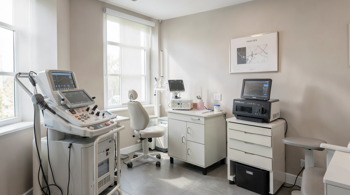
These designations are important because tinnitus treatment is highly nuanced. For instance, some specialists pursue additional training in hyperacusis-an increased sensitivity to sounds-or misophonia, which often co-occur with tinnitus 6. Clinics led by clinicians with this depth of expertise are equipped to perform detailed diagnostic testing, such as pitch and loudness matching, which informs the creation of sophisticated sound masking protocols that are significantly more precise than generic white noise applications 6, 7, 11.
Geographic Distribution of Expertise
Tinnitus expertise is distributed across various independent practices and large healthcare networks in the United States. In regions like Alaska, New Mexico, and Utah, private audiology groups have established specialized centers that prioritize long-term tinnitus rehabilitation 1, 3, 8, 9. These practices often highlight their independence from standard, limited hearing care models by providing in-depth consultations that address the specific psychosocial and physical impacts of tinnitus on the patient’s daily life 3, 9.
In larger markets, such as Cincinnati, Hastings, or Salt Lake City, specialized clinics operate by integrating advanced device technology, such as FDA-cleared neuromodulation devices, with traditional counseling and audiological care 2, 7, 8. The regional variation in tinnitus care centers demonstrates that high-quality clinical support is available in diverse community settings. Prospective patients are encouraged to research clinical credentials, check for affiliation with professional audiology boards, and verify the availability of multi-modal treatment options before scheduling an evaluation 4, 11, 16.
Regulatory Oversight and Patient Expectations
It is important for patients to maintain realistic expectations regarding tinnitus management. While clinical techniques have advanced significantly, the American Academy of Audiology and other professional bodies clarify that there is no singular medical cure for most forms of tinnitus 11. Treatment is focused on habituation and the reduction of symptom interference rather than total elimination of the sound 1, 2. Regulatory oversight of audiological practices ensures that patients receive evidence-based care, though individual outcomes will always vary based on the root cause and the complexity of the patient's hearing profile 3, 19.
Clinics are expected to follow strict ethical standards regarding the promotion of their services, emphasizing diagnostic accuracy and patient-centered counseling over the sale of hardware 9, 19. When selecting a specialist, it is standard practice to evaluate the clinic's commitment to ongoing management, as successful tinnitus relief is rarely achieved in a single session. Patients should expect a thorough diagnostic phase followed by a tailored, iterative treatment plan that may involve multiple types of therapeutic interventions 6, 7, 11.
Sources
- Tinnitus Specialists of New Mexico: Tinnitus Treatment Information
- Hill Hear Better Clinic: Clinical Tinnitus Services
- Audiology Associates, Inc.: Anchorage Tinnitus Care
- Timpanogos Hearing & Tinnitus: Dr. Layne Garrett Credentials
- Capital Hearing Wellness Center: Dr. Lindsay Allison Profile
- Froedtert & the Medical College of Wisconsin: Dr. Ann R. Smith Profile
- Journey Tinnitus Relief Center: Clinical Services
- University of Utah Health: Kaelin C. Roy, AuD Profile
- Timpanogos Hearing & Tinnitus: Advanced Tinnitus Protocols
- Timpanogos Hearing & Tinnitus: Community Care Philosophy
- General Clinical Consensus and Audiology Guidelines (ATA, VA, ASHA)
- American Tinnitus Association (ATA)
- U.S. Department of Veterans Affairs (VA)
- Johns Hopkins Medicine
- UCSF Health
- American Academy of Audiology
- Cleveland Clinic
- Hearing Loss Association of America
- American Speech-Language-Hearing Association (ASHA)
- House Institute
Authored by MistyMountainView team