Ways to manage eyelash mites at home: Evidence-based guidance for eyelid care
Ways to manage eyelash mites at home generally focus on gentle eyelid hygiene, warm compresses, and reducing irritation rather than trying to eliminate every mite. Demodex mites are microscopic organisms that commonly live in eyelash follicles and eyelid oil glands, and they usually become a concern only when their numbers or the eyelid’s inflammatory response increases.1
Understanding when eyelash mites become a problem
Demodex folliculorum lives mainly in eyelash follicles, while Demodex brevis is associated with oil glands near those follicles. These organisms are part of the normal skin microbiome for many adults, so their presence alone does not establish disease or indicate poor hygiene.2 Symptoms are more consistent with Demodex blepharitis when overgrowth is accompanied by inflammation along the eyelid margins.
Possible signs include itching, burning, redness, puffy eyelids, dry-eye symptoms, a gritty or foreign-body sensation, and crusting at the roots of the lashes. Cylindrical sleeves of debris, sometimes called collarettes or cylindrical dandruff, are a particularly recognizable finding around individual eyelashes.1 Similar symptoms can also occur with bacterial blepharitis, allergies, dry eye, rosacea, or other eyelid conditions, which makes self-diagnosis uncertain.
Begin with gentle eyelid cleaning
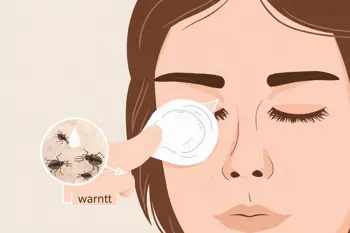
Regular cleaning removes accumulated oil, flakes, and debris from the lid margin. A practical routine involves washing the hands, closing the eyes, and cleaning the eyelids and lashes gently with clean water and an eyelid-cleaning product intended for the eye area. The motion should be light and controlled, because aggressive rubbing can worsen inflammation and irritate the ocular surface.3
Cleaning should address the lash line without pulling on the eyelashes or scraping the skin. The American Academy of Dermatology and other clinical references describe eyelid and lash cleansing as a supportive measure for blepharitis management.4 A consistent routine may help control debris and irritation, but it may not resolve persistent Demodex-related inflammation when prescription treatment or a confirmed diagnosis is needed.
Use warm compresses safely
A comfortably warm compress can soften crusts and loosen material at the lash roots before eyelid cleaning. Warmth may also support drainage from the eyelid’s oil glands, which can be relevant because Demodex brevis is associated with these glands.3 The compress should be warm rather than hot, and it should not cause stinging, redness, or discomfort.
For safety, a clean cloth should be used and the compress should be applied with the eyes closed. Reusing a soiled cloth can transfer skin oils and microorganisms back to the eyelids, so washcloths and towels should not be shared. Warm compresses are supportive care, not proof that mites have been eradicated, and symptoms that continue despite hygiene warrant clinical assessment.5
Reduce sources of irritation and transfer
Eye makeup and contact lenses can aggravate an already inflamed eyelid. During active irritation, commonly recommended supportive measures include pausing eye makeup and contact-lens use until symptoms settle or an eye-care professional provides individualized advice.3 Mascara, eyeliner, and other products used around the eyes should not be shared, because cosmetics can become contaminated and contribute to eye infection.
Old or potentially contaminated eye cosmetics should be discarded rather than reused. The U.S. Food and Drug Administration advises consumers to avoid sharing eye cosmetics and to replace products when contamination is suspected.7 Handwashing before touching the eyes, using separate clean towels, and avoiding unnecessary eye rubbing can reduce irritation and limit transfer of organisms between hands, surfaces, and eyelids.
Approach tea tree oil with caution
Tea tree oil has been studied in ocular Demodex management because some of its components show antimicrobial activity. However, research emphasizes that concentration and formulation matter, and clinical products or procedures are not equivalent to applying household essential oil near the eye.8 Evidence about tea tree oil does not establish that undiluted oil is safe for home use on the eyelid margin.
Undiluted tea tree oil and other essential oils can irritate or injure the eye and should not be placed in the eye or applied directly to the eyelid without professional guidance. Harsh scrubs, alcohol, household chemicals, and unapproved substances create avoidable risks and do not represent established home care. Safer self-care centers on gentle cleansing and comfortably warm compresses while the cause of symptoms is clarified.
Know when professional evaluation is needed
An eye-care professional can assess the eyelid margins, look for collarettes, and distinguish Demodex blepharitis from other causes of crusting and irritation. Persistent or recurrent symptoms may require targeted treatment, including prescription eye drops that reduce excess mites, according to Cleveland Clinic’s discussion of Demodex blepharitis.1 Treatment selection depends on examination findings, symptoms, and the condition of the eyelids and ocular surface.
Prompt medical attention is appropriate for eye pain, light sensitivity, vision changes, marked swelling, or symptoms that do not improve with gentle hygiene. Repeated styes, continuing redness, or ongoing eyelid discomfort also justify assessment because untreated inflammation can affect comfort and eye health.5 Eyelashes should not be pulled out in an attempt to remove mites, and home treatment should stop if cleaning or compresses increase pain or visual symptoms.
Sources
- Cleveland Clinic, Demodex Blepharitis: What It Is, Symptoms & Treatment
- American Academy of Ophthalmology, What Is Demodex?
- Mayo Clinic, Blepharitis: Symptoms and Causes
- American Academy of Dermatology, Blepharitis Treatment
- NHS, Blepharitis
- DermNet, Demodicosis
- U.S. Food and Drug Administration, Eye Cosmetic Safety
- National Library of Medicine, Tea Tree Oil and Ocular Demodex Review
Authored by MistyMountainView team