Home recovery for carpal tunnel release: A clinical perspective on post-operative care and rehabilitation
Home recovery for carpal tunnel release requires a structured approach to managing the surgical site, mitigating post-operative inflammation, and gradually reintroducing hand function 6. As one of the most frequently performed hand procedures in the United States, with over 500,000 cases annually, standardized post-operative care is essential to optimizing long-term outcomes 4. This guide outlines the clinical phases of healing, exercise-based recovery strategies, and the physiological considerations necessary for a successful return to daily activities.
The Initial Surgical Recovery Phase
Immediately following the procedure, the primary goal of home care is to protect the surgical incision and manage initial inflammatory responses. Most patients undergo this procedure on an outpatient basis, often utilizing techniques such as Wide Awake Local Anesthesia No Tourniquet (WALANT) to minimize the need for systemic anesthesia 3. During the first 48 to 72 hours, elevating the affected hand above heart level is clinically recommended to reduce edema and minimize discomfort at the incision site 9. Patients are typically advised to keep the dressing clean and dry to prevent complications, with stitches generally removed or dissolved between 10 and 14 days post-operatively 8.
Exercise-Based Rehabilitation Strategies
Recent research indicates that systematic home-based training can significantly enhance functional outcomes and patient satisfaction after surgery 1. A prospective, randomized, multicenter trial demonstrated that patients who participated in a structured home training program, including the use of therapeutic modeling clay, showed significant improvements in hand strength after four weeks compared to those relying on standard therapy 1. Early mobilization, such as gentle finger movements, is encouraged within 24 to 48 hours to prevent stiffness and reduce the risk of scar tissue formation 4, 8.
Phase-Based Recovery Progression
Clinical frameworks for recovery are typically organized into three progressive phases to ensure that tissue healing keeps pace with increased mechanical load. These phases facilitate a safe transition from initial protection to full functional utilization.
| Recovery Phase | Expected Duration | Key Focus |
|---|---|---|
| Phase One | Days 1 to 14 | Incision protection, edema management, and gentle finger motion. |
| Phase Two | Weeks 2 to 6 | Gradual increase in light hand use and initiation of stretching. |
| Phase Three | Months 2 to 12 | Progressive strengthening and long-term functional restoration. |
While Phase one centers on rest and protecting the surgical site, Phase two introduces light activities as stitches are removed 9. Full restoration of grip strength, pinch strength, and coordinated hand use is often delayed, requiring dedicated exercise-based interventions throughout the subsequent months 5, 7.
Managing Expectations and Potential Risks
It is important for patients to acknowledge that while sensory symptoms such as numbness and tingling often show improvement shortly after surgery, full nerve healing and the return of strength occur on a heterogeneous timeline 5, 8. Persistent or worsening pain, spreading redness, drainage, or fever are clinical indicators that warrant immediate evaluation to rule out infection or surgical complications 6. Furthermore, factors such as pre-existing severe nerve damage, diabetes, or tobacco use may influence the speed and extent of neurological recovery, making individual adherence to surgeon-specific activity restrictions critical 2, 7.
Activity Restrictions and Long-Term Function
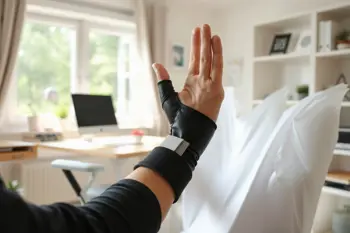
Maintaining activity restrictions is a cornerstone of effective post-operative care. Patients are generally advised to avoid heavy lifting, forceful grasping, or repetitive wrist tasks for at least four to six weeks to allow the ligamentous structure in the wrist to stabilize 4, 8. A wrist splint may be prescribed for the initial one to two weeks to provide comfort and stability, particularly during sleep or when performing necessary light tasks 8. Returning to light, non-forceful desk work is often possible within a few days of the procedure, provided the surgical site remains protected from mechanical strain 8.
Clinical Significance of Specialized Therapy
For patients lacking easy access to formal rehabilitative services, structured home-based programs serve as a vital alternative to improve hand function and overall patient satisfaction 1. The inclusion of nerve and tendon gliding exercises is considered biologically plausible to support nerve regeneration and prevent adhesions 5. As recovery progresses, occupational therapy may be specifically utilized to address potential complications like pillar pain or scar tissue hypersensitivity, ensuring that the patient regains full range of motion in the wrist 8. Professional guidance in these exercise progressions remains a fundamental component for preventing long-term setbacks 4.
Sources
- Effectiveness of a home-based training program on hand function after carpal tunnel release: A prospective multicenter trial, Brain and Spine, 2026
- Carpal Tunnel Release Surgery Recovery Guide, Acibadem Hospitals Group, 2026
- Carpal Tunnel Surgery Recovery, Brandon P. Donnelly, MD
- When to Start Exercise After Carpal Tunnel Surgery, HealthFlexio, 2026
- Postoperative Functional Recovery After Carpal Tunnel Release: A Narrative Review on Exercise-Based Rehabilitation, Cureus, 2026
- Carpal Tunnel Surgery Aftercare & Pain Management Tips, CarpalRx
- Carpal Tunnel Recovery: What to Expect After Surgery, CarpalRx
- General Surgical Recovery Guidelines, Various Clinical Resources (AAOS, Johns Hopkins, Mayo Clinic, Cleveland Clinic)
- Post Op Advice for Carpal Tunnel Decompressions, Barbara Jemec MD
Authored by MistyMountainView team