Natural remedies for sore throat: Clinical guidance for symptom relief
Why sore throats happen
A sore throat is inflammation in the pharynx, the area at the back of the throat. Viral infections are the most common cause, including common colds, influenza, and COVID-19, and many uncomplicated cases improve within several days without antibiotics. Strep throat results from Streptococcus pyogenes bacteria and requires testing and, when confirmed, antibiotics prescribed by a clinician. Other causes include acid reflux, allergies, dry indoor air, smoke, pollution, alcohol, spicy foods, and vocal strain. 1
Symptoms may include pain, scratchiness, cough, fever, headache, hoarseness, swollen glands, inflamed tonsils, runny nose, and difficulty swallowing. Because a sore throat can reflect different conditions, natural measures should be viewed as symptom support rather than a cure for every underlying cause. Antibiotics do not treat viral infections, and using them without a bacterial diagnosis can expose a person to unnecessary risks. 6
Hydration and warm liquids
Drinking fluids throughout the day helps prevent dehydration and keeps irritated throat tissue moist. Warm water, tea, and broth may feel soothing, while cool liquids can also reduce discomfort for some people. Ice chips and ice pops provide fluid while temporarily numbing the throat. Avoiding drinks that worsen reflux or irritation may also be useful when those conditions contribute to symptoms. 2
Warm tea with honey is commonly used for cough-associated soreness because honey can coat the throat and reduce irritation. Honey may also calm a mild cough, which can otherwise repeatedly aggravate inflamed tissue. Honey is intended for adults and children older than 1 year only. It must not be given to infants younger than 12 months because of the risk of infant botulism. 3
- Choose frequent sips rather than waiting until thirst develops.
- Use a temperature that feels comfortable rather than very hot liquid.
- Do not give honey to an infant under 12 months.
Salt-water gargles
Warm salt water can loosen mucus, lubricate the throat, and reduce irritation. A commonly cited mixture is one-half teaspoon of salt in about 8 ounces, or 1 cup, of warm water. Gargling for several seconds and spitting the solution out can be repeated periodically. Salt water may also inhibit some oral bacteria, although it does not replace evaluation or treatment for confirmed strep throat. 2
Gargling is appropriate only for people who can do it safely without swallowing the mixture. Young children and anyone with swallowing or coordination difficulties should not be instructed to gargle. A baking soda and salt mixture is another described option, using one-fourth teaspoon of baking soda and one-eighth teaspoon of salt in a cup of warm water, followed by a plain-water rinse. 7
Humidity, rest, and irritant avoidance
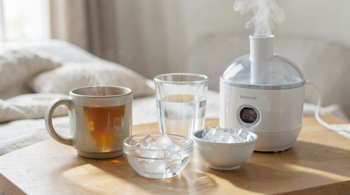
Dry indoor air can intensify scratchiness, particularly during colder seasons when heating systems reduce humidity. A cool-mist humidifier or humidified air may ease dryness, while adequate sleep and reduced voice use give irritated tissues time to recover. Humidifiers require regular cleaning according to manufacturer instructions because poorly maintained equipment can add contaminants to the air. 8
Cigarette smoke, vaping aerosols, air pollution, chemical fumes, alcohol, and strongly spicy foods can continue irritating the throat. Avoiding smoky environments is therefore part of supportive care, not simply a general lifestyle suggestion. People with allergies may also experience soreness from postnasal drainage, while reflux can produce recurring irritation that is unlikely to resolve through soothing drinks alone. 9
- Rest the voice if soreness follows prolonged yelling or singing.
- Keep bedroom air comfortably humidified when dryness is prominent.
- Avoid smoke and other known personal irritants.
Lozenges, ice, and herbal options
Lozenges, hard candy, and ice chips can increase saliva and temporarily lubricate or numb the throat. These options are not suitable for young children who may choke on hard items. Herbal teas, including preparations containing chamomile, slippery elm, or marshmallow root, are described as soothing options, but “natural” does not automatically mean risk-free. Allergies, medication interactions, pregnancy, and underlying health conditions can affect whether an herb is appropriate. 4
Evidence and safety vary substantially among herbal products and essential oils. Essential oils should not be swallowed, and applying concentrated oils directly to the skin or throat can cause irritation or allergic reactions. Steam may feel comforting, but very hot water and steam create burn risks, especially for children. Symptom relief should not be confused with antibacterial treatment or proof that an infection has been eliminated.
When home care is not enough
Medical assessment is warranted when a sore throat is severe, worsening, lasts longer than about a week, or repeatedly returns. White patches on the tonsils, high fever, rash, swollen lymph nodes, muffled voice, facial swelling, persistent hoarseness, or difficulty opening the mouth can indicate a condition requiring examination and possibly throat testing. A clinician may distinguish viral illness, strep throat, tonsillitis, reflux, allergy-related irritation, or another cause. 5
Urgent care is needed for trouble breathing, inability to swallow liquids or saliva, drooling, severe dehydration, rapidly worsening symptoms, or significant swelling. Children, older adults, and people with weakened immunity may need earlier evaluation. Testing may be appropriate when strep, influenza, or COVID-19 is suspected, since home remedies can reduce discomfort but cannot determine the cause or provide treatment for serious infection. 10
- Seek urgent help for breathing difficulty or inability to swallow.
- Arrange medical review for persistent, severe, or recurrent symptoms.
- Do not use home remedies to delay care for a high-risk person.
Practical limits and safety considerations
The most reliable home-care measures are supportive: fluids, comfortable warm or cool drinks, salt-water gargles when safe, humidified air, rest, and avoidance of smoke. These approaches may make swallowing, sleeping, and speaking easier while a mild viral illness resolves, but their effects are generally temporary. No remedy can safely be presented as a universal cure, and persistent symptoms require attention to the underlying cause. 8
Safety depends on age, swallowing ability, allergies, medical history, and concurrent medicines. Honey has a clear infant restriction, hard candies pose choking risks, and concentrated essential oils can irritate tissue. People with diabetes may need to account for honey or sweetened drinks, while those with reflux may find acidic or spicy ingredients aggravating. A pharmacist or clinician can help assess remedies when symptoms, medicines, or health conditions create uncertainty. 3
Sources
- WebMD, “Remedies for Sore Throat”
- Verywell Health, “14 Sore Throat Remedies That Can Provide Quick Relief”
- Cleveland Clinic, “Does Honey Help With a Sore Throat?”
- Good Housekeeping, “12 Best Home Remedies for a Sore Throat, According to Doctors”
- ENT Specialists of Northwestern Pennsylvania, “Home Remedies for Sore Throat Relief and When They’re Not Enough”
- Centers for Disease Control and Prevention, “Sore Throat”
- Mayo Clinic, “Sore Throat: Diagnosis and Treatment”
- MedlinePlus, “Sore Throat”
- National Health Service, “Sore Throat”
- Cochrane, “Honey for Acute Cough in Children and Adults”
Authored by MistyMountainView team