Best photography groups for seniors near me: A Local Research Guide
The search for the best photography groups for seniors near me usually begins with a practical location question: which senior centers, community organizations, libraries, colleges, or residential communities operate photography activities in the relevant city or neighborhood? Available examples show that senior photography groups vary considerably, from informal monthly discussions to structured clubs with workshops, assignments, exhibitions, and peer critique.
What senior photography groups commonly offer
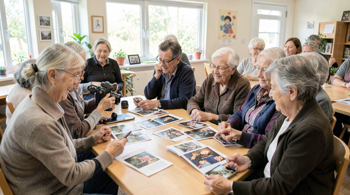
Documented groups generally combine photography learning with social connection. The Kanata Seniors’ Centre Camera Club in Ontario welcomes beginners and experienced photographers, describes its environment as supportive and non-judgmental, and encourages monthly meetings, workshops, presentations, and voluntary image submissions. Its regular meetings usually run from September through June, on the first Friday morning of each month, with presentations, a coffee break, photo challenges, and member image reviews. 1
Other groups use a less formal learning model. A photography discussion group at the Verona Senior Center meets monthly and brings together hobby photographers and more experienced participants. Meetings focus on photographs supplied by members, including the reasons an image was made and what the photographer believes worked or failed. Monthly tasks encourage members to practice with cameras or cell phones, and one session introduced basic cellphone video techniques. 2
Examples of age-focused and senior-center programs
The West Lothian 50+ Network Photography Group illustrates a clearly defined eligibility model. It meets at the Members’ Hub and Activity Centre in Bathgate, Scotland, on the first Thursday of each month from midday to 2 p.m. Membership is open to people aged 50 and older who live in West Lothian, and the listing identifies both social and educational purposes. This type of program may suit people seeking a predictable schedule and a group specifically organized around older adults. 3
Residential senior communities can also host photography groups, although access may be limited to residents. Oak Crest’s Viewfinders photography club in Parkville, Maryland, offers classes involving photo editing, lenses, composition, portraits, sports, abstract photography, and architecture. Members meet twice a month to share travel logs, and optional assignments have included clouds, flowers, shadows, and reflections. The group’s activities demonstrate how a club can combine technical subjects, creative prompts, and community-based photography. 4
How meeting formats differ
Meeting frequency and structure are important comparison points. Givens Highland Farms’ GHf64 Photo Club meets twice each month, on the first and third Monday at 1 p.m., for image sharing, stories, and social connection. The club welcomes participants at all experience levels and sets two stated rules: no camera snobbery and positive comments only. That format may appeal to photographers who prefer encouragement and conversation rather than formal technical judgment. 5
By contrast, Camera Rochester meets once or twice each month and places greater emphasis on image discussion, artistic growth, and opportunities to exhibit work in local galleries. Its stated approach recognizes that there is no single correct way to create a photograph, while allowing members to decide which comments are useful. A prospective participant can therefore assess whether a nearby group is primarily instructional, social, critique-oriented, project-based, or exhibition-focused. 6
Where to look for a nearby group
Local discovery usually requires several types of searches because photography activities are organized by different institutions. Meetup provides location-based discovery for photography groups and events, while Eventbrite lists photography workshops, photowalks, and classes that can be filtered by city and date. The Photographic Society of America maintains a directory of affiliated camera clubs, which can help identify established organizations rather than relying only on senior-specific listings. 11 12 15
Public libraries, municipal recreation departments, parks programs, and Osher Lifelong Learning Institutes are additional places to investigate. Library event calendars may include photography clubs or classes, recreation departments commonly organize adult enrichment programming, and Osher institutes provide noncredit learning opportunities for older adults through participating colleges and universities. Senior Planet from AARP and AARP’s photography resources can also support online learning and photography-related community engagement when a suitable in-person group is not nearby. 13 14 16 17 18
Questions to evaluate before joining
Eligibility is a central practical issue. Some groups accept anyone interested in photography, while others restrict participation by age, residence, health-network connection, or membership in a particular senior center or community. The West Lothian listing requires residents to be at least 50, whereas the Kanata club is open to members of its seniors’ centre regardless of skill level. Residential-community clubs such as Oak Crest’s may be designed primarily for residents, so outside access should not be assumed. 1 3 4
Questions about accessibility should cover meeting times, transportation, venue access, walking requirements for photowalks, equipment expectations, and whether cameras or cell phones are accepted. The available examples show that equipment requirements can be broad: Verona’s group includes cellphone video, while other clubs discuss lenses, editing, composition, and specialized photographic subjects. Clarifying the level of technical instruction and the style of feedback can prevent a mismatch between a beginner seeking guidance and an experienced photographer seeking advanced critique. 2 4
Limitations and practical cautions
A general search cannot identify the best local group without a city, ZIP code, or neighborhood. Schedules, eligibility rules, leaders, venues, and meeting seasons can change, and a published page may describe a recurring program without confirming its current calendar. Some activities are also internal to senior-living communities or membership organizations. The National Council on Aging’s community-service locator may help identify nearby senior centers and older-adult organizations, but each program’s current details require separate verification. 19
Photography groups also differ in their expectations around image sharing, critique, exhibitions, travel, and technology. Bloomingdale Aging in Place’s photography group uses themed galleries and assignments to develop members’ photographic eyes and technological knowledge, while Risborough and District U3A combines image discussion, skills sessions, exhibitions, projects, and an annual competition. These examples show why frequency alone is not enough: the relevant comparison is whether the group’s format, tone, equipment scope, and participation rules match the individual’s interests and capabilities. 7 8
Sources
- Kanata Seniors’ Centre Camera Club
- Verona Press, Verona seniors photography discussion group
- Chest Heart & Stroke Scotland, West Lothian 50+ Network
- Parkville Patch, Oak Crest Viewfinders photography club
- Givens Highland Farms, GHf64 Photo Club
- Episcopal SeniorLife Communities, Camera Rochester
- Bloomingdale Aging in Place, Photography Group
- Risborough & District U3A, Photography
- Your Observer, Lakewood Ranch Digital Photography Club showcase
- Catonsville Patch, Charlestown Photography Interest Group
- Meetup
- Photographic Society of America
- American Library Association
- National Recreation and Park Association
- Eventbrite
- Osher Lifelong Learning Institutes
- Senior Planet from AARP
- AARP Photography
- National Council on Aging
Authored by MistyMountainView team