14-day Caribbean cruise itinerary with island stops and excursions: A fact-based planning guide
A 14-day Caribbean cruise itinerary with island stops and excursions can cover eastern, southern, or combined Caribbean routes, with representative sailings departing from Fort Lauderdale, Galveston, Miami, Port Canaveral, Baltimore, or Philipsburg. Published examples show a mix of sea days, major cruise ports, private destinations, and excursions focused on beaches, history, wildlife, and rainforest landscapes. 1
How a 14-day itinerary is structured
Two-week Caribbean voyages generally use sea days to connect geographically separated island groups. One Holland America itinerary lists Fort Lauderdale, Half Moon Cay, Amber Cove, Grand Turk, Nassau, San Juan, and Saint Thomas, with several sea days and a return to Fort Lauderdale on the final day. The published schedule labels the cruise as 14 days but shows embarkation on Day 1 and disembarkation on Day 15, a common convention for a 14-night voyage. 1
Other routes use a more concentrated island pattern. A Windstar sailing aboard Wind Surf begins and ends in Philipsburg, St. Maarten, and includes Charlestown, Roseau, Mayreau, Les Saintes, Basseterre, Gustavia, Soper's Hole, Jost Van Dyke, Virgin Gorda or Prickly Pear, Road Bay, and Falmouth Harbour. The itinerary includes repeated calls at St. Maarten, Gustavia, and Jost Van Dyke, demonstrating that smaller-ship schedules may prioritize longer or repeated access to selected ports rather than maximizing the number of countries visited. 2
Eastern Caribbean island stops
Eastern Caribbean routes commonly emphasize the Leeward and Windward islands. A Carnival Breeze itinerary from Galveston includes Key West, Celebration Key, San Juan, Saint Thomas, Saint Kitts, Sint Maarten, Saint Croix, and Ocho Rios, separated by sea days. A separate Seabourn itinerary from Miami includes San Juan, Jost Van Dyke, South Friars Bay, Roseau, Bequia, and Bridgetown. These examples show how eastern itineraries can combine large, established ports with smaller island harbors. 3
Island character varies significantly across this region. San Juan provides access to colonial history and urban culture, while Saint Thomas is a deep-water port frequently used by large cruise ships. Roseau and the wider Dominican landscape are associated with rainforest scenery, while St. Kitts, Antigua, Barbados, and Saint Lucia offer different combinations of beaches, heritage sites, coastal tours, and inland excursions. A 14-day schedule allows more than one island chain to be included, but port calls remain limited to specific arrival and departure windows. 4
Southern Caribbean routes and ABC islands
Southern Caribbean itineraries often extend farther south to increase the number of distinct island environments visited during a longer voyage. A Carnival Pride route from Baltimore lists St. Thomas, St. Maarten, St. Kitts, Aruba, Curaçao, and Grand Turk, with three consecutive sea days in the schedule. Aruba and Curaçao are part of the ABC islands and are described in the research material as having Dutch-influenced port cities, dry climates, turquoise waters, and a different landscape from the wetter volcanic islands farther east. 5
A Carnival Firenze itinerary from Port Canaveral includes St. Thomas, Antigua, Saint Lucia, Grenada, Barbados, St. Maarten, St. Croix, and San Juan. A Carnival Venezia itinerary from Galveston instead lists Ocho Rios, Barbados, Saint Lucia, St. Kitts, San Juan, and Amber Cove. These routes illustrate the trade-off between distance and port variety: southern itineraries can reach more widely separated islands, but the schedule may require multiple sea days for transit. 6
Excursions by destination type
Excursions on a 14-day cruise tend to fall into several practical categories. St. Lucia is associated with the Pitons, rainforest activities, and volcanic mud baths. Barbados is known for catamaran snorkeling trips that may include sea turtles, while Antigua is recognized for its beaches and beach-access excursions. In San Juan, cultural options include historical fortifications and culinary walking tours. These activities differ in physical demand, transport time, and sensitivity to port departure deadlines. 7
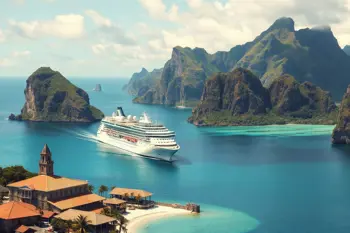
Nature and adventure: rainforest hiking, waterfall visits, snorkeling, and coastal boat trips. 7
History and culture: colonial centers, fortifications, local markets, and heritage districts in destinations such as San Juan and Bridgetown. 8
Beach and relaxation: Half Moon Cay, Mayreau, Antigua, and other beach-oriented calls. 1
Urban exploration: Willemstad in Curaçao, Bridgetown, Philipsburg, and San Juan provide concentrated shopping, architecture, food, and museum areas. 4
Port timing, sea days, and operational risks
Port time is a central limitation when evaluating excursions. Published schedules commonly show calls lasting from morning to late afternoon, while some ports receive longer visits. Wind Surf lists Basseterre and Gustavia until 10:00 p.m., and Aruba on the Carnival Pride itinerary remains open until 10:00 p.m. Longer calls create more room for evening activities, but they do not eliminate the need to account for transport, tour duration, weather, and the ship's required return time. 2
Weather and itinerary changes are material risks. The research describes mid-December through April as a period associated with more stable conditions and reduced hurricane-season exposure, while Caribbean itineraries remain subject to sea conditions and operational adjustments. Sea days also create useful recovery periods after physically demanding excursions, but they can feel restrictive to travelers expecting a port visit every day. Regulatory, immigration, and port procedures vary by destination, so passports, entry requirements, and excursion documentation must be checked against the specific sailing. 4
How to compare representative routes
Route comparison should begin with the departure port, number of port calls, number of sea days, and the balance between large and small ships. Holland America’s Rotterdam is listed with capacity for 2,668 passengers, 1,025 crew, 99,800 tons, and 12 decks. Wind Surf’s published route represents a smaller-ship approach with repeated calls and smaller harbors, while Carnival itineraries provide larger-scale eastern and southern route examples from several North American homeports. 1
| Route pattern | Representative stops | Planning emphasis |
|---|---|---|
| Eastern Caribbean | San Juan, Saint Thomas, St. Kitts, Sint Maarten, Roseau | History, beaches, rainforest, and inter-island variety 3 |
| Southern Caribbean | Aruba, Curaçao, Barbados, Grenada, Saint Lucia | Longer transit distances and contrasting climates 5 |
| Mixed eastern and southern | St. Maarten, St. Kitts, Dominica, Barbados, Curaçao, Aruba | Maximum geographic variety, with additional sea days 4 |
Costs, eligibility, and preparation considerations
The research describes a 14-day combined eastern and southern trip costing approximately €3,500 to €6,500 per person when flight, a balcony cabin, tips, and excursions are included. That figure is presented as a realistic trip range from one travel account rather than a universal quotation, and actual totals depend on departure city, cabin category, ship, season, and excursion choices. The same source identifies excursion costs of about €50 to €150 per island and daily gratuities of US$14 to US$18. 4
Preparation also involves physical and administrative eligibility. Rainforest hikes, snorkeling, zip-lining, and water-based activities may not suit every traveler, while tender ports or smaller harbors can create access limitations for people with mobility needs. Excursions arranged independently carry a timing risk if transportation is delayed, whereas ship-organized activities are structured around the vessel’s schedule but may have less flexibility. The itinerary should therefore be assessed as a sequence of port windows, sea days, documentation requirements, weather exposure, and activity demands rather than as a simple list of islands.
Sources
- World of Cruising, 14-Day Eastern Caribbean: Bahamas & San Juan
- Cruises.To, 14 Nights Caribbean Cruise, Wind Surf
- World of Cruising, 14-Day Leeward Island Jewels
- Max Haase, Caribbean Cruise: Eastern vs. Southern
- Cruises.To, 14-Day Southern Caribbean, Carnival Pride
- Cruises.To, 14-Day Southern Caribbean, Carnival Firenze and Carnival Venezia
- St. Lucia Tourism Authority, Visit Barbados, Visit Antigua and Barbuda
- World of Cruising, Carnival and Seabourn destination descriptions
Authored by MistyMountainView team