Warning signs of heart disease: Clinical indicators and diagnostic considerations for early detection
The Clinical Importance of Recognizing Early Cardiac Signals
Heart disease serves as a leading global cause of mortality, often progressing through stages that remain asymptomatic or present with subtle, easily overlooked indicators 3. While many individuals associate cardiac distress exclusively with dramatic, acute events, the clinical reality often involves a progression of warning signs that occur hours, days, or even weeks before a significant medical event 1. These indicators are frequently misattributed to factors such as aging, stress, or minor gastrointestinal discomfort, which can lead to delayed diagnostic assessment 1. Understanding these nuances is critical for risk management and potential life-saving intervention 7.
The cardiovascular system relies on a complex network of vessels and chambers to deliver oxygenated blood to essential tissues 4. When structural integrity is compromised-such as in coronary artery disease (CAD), where plaque buildup restricts arterial flow-the heart muscle experiences stress 3. Clinical observations indicate that early detection of these vascular changes through the monitoring of persistent or recurring symptoms allows for more effective management strategies, including lifestyle modifications, pharmacological interventions, or surgical procedures 7.
Common Manifestations of Angina and Chest Discomfort
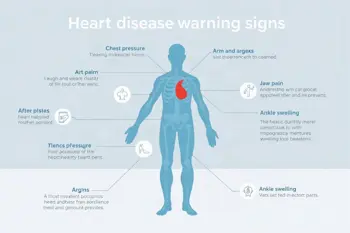
Chest discomfort remains one of the most recognized indicators of heart-related issues, though it rarely presents as a cinematic event. Instead, patients frequently report sensations of pressure, heaviness, or tightness, which can be misidentified as heartburn or indigestion, particularly following meals or periods of emotional strain 1. This sensation, known clinically as angina, often reflects inadequate blood flow to the heart muscle when it is subjected to increased demand, such as during physical exertion or acute stress 5.
The nature of this discomfort is often episodic, described as symptoms that wax and wane over minutes rather than manifesting as constant, localized pain 8. The diagnostic challenge lies in the intermittent nature of these events, which may lead individuals to disregard them as trivial when they subside after rest 2. Clinical guidance emphasizes that any chest sensation provoked by exertion and subsequently relieved by rest warrants a systematic investigation by a qualified healthcare professional to rule out obstructive cardiovascular pathology 2.
Subtle Extracardiac Indicators and Referred Pain
Cardiac distress frequently communicates through referred pain, where the discomfort is felt in areas distant from the heart itself. This can involve the neck, jaw, shoulders, arms, back, or upper abdomen 1. Because this pain may not be localized to the thoracic cavity, it is often overlooked or attributed to musculoskeletal strain or digestive issues 2. When the heart muscle struggles to meet metabolic demands, the subsequent nerve stimulation can manifest as discomfort in these peripheral anatomical regions 2.
| Region | Nature of Discomfort |
|---|---|
| Arms/Shoulders | Dull or tight aching sensations |
| Jaw/Neck | Referred nerve-related discomfort |
| Upper Abdomen | Burning or pressure mimicking indigestion |
| Back | Diffuse muscular or deep-seated tension |
These symptoms are particularly significant when they appear without an obvious physical origin or injury 2. The medical literature suggests that the tendency to dismiss these sensations delays the diagnostic timeline for conditions like coronary artery disease, potentially allowing structural damage to worsen before formal evaluation occurs 6.
Fatigue and Respiratory Distress as Markers of Heart Failure
Unusual or extreme fatigue is a common, albeit non-specific, indicator that often precedes a cardiac episode. Unlike exhaustion resulting from physical labor, this form of fatigue is frequently described as persistent or out of proportion to daily activities 1. In the context of heart failure, where the heart’s pumping efficiency is diminished, the body struggles to maintain the energy demands of routine tasks, leading to profound lethargy 8.
Respiratory symptoms are similarly indicative of cardiac underperformance. Shortness of breath during basic tasks-such as climbing a flight of stairs or performing household chores-should be viewed as a potential signal that the heart is struggling to circulate sufficient oxygenated blood 1. The Heart Failure Society of America utilizes the mnemonic FACES (Fatigue, Activity limitation, Congestion, Edema, Shortness of breath) to assist clinicians and patients in identifying these early-stage symptoms, which are frequently mistaken for normal aging processes 8.
Systemic Observations: Palpitations and Edema
Beyond pain and fatigue, the cardiovascular system provides other systemic cues of dysfunction. Heart palpitations, characterized by sensations of a racing, irregular, or fluttering heartbeat, may indicate electrical system abnormalities such as arrhythmias 7. While these sensations can be benign, they require investigation to distinguish between transient occurrences and symptomatic heart rhythm disorders that could necessitate long-term clinical management 7.
Peripheral swelling, specifically in the legs, ankles, or feet, is a frequent sign of fluid retention often associated with heart failure 6. When the heart’s pump function is inefficient, blood can back up in the venous system, causing fluid to accumulate in peripheral tissues. This symptom, known as edema, is a clinical marker that the heart may not be maintaining adequate output 6. Furthermore, symptoms such as dizziness or fainting spells can indicate that cerebral blood flow is periodically compromised due to low cardiac output or rhythm irregularities 7.
Risk Mitigation and Diagnostic Standards
Recognizing the warning signs of heart disease is only one facet of cardiovascular health. Individuals with known risk factors, including high blood pressure, elevated cholesterol levels, diabetes, tobacco use, and a sedentary lifestyle, must maintain a heightened state of awareness 2. A family history of cardiac disease further increases the necessity for regular screenings and proactive monitoring of these subtle physiological changes 2.
Modern diagnostic protocols often involve a combination of clinical assessments, including physical examinations, electrocardiograms (ECG), echocardiography, and targeted blood tests 7. These tools allow for the identification of underlying pathology before it manifests as a catastrophic event like a heart attack. While the presence of symptoms can be alarming, they serve as actionable data for medical teams to develop management plans that may include pharmacological therapies, lifestyle modifications, or invasive interventions to restore arterial patency and cardiac function 7.
Sources
- NIHD: Early Signs of Heart Disease You Shouldn’t Ignore (Feb 2026)
- Harvard Health: 5 overlooked symptoms that may signal heart trouble (March 2026)
- UC Davis Health: Heart Disease Overview (Jan 2026)
- Ochsner Health: 5 Sneaky Signs to Know About Heart Disease (Jan 2026)
- Harvard Health: Coronary Artery Disease A to Z (March 2026)
- Penn Medicine: Coronary Artery Disease Symptoms and Causes
- Acibadem Hospitals Group: Heart Disease Symptoms, Causes, and Treatment (July 2026)
- Cleveland Clinic: Early Warning Signs of a Heart Attack (Jan 2026)
- Harvard Health: 5 warning signs of early heart failure (April 2026)
- Merck Manual: Overview of Coronary Artery Disease (July 2026)
Authored by MistyMountainView team