Train journeys across the American Southwest: An analysis of scenic rail corridors and transit history
The Evolution of Rail Transit in the American Southwest
Rail travel across the American Southwest has transitioned from a utility-driven network built for industrial logistics into a distinct mode of scenic observation. Historically, lines such as the Denver and Rio Grande Western Railroad were engineered in the 1870s to facilitate the movement of coal, timber, and mining goods through challenging mountainous terrain 1. Today, these corridors provide a unique, continuous perspective of the high desert and mountain landscapes that are often fragmented by the episodic nature of automobile travel 1. This shift in rail utilization highlights a growing preference for transit options that prioritize observation over mere speed 2.
Contemporary rail infrastructure in this region includes both long-distance Amtrak services and specialized historic excursion lines. While long-distance routes like the Southwest Chief offer cross-country connections, smaller regional lines serve as specialized conduits through ecologically diverse areas 5. The operational focus has shifted toward providing passengers with immersive environmental experiences, allowing for viewing opportunities in remote territories that remain inaccessible to standard vehicular traffic 7. These journeys are characterized by a departure from the congestion of highway systems, offering a more sustainable approach to regional exploration 7.
Long-Distance Transit: The Amtrak Southwest Chief
The Amtrak Southwest Chief serves as a primary arterial route for travelers moving between Chicago and Los Angeles, traversing eight states including Illinois, Missouri, Kansas, Colorado, New Mexico, Arizona, and California 5. Spanning 2,265 miles, the route functions as a modern successor to the historic Super Chief, which was historically recognized for setting early standards in long-distance luxury rail travel 9. The journey, which lasts approximately 43 hours, offers a diverse cross-section of American landscapes, shifting from Midwestern plains to the high-altitude deserts of the Southwest 5, 9.
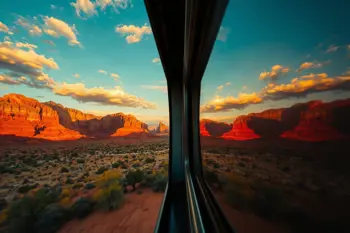
The scenic quality of this route is particularly pronounced in its western segments, specifically between northern New Mexico and southern California. Travelers often observe the Sangre de Cristo Mountains, the Apache Canyon, and various red rock formations that characterize the high desert environment 8. The route design provides daylight access to these areas for westbound passengers, which is a consideration for those prioritizing landscape observation 8. The inclusion of a Sightseer Lounge car further enhances this experience, providing elevated viewpoints for observing the changing terrain as the train negotiates the mountainous and desert stretches 5, 9.
The Sunset Limited and Transcontinental Connectivity
The Sunset Limited represents the southernmost rail corridor operated by Amtrak, connecting New Orleans to Los Angeles 6. Traversing five states-Louisiana, Texas, New Mexico, Arizona, and California-the route offers a distinct environmental contrast, beginning with the bayous of the Gulf Coast and transitioning into the parched, shrub-dotted mesas of the Southwest 6, 9. This 46-to-48-hour journey provides a comprehensive look at the changing geography of the southern United States, with service occurring three times per week in both directions 6.
| Route | Endpoints | Primary Geographic Features |
|---|---|---|
| Southwest Chief | Chicago to Los Angeles | High desert, mesas, Raton Pass |
| Sunset Limited | New Orleans to Los Angeles | Bayous, Texas deserts, Arizona mountains |
| California Zephyr | Chicago to Emeryville | Rocky Mountains, Utah desert landscapes |
Integration with other rail lines, such as the Texas Eagle, facilitates broader transit options across the region. Passengers traveling between Chicago and San Antonio on the Texas Eagle can utilize coordinated connections to access the Sunset Limited for westward travel toward California 10. This network-based approach allows for a degree of flexibility in planning long-distance travel, though the infrastructure relies on synchronized scheduling across several hundred miles of track 10.
Historic and Regional Excursion Railways
Beyond national transit networks, the Southwest is home to various specialized rail operators that function primarily as historical and scenic excursions. These lines often traverse geographically restrictive areas, such as the San Juan Mountains of southwestern Colorado, via the Durango and Silverton Narrow Gauge Railroad 7. Similarly, the Cumbres and Toltec Scenic Railroad provides transit across high-altitude mountain terrain between Chama, New Mexico, and Antonito, Colorado, preserving a unique form of rail heritage that is rarely encountered in modern transit 8.
Regional passenger services also play a role in local connectivity. The New Mexico Rail Runner Express, for instance, serves as an essential commuter and tourist link between Albuquerque and Santa Fe, navigating the Rio Grande corridor 6. Arizona features multiple specialized rail experiences, such as the Grand Canyon Railway, which links Williams to the South Rim of Grand Canyon National Park, and the Verde Canyon Railroad, which offers excursions from Clarkdale through central Arizona’s topographical features 4, 5. These lines operate independently of the national network, focusing on localized historical narratives and environmental access.
The Canyon Spirit and Emerging Luxury Itineraries
The Canyon Spirit, introduced by the Rocky Mountaineer, represents a recent entry into the market for daylight-only, luxury rail experiences between Denver, Colorado, and Salt Lake City, Utah 1. The route follows historically significant corridors developed in the late 19th century for freight movement, now reimagined for passenger observation 1. This service emphasizes the visual experience, navigating rugged terrain such as Burns Canyon and shifting from pine-dotted mountains to the sedimentary rock mesas of eastern Utah 1, 2.
The expansion of this route to include Moab, the gateway to Arches National Park, reflects a trend toward incorporating established tourism hubs into rail itineraries 2. Unlike long-distance overnight trains, these luxury services are designed specifically to minimize transit time in darkness, maximizing visibility of the surrounding landscapes 1. This operational approach mirrors the demand for scenic-focused travel where the journey itself is positioned as the primary destination, rather than simply a method of arrival 3.
Operational Realities and Traveler Considerations
Planning a rail journey across the American Southwest requires careful consideration of the operational limitations inherent in long-distance train travel. Unlike regional transit, major routes like the Southwest Chief and Sunset Limited operate on schedules that may be subject to delays due to track maintenance or freight priority 5, 6. Travelers are advised to account for these potential fluctuations when planning connections or scheduled arrivals at specific regional hubs like Flagstaff or Albuquerque 5, 8.
Additionally, passengers should evaluate the amenities offered on long-haul routes, such as the availability of sleeper accommodations and dining services, which vary by train line 5, 6. The experience is generally less about speed and more about endurance and observation, a factor that influences the demographic of those utilizing these services 9. Prospective riders should review current timetables through official channels, as seasonal adjustments and infrastructure projects can impact the availability and specific stops of these long-distance and excursion services 5.
Sources
- National Geographic, 'This historic rail corridor offers a new way to see the American West'
- Condé Nast Traveler, 'This New Luxury Train Journey Tells the Stories of the American Southwest'
- Irish Examiner, 'This new rail journey through America’s canyons is a spectacular luxury adventure'
- Grand Canyon Railway, 'Train Schedule and Service'
- Travels with Kev, 'Amtrak Southwest Chief: Schedule, Stops, & Route Guide'
- Travel + Leisure, 'This Amtrak Train Passes 5 States and 3 National Parks'
- The Travel, 'Forget Going-To-The-Sun Road: This Amtrak Route Feels Like a Rolling National Park Tour'
- Amtrak Guide, 'The most scenic part of the Southwest Chief route'
- The Travel, 'Amtrak’s Southwest Chief Combines Route 66 Nostalgia With Iconic American Landscapes'
- Amtrak, 'Texas Eagle Route Information'
Authored by MistyMountainView team