Warning signs of Parkinson's disease: A clinical guide to early symptoms
Warning signs of Parkinson's disease may begin with a resting tremor, stiffness, slower walking, or reduced arm swing, but early changes can also involve smell, sleep, digestion, and mood. Symptoms often accumulate gradually over years and may be mistaken for normal aging, making patterns and progression important to document. 1
How early Parkinson's symptoms may appear
Parkinson's disease is a progressive neurological disorder associated with damage to dopamine-producing nerve cells in the substantia nigra. Dopamine helps transmit signals involved in smooth, purposeful movement. The condition affects people differently, and symptoms may begin on one side of the body before becoming more widespread. Common early motor features include tremor, stiffness, slowness, and changes in balance. 6
Early signs do not establish a diagnosis. A single tremor, constipation, sleep disturbance, or reduced sense of smell can have many possible causes. Concern is greater when several new, unexplained changes occur together, especially when they progressively interfere with walking, writing, dressing, speaking, or other familiar activities. Medical evaluation is therefore based on the overall pattern rather than one isolated symptom. 2
Movement changes to watch for
A tremor associated with Parkinson's disease commonly appears when a hand, finger, foot, or chin is relaxed, rather than while the limb is actively being used. Slowness of movement, known as bradykinesia, can make routine actions take longer. Difficulty rising from a chair, reduced dexterity with buttons or shoelaces, and smaller or messier handwriting are examples of changes that may deserve clinical attention. 8
Rigidity can make muscles feel stiff, restricted, or uncomfortable during walking and other movements. A person may notice that one arm swings less than the other, steps become shorter, or walking speed and rhythm change. Posture may become more stooped, while balance and coordination can decline as the disease progresses. These findings are not exclusive to Parkinson's disease, but asymmetry and gradual progression are clinically relevant details. 1
Changes in writing, face, and voice
Micrographia refers to handwriting that becomes unusually small, crowded, or cramped. It may appear gradually during a note, signature, or longer written passage. Loss of automatic movements can also reduce blinking, smiling, or natural arm swing. A less expressive face, sometimes called facial masking, may be noticed by relatives before the individual recognizes a change. 2
Speech changes can include a softer, lowered, or hoarse voice and a more monotonous delivery. Because these symptoms may develop slowly, they can be attributed to tiredness, aging, or a throat problem. A clinician will consider whether voice changes occur alongside slowness, stiffness, tremor, reduced facial expression, or altered handwriting. Persistent or worsening changes should be described during a medical consultation. 8
Non-motor warning signs
Reduced ability to smell, medically described as hyposmia or anosmia, may precede movement symptoms by several years. Constipation is another recognized non-motor feature and may be overlooked because it is common in many other conditions. Depression, excessive daytime sleepiness, and changes in automatic body functions can also occur before or alongside motor symptoms. 2
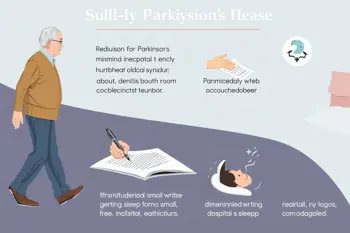
REM sleep behavior disorder is characterized by physically or vocally acting out dreams, such as talking, shouting, punching, kicking, or jumping from bed. Sleep changes can have several explanations, including medications and other sleep disorders, so they do not independently confirm Parkinson's disease. Their significance increases when they occur with persistent smell loss, constipation, or emerging movement changes. 8
Why symptoms are often missed
Parkinson's disease typically develops gradually, and early symptoms may be mild enough to escape notice. Some people do not develop a tremor, even though tremor is widely associated with the condition. Initial difficulties may instead involve walking, standing from a chair, dexterity, facial expression, or sleep. Symptoms can also be less severe on one side than the other, which may delay recognition. 3
The disease process may begin before a formal diagnosis. Clinical references report that pathological changes can start a decade or more before obvious motor manifestations, while the National Institute of Neurological Disorders and Stroke states that many patients have lost 60% to 80% or more of dopamine-producing cells by the time symptoms appear. These figures explain why early clues are important, but they do not make screening a diagnosis. 6
When medical evaluation is appropriate
A medical appointment is reasonable when symptoms are new, persistent, progressive, or unexplained, particularly when more than one warning sign is present. Useful observations include which side started first, whether tremor occurs at rest, changes in handwriting size, walking speed, falls, stiffness, voice volume, sleep behaviors, bowel patterns, and smell. A dated symptom record can help a clinician assess progression and daily impact. 4
Doctors base Parkinson's disease assessment largely on the history and neurological examination, because symptoms overlap with other disorders and medication effects. There is no single symptom that proves Parkinson's disease, and diagnosis requires professional judgment. Earlier evaluation can support symptom management and planning, while treatment may include medications and therapies designed to improve quality of life. 7
Age is the strongest risk factor, and most people are diagnosed after age 60, although early-onset Parkinson's disease can occur before age 50. The condition is more common in men than women, and researchers associate its development with a combination of genetic and environmental factors. These risk patterns do not predict an individual's diagnosis, so symptoms still require clinical assessment. 5
Sources
- Harvard Health, “How to spot Parkinson's disease symptoms”
- Parkinsons.org, “Early Signs and Symptoms of Parkinson's Disease”
- Stony Brook Medicine, “Early Signs of Parkinson's Disease: Symptoms Beyond the Tremor”
- Scripps Health, “What Are The Early Signs of Parkinson's?”
- UPMC HealthBeat, “What to Know About Parkinson's Disease Symptoms”
- National Institute of Neurological Disorders and Stroke, “Parkinson's Disease”
- Cleveland Clinic, “Parkinson's Disease: What It Is, Symptoms & Treatment”
- Keck Medicine of USC, “Seven warning signs of Parkinson's disease”
- NCBI Bookshelf, “Parkinson Disease”
- Merck Manual Consumer Version, “Parkinson Disease”
Authored by MistyMountainView team