Best hospitals for Gastroenterology: An Analysis of Global Clinical Excellence and Research Impact
Global Benchmarks in Gastroenterology Care
Identifying the leading institutions for gastroenterology requires an analysis of clinical outcomes, research contributions, and the availability of specialized interventional technologies. Global rankings for 2026 position the Mayo Clinic in Rochester, United States, as the primary institution for gastroenterology and gastrointestinal surgery 1. Other notable global leaders include the Cleveland Clinic and Massachusetts General Hospital, both of which are frequently cited for their rigorous approach to digestive health and complex surgical interventions 1. The evaluation of these hospitals often relies on institutional volume, patient outcomes, and the depth of specialized care provided for chronic conditions.
International institutions also maintain significant influence in the field. The Chinese University of Hong Kong (CU Medicine) has secured a top global position, frequently appearing within the top three rankings worldwide for gastroenterology and hepatology 8. Furthermore, institutions such as the Asan Medical Center and Samsung Medical Center in Seoul, South Korea, are recognized for their advanced clinical infrastructure 1. These rankings serve as a framework for understanding where high-level expertise is concentrated, particularly for patients requiring multidisciplinary management for severe gastrointestinal disorders.
The Role of Clinical Research in Digestive Health
The advancement of gastroenterological care is inextricably linked to ongoing academic research. Leading centers of excellence often serve as hubs for innovation in areas such as gut microbiome modulation, non-invasive diagnostics, and the development of novel biomarkers 8. For instance, CU Medicine has pioneered fecal microbiota transplantation and research regarding the role of Streptococcus anginosus in gastric cancer pathogenesis 8. This integration of clinical practice and laboratory research allows major hospitals to evolve treatment protocols based on the latest scientific evidence.
Research initiatives extend beyond oncology and into the study of functional gastrointestinal disorders. Leading physicians, such as those at Houston Methodist Hospital, are internationally recognized for investigations into irritable bowel syndrome and the role of the gut microbiome in systemic health 4. By combining longitudinal research with direct patient care, these top-tier programs ensure that emerging therapeutic options move from experimental settings into standard clinical application with clinical oversight and regulatory scrutiny 4.
Integrated Approaches to Complex Digestive Disorders
Effective gastroenterology programs are characterized by their ability to manage complex cases through multidisciplinary teams. This approach typically involves the integration of medical gastroenterologists with surgical specialists, nutritionists, and advanced critical care teams 3. At institutions like Montefiore Einstein, this collaborative framework supports the management of conditions such as Crohn's disease, ulcerative colitis, and complex esophageal motility disorders 3. Such systems are designed to provide a cohesive journey for the patient, from initial diagnostic screening to long-term chronic disease management.
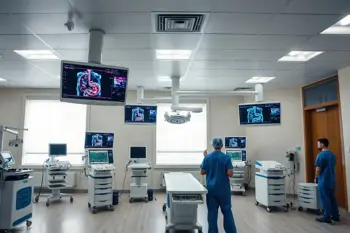
Interventional gastroenterology represents a significant component of these integrated models. Facilities are increasingly utilizing advanced endoscopic techniques, such as endoscopic retrograde cholangiopancreatography (ERCP), endoscopic ultrasound (EUS), and third-space endoscopy to treat conditions that previously required invasive surgery 5. The goal is to minimize patient trauma while maximizing diagnostic and therapeutic precision. Consequently, hospital departments that invest in state-of-the-art endoscopy suites and robotic-assisted navigation systems often report improved patient recovery metrics and higher levels of procedural safety 5.
Geographic Distribution of Top-Tier Facilities
While concentration of expertise is evident in the United States, significant medical infrastructure for digestive health is distributed globally. In the United States, the geographic distribution includes heavy hitters such as The Johns Hopkins Hospital in Maryland, The Mount Sinai Hospital in New York, and UCLA Medical Center in California, which excel in liver disease management and hepatology 1. These institutions are often referral sites, accepting patients from broader health systems who require a level of specialization not available in local community hospitals.
| Rank | Hospital | Location |
|---|---|---|
| 1 | Mayo Clinic - Rochester | Rochester, USA |
| 2 | Cleveland Clinic | Cleveland, USA |
| 3 | Massachusetts General Hospital | Boston, USA |
| 4 | Asan Medical Center | Seoul, South Korea |
| 5 | Samsung Medical Center | Seoul, South Korea |
| 6 | The Johns Hopkins Hospital | Baltimore, USA |
Outside of North America, institutions such as the Hospital Israelita Albert Einstein in Brazil, King's College Hospital in the United Kingdom, and Policlinico Universitario A. Gemelli in Italy highlight the international standard of care 1. Each of these facilities operates under regional health systems with unique regulatory oversight, yet they share a common dedication to specialized gastroenterological practice. This global spread ensures that high-acuity gastrointestinal services remain accessible across diverse patient populations.
Regulatory Oversight and Patient Safety Protocols
Participation in top-tier specialized hospital rankings is typically contingent upon meeting rigorous safety and quality benchmarks. Institutional oversight is managed through a combination of local accreditation boards and global rating agencies that monitor outcomes, such as Procedural Outcomes Measures (PROMs) 1. High-performing hospitals must maintain transparency regarding their clinical results, especially in fields like surgery and oncology, where complication rates and survival statistics are critical metrics for institutional credibility.
Furthermore, managing complex cases often requires handling high-cost biologic therapies or long-term clinical trials. Institutions with established subspecialty pharmacies and dedicated clinical liaison services are better equipped to help patients navigate the logistical complexities of specialized treatment 3. Whether a patient is seeking care for early-stage screening or advanced liver transplantation, the quality of an institution is often measured by its commitment to safety protocols, ethical management of clinical research, and the presence of specialized intensive care units designed for gastrointestinal and liver patients 5.
Trends in Gastroenterology and Hepatology for 2026
Looking toward the remainder of 2026, the focus in gastroenterology continues to shift toward precision medicine and artificial intelligence (AI). The integration of AI-assisted colonoscopy is becoming a key indicator of a clinic's technological readiness, aiding in the early detection of colorectal polyps and reducing human error during screenings 7. Additionally, the emphasis on non-invasive diagnostics is reducing the reliance on surgical intervention for initial staging of digestive cancers and inflammatory conditions.
Hepatology continues to be a high-growth subspecialty within gastroenterology, particularly regarding liver transplantation and the management of metabolic-associated liver disease. Hospitals that demonstrate excellence in this area typically possess advanced transplant infrastructure and multidisciplinary teams capable of managing pre- and post-operative care 6. As these technologies and clinical practices mature, the gap between top-ranked specialized hospitals and general care facilities may continue to influence patient referral patterns globally 2.
Sources
- Newsweek - World's Best Specialized Hospitals 2026: Gastroenterology
- Ampliz - List of Gastroenterology Hospitals in the US
- Montefiore Einstein Advanced Care - Gastroenterology Services
- Becker's ASC - More leaders of the nation's top GI hospitals
- CARE Hospitals - Best Gastroenterology Hospital in Hyderabad
- Acibadem International - Gastroenterology, Hepatology & Endoscopy
- Liv Hospital - Gastroenterology Clinic
- Newswire - CU Medicine Ranked World No. 2 in Gastroenterology & Hepatology
Authored by MistyMountainView team