Best hospitals for vascular reconstruction: A clinical comparison of capabilities and selection factors
The search for the best hospitals for vascular reconstruction requires more than a general reputation score. Relevant factors include experience with aortic disease, peripheral artery disease, carotid conditions, venous disorders, complex reconstruction, minimally invasive treatment, and multidisciplinary follow-up. The hospitals discussed below represent programs identified in the supplied research, not a universal ranking or a guarantee of individual outcomes.
How hospitals should be compared
Vascular reconstruction can involve diseased arteries, veins, or lymphatic structures, with treatment ranging from medical management to open surgery, endovascular intervention, or a hybrid approach. Penn Medicine describes a program offering open techniques, minimally invasive procedures, and medical management, while its Hospital of the University of Pennsylvania and Penn Presbyterian Medical Center hold the highest three-star rating in the Society for Vascular Surgery’s Vascular Quality Initiative. 12 A meaningful comparison therefore considers procedure-specific experience rather than a single hospital-wide label.
- Aortic aneurysm, dissection, and inherited aortic disorders
- Carotid artery disease and stroke prevention
- Peripheral artery disease and limb salvage
- Venous disease, dialysis access, and vascular malformations
- Open, endovascular, and hybrid reconstruction capability
Programs noted for aortic reconstruction
Several institutions in the research are associated with complex aortic care. Cleveland Clinic operates a dedicated Aorta Center focused on complex vascular conditions, while Johns Hopkins reports extensive experience with abdominal, thoracic, and thoracoabdominal aneurysms, aortic dissection, and genetically inherited syndromes including Marfan, Loeys-Dietz, and vascular Ehlers-Danlos syndromes. 2 4 UCLA Health is also identified for complex aortic repair and minimally invasive vascular reconstruction. 5
| Program | Research-supported focus |
|---|---|
| Cleveland Clinic | Dedicated Aorta Center |
| Johns Hopkins | Aneurysm, dissection, and inherited aortic disease |
| UCLA Health | Complex aortic repair and minimally invasive reconstruction |
| Mount Sinai | Aortic disease and vascular innovation |
Peripheral arteries and limb salvage
Peripheral reconstruction requires assessment of blood flow, tissue damage, wound status, and the feasibility of preserving a limb. UCSF is identified in the research for peripheral vascular interventions and complex limb salvage, while FV Hospital describes endarterectomy, bypass surgery, vascular reconstruction, and arterial thrombectomy for peripheral arterial disease and severe limb ischemia. 8 13 Bharati Hospital in Pune states that its vascular department covers arterial, venous, and lymphatic disease through minimally invasive, open, and hybrid approaches. 14
- Questions may include whether bypass, endovascular therapy, or a combination is appropriate.
- Severe ischemia may require coordinated wound, imaging, and surgical assessment.
- Complex limb salvage is distinct from routine treatment of varicose veins.
- Diabetes-related foot and leg problems are included among the conditions treated by OU Health. 15
Carotid, venous, and access procedures
Hospital selection also depends on the vascular territory involved. Johns Hopkins provides comprehensive options for carotid and peripheral artery disease, while OU Health lists carotid stenosis, peripheral arterial disease, chronic venous insufficiency, deep vein thrombosis, dialysis access, thoracic outlet syndrome, and vascular malformations among its service areas. 4 University Vascular Surgeons at UT Medical Center report expertise in arteries and veins, noninvasive vascular testing, lower-extremity limb salvage, mesenteric arterial insufficiency, and endovascular surgery. 16
- Carotid endarterectomy or selected carotid stenting for carotid disease
- Venous evaluation for chronic insufficiency or deep vein thrombosis
- Dialysis-access creation or revision
- Noninvasive testing before an invasive reconstruction
Technology, research, and multidisciplinary care
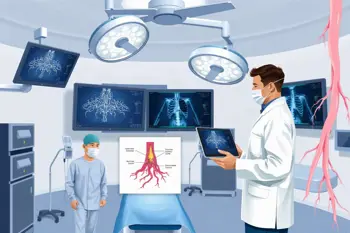
Advanced technology is relevant when anatomy is complex or when open and catheter-based methods may need to be combined. Massachusetts General Hospital is identified as using hybrid operating rooms for advanced endovascular procedures, and NewYork-Presbyterian is described as providing integrated heart and vascular care. 3 7 Stanford’s vascular faculty profile lists endovascular treatment of abdominal and thoracic aortic aneurysms, open abdominal revascularization, peripheral arterial and venous intervention, thoracic outlet surgery, and vascular reconstruction for high-performance athletes. 9 17
Research participation can also distinguish academic programs from community services. Penn Medicine describes clinical trials and second opinions, while Becker’s Healthcare’s 2025 editorial research identifies AdventHealth Orlando as performing approximately 2,600 vascular surgeries annually within a larger heart, lung, and vascular institute. 12 18 These details indicate institutional scope, but they do not predict an individual patient’s risk, recovery, or suitability for a specific procedure.
Practical risks and selection realities
Reconstruction is not a single standardized operation. The appropriate hospital may depend on anatomy, urgency, prior procedures, kidney function, wound severity, inherited disease, available imaging, insurance network rules, travel distance, and the need for intensive postoperative monitoring. Endovascular treatment can use smaller incisions and may shorten recovery, but open surgery remains necessary when it is considered safer; Sutter Health describes both approaches and emphasizes tailoring treatment to the patient’s condition. 11
Patients and referring clinicians can ask about the surgeon’s experience with the exact condition, access to vascular imaging, emergency coverage, hybrid procedures, clinical trials, rehabilitation, and long-term surveillance. Ongoing maintenance may include imaging after aneurysm repair, medication management, wound care, graft monitoring, and follow-up for recurrent or progressive disease. Sutter reports multidisciplinary collaboration with cardiology and cardiothoracic surgery, while UT Medical Center identifies a vascular surgery fellowship program and advanced noninvasive testing. 11 16
What the evidence can and cannot establish
The supplied sources describe capabilities, recognitions, clinical programs, and specialist expertise, but they do not provide a standardized head-to-head ranking of hospitals for every form of vascular reconstruction. A hospital noted for aortic dissection may not be the most relevant choice for dialysis access or limb salvage. Quality ratings, institutional volume, and published expertise should therefore be interpreted alongside patient-specific eligibility, surgeon assessment, local regulation, and the risks explained during informed consent.
- Confirm that the program treats the specific vascular condition involved.
- Distinguish emergency care from elective reconstruction planning.
- Review open, endovascular, and hybrid alternatives with the treating team.
- Clarify follow-up imaging, medication, wound care, and rehabilitation requirements.
- Consider a specialist second opinion when the anatomy or diagnosis is unusually complex.
Sources
- U.S. News & World Report, Cardiology and Heart Surgery rankings
- Cleveland Clinic, Aorta Center
- Massachusetts General Hospital, Heart and Vascular services
- Johns Hopkins Medicine, Vascular Surgery
- UCLA Health, Vascular Surgery
- Mount Sinai Health System, Vascular Surgery
- NewYork-Presbyterian, Vascular Surgery
- UCSF Health, Vascular Surgery
- Stanford Health Care, Vascular Surgery
- Northwestern Medicine, Vascular Surgery
- Sutter Health, Vascular Surgery and Intervention
- Penn Medicine, Vascular Surgery and Endovascular Therapy
- FV Hospital, Advanced Vascular Techniques
- Bharati Vidyapeeth Hospital Pune, Vascular Surgery
- OU Health, Vascular Surgery
- UT Medical Center, University Vascular Surgeons
- Stanford Medicine, Vascular and Endovascular Surgery Faculty
- Becker’s Hospital Review, 100 Hospitals and Health Systems with Great Heart Programs, 2025
Authored by MistyMountainView team