Home Recovery for Hip Arthroscopy: A Clinical Overview of Postoperative Care and Rehabilitation Milestones
Hip arthroscopy is a minimally invasive surgical procedure utilized to diagnose and treat intra-articular hip pathologies, such as femoroacetabular impingement (FAIS) and labral tears 1. Because this method avoids the significant muscle disruption associated with open surgical approaches, it generally allows for a faster recovery period 2. However, the success of the intervention relies heavily on a structured, phase-based rehabilitation program designed to restore hip biomechanics, neuromuscular control, and overall functional capacity 3.
The Multi-Stage Rehabilitation Framework
Recovery following hip arthroscopy is typically structured into four distinct phases, each defined by functional goals rather than strictly defined timeframes 3. The first phase, spanning approximately 0 to 4 weeks, prioritizes maximum protection of the inflamed hip joint as the surgical site begins to heal 3. During this period, the primary objectives include pain management and the initiation of early, protected motion exercises to prevent stiffness 7.
As the patient progresses through the second phase, known as the low-impact phase (4 to 12 weeks), the focus shifts to restoring a normal gait pattern and enhancing balance 3. Progression to this phase typically requires the absence of active joint effusion and the attainment of pain-free passive range of motion 3. The third and fourth phases, categorized as the linear and high-impact stages respectively, concentrate on restoring proprioception, muscle strength, and the mechanics required for athletic activity 3.
Weight-Bearing and Mobility Protocols
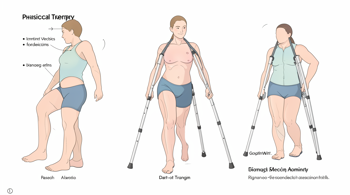
The use of assistive devices, such as crutches, is a common requirement in the immediate aftermath of surgery 5. The specific weight-bearing restrictions are determined by the surgeon based on the complexity of the procedure, including whether a labral repair or bony recontouring was performed 2. Patients are expected to adhere strictly to these weight-bearing directives to ensure that the repaired tissues are not subjected to premature stress during the critical healing phase 7.
Progression to full weight-bearing is a measured process that should only occur when patients meet specific criteria, such as demonstrating a normalized gait pattern without the use of assistive devices 3. Furthermore, patients must demonstrate the ability to ascend and descend stairs effectively and maintain a pain-free, symmetrical squat to 75 degrees 3. Rushing this transition can impede the healing of internal tissues and potentially lead to compensatory pain in the lower back or knee 4.
Managing Daily Living and Safety at Home
Returning home after surgery requires careful planning regarding daily living activities. Simple tasks, including dressing, grooming, and navigating the bathroom, often necessitate temporary modifications to ensure the hip remains within a safe range of motion 7. Patients are generally advised to avoid hip flexion beyond 90 degrees and to exercise caution with adduction and rotational movements that could stress the surgical repair 7.
Driving restrictions are another critical consideration during the home recovery process. The ability to safely operate a vehicle is typically contingent on the discontinuation of opioid pain medications, the recovery of adequate leg strength, and the restoration of sufficient reaction time 5. The specific side of the surgery, whether left or right, may also influence the timeline for resuming driving, as the right leg is essential for operating the accelerator and brake pedals 7.
Objective Recovery Metrics and Benchmarks
| Recovery Metric | Estimated 50% Milestone | Estimated Full Recovery |
|---|---|---|
| Physical Function (PROMIS) | 11.0 Weeks | 17.0 Weeks |
| Pain Interference (PROMIS) | 6.7 Weeks | 37.4 Weeks |
| Tegner Activity Scale | 18.5 Weeks | 28.8 Weeks |
Research indicates that patient outcomes follow a predictable, albeit variable, trajectory following hip arthroscopy 9. While physical function levels often plateau around 4 months post-surgery, pain interference recovery can be more protracted, with full resolution sometimes taking longer 9. Understanding these benchmarks is valuable for managing expectations and identifying patients who might require adjustments to their physical therapy program to address delayed progress 9.
Monitoring for Complications
Maintaining clear communication with a surgical team is essential throughout the rehabilitation period. Patients should monitor their incisions closely for signs of potential complications, such as increasing redness, significant drainage, persistent swelling, or the reopening of the wound 5. Additionally, the development of a fever is a clinical indicator that necessitates immediate professional medical evaluation 5.
While standard postoperative discomfort is managed through a combination of ice, activity modification, and prescribed medication, any pain that does not respond to these measures or that worsens over time warrants investigation 5. Following the surgeon's specific, individualized instructions for wound care and medication management is the most effective way to minimize the risk of complications and support a successful return to daily function 8.
Conclusion: The Role of Disciplined Rehabilitation
The ultimate success of hip arthroscopy is not defined solely by the procedure itself but by the rigor and discipline applied during the recovery phase 2. Because the hip is a major weight-bearing joint, neglecting rehabilitation guidelines or attempting to resume high-impact activities prematurely can undermine the structural integrity of the surgical repair 5. By adhering to a goal-oriented, science-based protocol, patients can maximize their chances of regaining functional capacity and minimizing long-term discomfort 3.
Sources
- Rehab Ottawa: Hip Arthroscopy Rehab Protocol
- Prof. Dr. Gokhan Polat: Hip Arthroscopy Recovery Guide
- Journal of Arthroscopic and Related Surgery: Rehabilitation Following Hip Arthroscopy
- Lake Country Physiotherapy: Hip Labral Repair Recovery Guide
- Liv Hospital: Hip Labral Repair Protocol
- Dr. Mufaddal Gombera: Hip Arthroscopy for FAI and Labral Tears
- Anthony Cappellino MD: Hip Arthroscopy Recovery Timeline
- Hip International: Trajectory of Recovery After Hip Arthroscopy
Authored by MistyMountainView team